Edoardo Colao 1
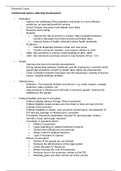
Institutional factors affecting Development
• Education:
◦ Improve the wellbeing of the population and leads to a more efficient
workforce- an external benefit for society
◦ Social Change- discussion and debate more likely
◦ Requires vast funding
◦ Benefits:
▪ Improve the role of women in society: High correlation between
women’s education and child survival and fertility rates.
▪ Improve levels of health- education about health standards
◦ Problems:
▪ Internal disparities between urban and rural areas
▪ Family’s economic situation- may require children to work
◦ 2006- Net enrollment in primary school globally at 90%- MDG
◦ 2006- Net enrolment in primary school in Sub-Saharan Africa- 71%
• Health:
◦ Improves the level of economic development
◦ Strong relationship between healthcare and life expectancy- countries which
spend high proportion of GDP on health have higher life expectancies
◦ Close correlation between Education and life expectancy- training of doctors,
nurses, hospital buildings facilities
• Infrastructure:
◦ Definition: The essential facilities and service” e.g. roads, airports, sewage
treatment, water systems, etc
◦ Improvements in infrastructure will lead to economic growth- improve the
wellbeing of the people
• Political Stability and lack of corruption:
◦ Political stability attracts Foreign Direct Investment
◦ Political Stability means people are more likely to have an input into the
running of the economy
◦ Political instability in Sudan- poor economic performance- low attraction of
FDI and aid, damage to infrastructure, corruption
◦ Corruption- Dishonest exploitation of power for personal gain, bribery,
extortion, fraud, patronage, nepotism.
◦ Corruption is prevalent where:
▪ Military Government
▪ Large spending on capital investment projects
▪ Government officials are not well paid
▪ Weak control of political elections
▪ Lack of Freedom of Speech
◦ Effects of Corruption:
▪ Wishes of the people are not heeded
▪ Reduces the effectiveness of the legal system
▪ Unfair allocation of resources
▪ Bribes increase the cost of businesses
▪ Reduces trust in the economy- harder to find FDI
▪ Monetary gains are often moved out of the country
Institutional factors affecting Development
• Education:
◦ Improve the wellbeing of the population and leads to a more efficient
workforce- an external benefit for society
◦ Social Change- discussion and debate more likely
◦ Requires vast funding
◦ Benefits:
▪ Improve the role of women in society: High correlation between
women’s education and child survival and fertility rates.
▪ Improve levels of health- education about health standards
◦ Problems:
▪ Internal disparities between urban and rural areas
▪ Family’s economic situation- may require children to work
◦ 2006- Net enrollment in primary school globally at 90%- MDG
◦ 2006- Net enrolment in primary school in Sub-Saharan Africa- 71%
• Health:
◦ Improves the level of economic development
◦ Strong relationship between healthcare and life expectancy- countries which
spend high proportion of GDP on health have higher life expectancies
◦ Close correlation between Education and life expectancy- training of doctors,
nurses, hospital buildings facilities
• Infrastructure:
◦ Definition: The essential facilities and service” e.g. roads, airports, sewage
treatment, water systems, etc
◦ Improvements in infrastructure will lead to economic growth- improve the
wellbeing of the people
• Political Stability and lack of corruption:
◦ Political stability attracts Foreign Direct Investment
◦ Political Stability means people are more likely to have an input into the
running of the economy
◦ Political instability in Sudan- poor economic performance- low attraction of
FDI and aid, damage to infrastructure, corruption
◦ Corruption- Dishonest exploitation of power for personal gain, bribery,
extortion, fraud, patronage, nepotism.
◦ Corruption is prevalent where:
▪ Military Government
▪ Large spending on capital investment projects
▪ Government officials are not well paid
▪ Weak control of political elections
▪ Lack of Freedom of Speech
◦ Effects of Corruption:
▪ Wishes of the people are not heeded
▪ Reduces the effectiveness of the legal system
▪ Unfair allocation of resources
▪ Bribes increase the cost of businesses
▪ Reduces trust in the economy- harder to find FDI
▪ Monetary gains are often moved out of the country