Summary paper: proteome profiling of
whole plasma and plasma derived EC
vesicles facilitates the detection of tissue
biomarkers in the non-obese diabetic
mouse (NOB)
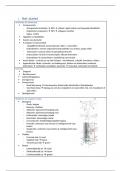
T1D (type 1 diabets) -> loss of beta cells that produces insuline
appearance of autoantibodies to beta cell antigens -> initiation of auto-immune reaction that can
lead to beta cell destruction (hyperglycemia) T1D
C-peptide can be measured to evaluate the insulin production (will be cleaved of proinsulin and
secreted together with insulin)
-> if C-peptide, produced by beta cell, could be detected in the blood -> other proteins could also be
detected and could indicate the progression of the disease?
Proteomic analysis of blood plasma using MS is used for the discovery of protein biomarkers:
Protein biomarkers are useful in type 1 diabetes T1D: presence, progression and severity of the
disease
-> detection of new biomarkers that could give insights in disease phenotypes
Samples of non-obese diabetic mouse -> integrated proteome analysis could be useful for the
discovery of new endotype specific biomarkers in T1D
Why enrichment of EC vesicles?
It may improve the detection and identification of low abundance biomarkers
EC vesicles
o Small phospholipid bilayer membrane-bound vesicles -> secreted by all cell types in
EC space
o They contain DNA, RNA and proteins from their parent cell
o Function in IC communication
EC vesicles subtypes: size/ pathway
o Exosomes: endocytotic pathway (nm)
o Microvesicles: by budding of plasma membrane (nm)
o Apoptotic bodies: apoptotic pathway (mm)
Isolation of EC vesicles: based on sample volume
Differential ultracentrifugation
o Limitations: expensive, co-purification of protein aggregates, long processing time
o Separate exosomes and microvesicles
Size exclusion chromatography (SEC)
o qEV
Immunoprecipitation
Membrane affinity (MA)
o ExoEasy
1
, GOAL
Develop a protocol for improved detection of tissue-enriched proteins in plasma samples from an
experimental model of T1D, the NOD mouse.
In this study, they wanted to look whether the combined analysis of whole plasma samples and
plasma-derived EC vesicles fractions increased the number of unique proteins identified by mass
spectrometry (MS) compared to the analysis of whole plasma samples alone
Result: 600 proteins were detected in EC vesicles enriched samples -> >1/3 of these proteins were
not found in the whole plasma sample
parallel profiling of EV-enriched plasma fractions and whole plasma samples increases the
overall proteome depth and facilitates the discovery of tissue-enriched proteins in plasma
Methods
2 methods based on the EC vesicles enrichment
SEC (qEV)
MA (exoEasy)
exoEasy
1. Filter the plasma -> remove large particles
2. Mix plasma with XBP buffer
3. Add plasma to exoEasy spin column -> spin
4. Wash the bound exosomes with XWP -> spin
5. Elute the exosomes by adding XE buffer
6. Incubation
7. Spin -> collect elute
8. Elute is reapplied to the column membrane -> incubation
9. Spin and collect the final elute
qEV
1. Filter the plasma
2. Load the plasma on qEV column
3. Fractions of 0,5ml were collected and analyzed for protein, particle content -> identify the
optimal fractions for EV collection
qEV: fraction 7-15 were collected
-> Transmission electron microscopy
-> Nanoparticle tracking analysis -> measure the protein concentration and size distribution
-> Depletion of abundant plasma proteins
2
whole plasma and plasma derived EC
vesicles facilitates the detection of tissue
biomarkers in the non-obese diabetic
mouse (NOB)
T1D (type 1 diabets) -> loss of beta cells that produces insuline
appearance of autoantibodies to beta cell antigens -> initiation of auto-immune reaction that can
lead to beta cell destruction (hyperglycemia) T1D
C-peptide can be measured to evaluate the insulin production (will be cleaved of proinsulin and
secreted together with insulin)
-> if C-peptide, produced by beta cell, could be detected in the blood -> other proteins could also be
detected and could indicate the progression of the disease?
Proteomic analysis of blood plasma using MS is used for the discovery of protein biomarkers:
Protein biomarkers are useful in type 1 diabetes T1D: presence, progression and severity of the
disease
-> detection of new biomarkers that could give insights in disease phenotypes
Samples of non-obese diabetic mouse -> integrated proteome analysis could be useful for the
discovery of new endotype specific biomarkers in T1D
Why enrichment of EC vesicles?
It may improve the detection and identification of low abundance biomarkers
EC vesicles
o Small phospholipid bilayer membrane-bound vesicles -> secreted by all cell types in
EC space
o They contain DNA, RNA and proteins from their parent cell
o Function in IC communication
EC vesicles subtypes: size/ pathway
o Exosomes: endocytotic pathway (nm)
o Microvesicles: by budding of plasma membrane (nm)
o Apoptotic bodies: apoptotic pathway (mm)
Isolation of EC vesicles: based on sample volume
Differential ultracentrifugation
o Limitations: expensive, co-purification of protein aggregates, long processing time
o Separate exosomes and microvesicles
Size exclusion chromatography (SEC)
o qEV
Immunoprecipitation
Membrane affinity (MA)
o ExoEasy
1
, GOAL
Develop a protocol for improved detection of tissue-enriched proteins in plasma samples from an
experimental model of T1D, the NOD mouse.
In this study, they wanted to look whether the combined analysis of whole plasma samples and
plasma-derived EC vesicles fractions increased the number of unique proteins identified by mass
spectrometry (MS) compared to the analysis of whole plasma samples alone
Result: 600 proteins were detected in EC vesicles enriched samples -> >1/3 of these proteins were
not found in the whole plasma sample
parallel profiling of EV-enriched plasma fractions and whole plasma samples increases the
overall proteome depth and facilitates the discovery of tissue-enriched proteins in plasma
Methods
2 methods based on the EC vesicles enrichment
SEC (qEV)
MA (exoEasy)
exoEasy
1. Filter the plasma -> remove large particles
2. Mix plasma with XBP buffer
3. Add plasma to exoEasy spin column -> spin
4. Wash the bound exosomes with XWP -> spin
5. Elute the exosomes by adding XE buffer
6. Incubation
7. Spin -> collect elute
8. Elute is reapplied to the column membrane -> incubation
9. Spin and collect the final elute
qEV
1. Filter the plasma
2. Load the plasma on qEV column
3. Fractions of 0,5ml were collected and analyzed for protein, particle content -> identify the
optimal fractions for EV collection
qEV: fraction 7-15 were collected
-> Transmission electron microscopy
-> Nanoparticle tracking analysis -> measure the protein concentration and size distribution
-> Depletion of abundant plasma proteins
2