J.K.K. July 2023
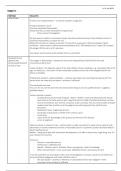
Negligence
SQE Spec Key points
Duty of care
If there is an established DoC – no need to consider 3-stage test
Proximity between C & D?
Was loss reasonably foreseeable?
Would it be fair, just and reasonable to impose DoC?
- Policy reasons? Floodgates?
No duty owed in relation to omissions except: statutory/contractual duty, D has sufficient control, D
assumed responsibility, D creates the risk
Where the omission is a failure to prevent 3rd party from causing harm (Chief Constable of West
Yorkshire) – there must be sufficient proximity between D & C OR between D & 3rd party OR D created
the danger OR the risk is on D's premises
You always need to ask yourself whether there is a precedent
Standard of care
(general and Two stages in determining – standard of care can be expected (Q of law) & all the facts and
professional) & breach circumstances (Q of fact)
of duty of care
Lower standard = the objective nature of the test (children, illness, disability), e.g. reasonable child of D's
age. For illness etc., only lower if D was reasonable unaware at the time of the alleged breach from
illness or disability.
Professional standard = objective (Bolam – ordinary reasonable man exercising that special skill. The
person does not need to be an expert = ordinary is sufficient)
The reasonable man test
Focus on the act, not the actor that sets SoC (trainee doing an act of a qualified lawyer = judged as
qualified lawyer)
Factors relevant to breach
- Usual/common practice (only if logical) - Bolam + Bolitho = body of professionals that would
have acted in the same way & it was a logical thing to do. Body of professionals does not have
to be a lot of doctors (can even be 11 doctors as per case law). The court will consider all expert
evidence and then it will be up to the judge to see what argument they will find more
persuasive
- likelihood of harm, magnitude of harm,
- practicality of precautions, benefit of D's conduct, sport
- social value
- 'state of the art' (knowledge of the practice at the time of the breach)
- errors of judgment
Failure to advise in relation to risks – doctor needs to make sure patient is aware of any material risks,
alternative or variant treatments (risk that a reasonable person in a patient's position would be likely to
attach significance to)
Medics – being up to date with mainstream developments, not able to know every single thing, esp. if it
was released very recently
Summary:
- General = reasonable person
- Professional = skilled/trained
- Special = children, sports, unskilled, illness, emergencies, state of knowledge
- Other relevant factors = cost, social value, likelihood of harm, seriousness of harm
C can be assisted by res ipsa loquitur if the cause of damage/loss is uknown, would not normally have
occurred without negligence and D had sufficient control
- Res ipsa loquitur = permits an inference or presumption that D was negligent = mere
occurrence of an accident is sufficient
, J.K.K. July 2023
Where D convicted of a criminal offence which involves negligent conduct C can seek to rely upon the
conviction and D will need to prove they were not negligent
Causation (single and
multiple) Factual causation – establishing a link between the breach and the damage
- But for D's breach of duty, they would not have suffered the loss at that time and in that way
- Cumulative causes in an industrial disease case? McGhee Did the act materially increase the
risk of the injury? (material increase = only applies when we're dealing with a singular cause
that might have tortious and non-tortious)
- Cumulative causes? How likely is that the injury would have occurred without D's breach?
Wilshire
Material increase in risk
- Material contribution to harm
- Mesothelioma exception (each employer can be pursued, they will be jointly and severally
liable)
- Materially increases risk of harm
Asbestos mesothelioma – joint and several liability (means can bring a claim against any employer and
receive 100% of the damages)
Asbestos lung cancer – C can claim from liable employers but the damages will be apportioned relating
to how long C worked for the employer
C must prove that the breach made greater than de minimis contribution to the risk
Multiple sufficient causes
- Consecutive causes of harm (original D will be liable)
- Equal/proportional causes of haem
- Non-tortious/unrelated subsequent harm (original D will not be liable)
Loss of chance if the lost chance is less than 50% on the BoP the court is unlikely to find for C.
- If Q relies solely on clinical negligence lost chance claim cannot form the basis of the claim
Legal causation – considering whether there are any grounds upon which the link should be regarded as
having been broken (NAI)
- Acts of God/natural events (exceptional natural event)
- Acts of third parties (highly unforeseeable)
- Acts of the claimant (highly unreasonable)
Medical treatment – higher bar for act of 3rd party – whether that act is so gross and egregious as to be
unforeseeable
Remoteness and loss
Was the damage suffered reasonable foreseeable? (the extent does not need to be foreseeable)
- Yes = not too remote (precise way damage occurred does not have to be reasonably
foreseeable AND the full extent of the damage not foreseeable – thin skull rule)
- No = ask 2nd Q
Was damage of the same type foreseeable? (Could be construed narrowly or broadly)
- Yes = not too remote
- No = not possible to recover
Once it has been established that the kind of damage is reasonably foreseeable, there is no need for it to
be reasonable for the Defendant to foresee the exact circumstances leading up to the damage.
SO: it does not matter that the extent of the damage is not foreseeable
Principles of remedies Special damages – quantifiable losses (Earing losses, medical expenses incurred up to the day of trial)
for personal injury and
death claims General damages – future financial losses which cannot be specifically proven at trial & non-quantifiable
losses (e.g. compensation for pain and suffering caused by a broken arm)
Negligence
SQE Spec Key points
Duty of care
If there is an established DoC – no need to consider 3-stage test
Proximity between C & D?
Was loss reasonably foreseeable?
Would it be fair, just and reasonable to impose DoC?
- Policy reasons? Floodgates?
No duty owed in relation to omissions except: statutory/contractual duty, D has sufficient control, D
assumed responsibility, D creates the risk
Where the omission is a failure to prevent 3rd party from causing harm (Chief Constable of West
Yorkshire) – there must be sufficient proximity between D & C OR between D & 3rd party OR D created
the danger OR the risk is on D's premises
You always need to ask yourself whether there is a precedent
Standard of care
(general and Two stages in determining – standard of care can be expected (Q of law) & all the facts and
professional) & breach circumstances (Q of fact)
of duty of care
Lower standard = the objective nature of the test (children, illness, disability), e.g. reasonable child of D's
age. For illness etc., only lower if D was reasonable unaware at the time of the alleged breach from
illness or disability.
Professional standard = objective (Bolam – ordinary reasonable man exercising that special skill. The
person does not need to be an expert = ordinary is sufficient)
The reasonable man test
Focus on the act, not the actor that sets SoC (trainee doing an act of a qualified lawyer = judged as
qualified lawyer)
Factors relevant to breach
- Usual/common practice (only if logical) - Bolam + Bolitho = body of professionals that would
have acted in the same way & it was a logical thing to do. Body of professionals does not have
to be a lot of doctors (can even be 11 doctors as per case law). The court will consider all expert
evidence and then it will be up to the judge to see what argument they will find more
persuasive
- likelihood of harm, magnitude of harm,
- practicality of precautions, benefit of D's conduct, sport
- social value
- 'state of the art' (knowledge of the practice at the time of the breach)
- errors of judgment
Failure to advise in relation to risks – doctor needs to make sure patient is aware of any material risks,
alternative or variant treatments (risk that a reasonable person in a patient's position would be likely to
attach significance to)
Medics – being up to date with mainstream developments, not able to know every single thing, esp. if it
was released very recently
Summary:
- General = reasonable person
- Professional = skilled/trained
- Special = children, sports, unskilled, illness, emergencies, state of knowledge
- Other relevant factors = cost, social value, likelihood of harm, seriousness of harm
C can be assisted by res ipsa loquitur if the cause of damage/loss is uknown, would not normally have
occurred without negligence and D had sufficient control
- Res ipsa loquitur = permits an inference or presumption that D was negligent = mere
occurrence of an accident is sufficient
, J.K.K. July 2023
Where D convicted of a criminal offence which involves negligent conduct C can seek to rely upon the
conviction and D will need to prove they were not negligent
Causation (single and
multiple) Factual causation – establishing a link between the breach and the damage
- But for D's breach of duty, they would not have suffered the loss at that time and in that way
- Cumulative causes in an industrial disease case? McGhee Did the act materially increase the
risk of the injury? (material increase = only applies when we're dealing with a singular cause
that might have tortious and non-tortious)
- Cumulative causes? How likely is that the injury would have occurred without D's breach?
Wilshire
Material increase in risk
- Material contribution to harm
- Mesothelioma exception (each employer can be pursued, they will be jointly and severally
liable)
- Materially increases risk of harm
Asbestos mesothelioma – joint and several liability (means can bring a claim against any employer and
receive 100% of the damages)
Asbestos lung cancer – C can claim from liable employers but the damages will be apportioned relating
to how long C worked for the employer
C must prove that the breach made greater than de minimis contribution to the risk
Multiple sufficient causes
- Consecutive causes of harm (original D will be liable)
- Equal/proportional causes of haem
- Non-tortious/unrelated subsequent harm (original D will not be liable)
Loss of chance if the lost chance is less than 50% on the BoP the court is unlikely to find for C.
- If Q relies solely on clinical negligence lost chance claim cannot form the basis of the claim
Legal causation – considering whether there are any grounds upon which the link should be regarded as
having been broken (NAI)
- Acts of God/natural events (exceptional natural event)
- Acts of third parties (highly unforeseeable)
- Acts of the claimant (highly unreasonable)
Medical treatment – higher bar for act of 3rd party – whether that act is so gross and egregious as to be
unforeseeable
Remoteness and loss
Was the damage suffered reasonable foreseeable? (the extent does not need to be foreseeable)
- Yes = not too remote (precise way damage occurred does not have to be reasonably
foreseeable AND the full extent of the damage not foreseeable – thin skull rule)
- No = ask 2nd Q
Was damage of the same type foreseeable? (Could be construed narrowly or broadly)
- Yes = not too remote
- No = not possible to recover
Once it has been established that the kind of damage is reasonably foreseeable, there is no need for it to
be reasonable for the Defendant to foresee the exact circumstances leading up to the damage.
SO: it does not matter that the extent of the damage is not foreseeable
Principles of remedies Special damages – quantifiable losses (Earing losses, medical expenses incurred up to the day of trial)
for personal injury and
death claims General damages – future financial losses which cannot be specifically proven at trial & non-quantifiable
losses (e.g. compensation for pain and suffering caused by a broken arm)