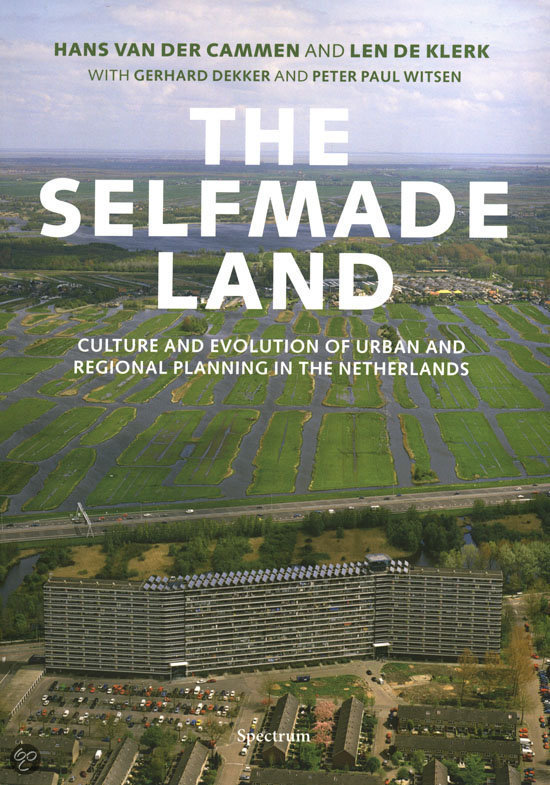
Urbanism and Planning (The Selfmade Land)
Content
Chapter 1 A Culture of Order 1.1 1.2 1.3 1.4
Chapter 2 The Nature of Planning 2.1 2.2 2.3
Chapter 3 The Golden Age 3.1 3.2 3.3 3.4 3.5
Chapter 4 The Industrial City 4.1 4.2 4.3 4.4 4.5 4.6 4.7 4.8
Chapter 5 A Modern Nation 5.1 5.2 5.3 5.4 5.5 5.6 5.7
Chapter 6 The Urban Crisis 6.1 6.2 6.3 6.4 6.5 6.6 6.7
Chapter 7 The Information Society 7.1 7.2 7.3 7.4 7.5 7.6 7.7
Chapter 8 Similar and yet Different 8.1 8.2 8.3
,1. A Culture of Order
Since the Middle Ages controlling, shaping and protecting land from the forces of nature has been the rule rather than the
exception.
Order is the existential condition of a civilisation which had to survive in the delta of 3 rivers: Rhine, Meuse and Scheldt.
Late Middle Ages Local authorities and agricultural communities started coordinating activities to expand cities
and to reclaim the next lake or the next part of the sea.
Water boards were the first manifestation of public authority. Local authorities could expropriate
land in order to construct infrastructure.
1.1 The Selfmade Land
3rd/4th Several settlements, mostly along the river Rhine.
The word water wolf expresses the national fear of water as the major enemy building mounds, dams, dykes.
After 1530 Urban growth resulted in increased demand for fuel large scale peat cutting numerous smaller
and greater lakes increasing threat of flooding for cities.
Order, symmetry and optimization have shaped the Dutch landscape.
Moral geography the struggle with the water wolf left the country with more than dry feet: it became a source of moral
inspiration throughout the ages, a fair body of lessons for life.
The traditional absence of a dominant medieval feudal or clerical governance meant that the services and amenities were
greatly lacking in Dutch cities. Poor relief was a sign of the well-regulated and caring society, wherein differences or conflicts
were settled by means of dialogue and toil instead of command and punishment.
1.2 The Culture of Deliberation
Social cohesiveness by continuous deliberation.
In the 17th century the Dutch Republic was characterized by its remarkably decentralised governance structure of 7
provinces and about 20 autonomous cities.
Provincial and local authorities had two interests in common:
● the struggle with the water wolf
● control and secure the international trade routes
The lack of a central power had one serious drawback: decision making was extremely slow.
The culture of deliberation relied on two basic assumptions:
● the willingness to take note of other viewpoints
● the priority given to the consensus and balance of different political interests
At the turn of the century the liberal utopia (the dream of harmonious togetherness and cohesion of independent and
responsible citizens who share equal rights) was replaced by 4 new political movements:
● social liberalism
,● Protestant
● Roman Catholic
● democratic socialism
1900 Politicians of the various parties laid out the path to a pillarised society. Each pillar (socialist, Protestant, Catholic)
organised its own unions, employer’s organisations, schools, housing associations, libraries, etc.
↓
This development is called “emancipation in a familiar setting”
After the establishment of general suffrage (1917) a new issue emerged: how to make decisions in a Parliament of
relatively small minorities? answer: a historical political compromise agreement that was built on 2 principles:
● pacification of contradictory interests between the pillars
● subsidiary decision-making (making decisions on the lowest possible level)
Since 1945 The era of post-war reconstruction introduced a new framework for social life the pillars slowly
loosened their grip. Internally: the combination of secularisation, growing prosperity, independence,
welfare and individualisation, shaped new context for social life. Externally: the state took over the
general emancipation goals from the pillars and subordinated their vital institutions in the domains of
health care and housing to stricter public rules.
1.3 The Culture of Planning
The permanent struggle to gain control over the physical environment, the carefully selfmade land and the history of
independent cities and regions resulted in a culture of permanent engagement with the physical environment.
The Netherlands offers “planning with a soft spot for culture”.
Characteristics of Dutch planning culture:
● serving the common good through deliberation and pragmatic measures
● promotion of physical safety and the production of landscape by technical measures
● the plan as an instrument to shape not just space, but also society and the economy
● an institutional status of plans and a high level of respect for the public institutions
● a strong position for local governments and heavy reliance on the subsidiary principle
Housing Act (1901) this obliged cities and fast-growing municipalities to draw up urban plans.
2008 New Spatial Planning Act (Wet ruimtelijke ordening)
The previous law was criticised for inflexibility, slow procedures and juridification of planning. The new act has
concurrently centralised and decentralised planning by an elaborate system of checks and balances, allowing for the
transition from hierarchical steering to network steering.
● municipalities gained more freedom in their planning practices
● provincial and national authorities got more opportunities to enforce their own plans
Each planning authority is now fully responsible for its own interests and has to frame its strategy into a
structure vision (structuurvisie) or spatial planning strategy.
, A structure vision is to be specified and laid down into a land use plan or zoning plan (bestemmingsplan).
When national or provincial interests are at stake, national or provincial authorities, by virtue of their statutory
mandate, may decide to enact an insertion plan (inpassingsplan), which has the same legal status as a local land
use plan.
The readjustment of an irrevocable land use plan is to be laid down in a project decision (projectbesluit).
General Act on the Environment (2010) different classic planning permissions have been integrated into a single
environmental permission (omgevingsvergunning).
Formal status of a land use plan includes:
● the policy section including descriptions and analysis of the character of the plan area
● map projecting future land use: the spatial allocation of functions and activities from separate parcels of land to large sites
● binding building codes, land use regulations and in some cases zoning codes.
The Dutch distinguish between plans and planning and between planning and urban and regional planning.
1.4 Outline of the Book
Urban expansion during the Golden Age was necessary because of the increasing trade, industrial production and population
growth.
Aesthetic design elements to increase the amenity and attraction of the town were a vital element of Dutch Renaissance
town planning.
Golden Age Late Middle Ages - 1700
Industrial Revolution 1870 – 1920
Modernism 1930 - 1970
Sociocratic planning 1970 – 1990
Global service economy 1990 – now
The Industrial Revolution was an urban revolution. Steam, railways and mass industry became the symbols of modernisation.
Regional railway networks replaced travel by water. Most cities transformed their fortifications into city parks, villa
quarters and boulevards.
Modernism heyday of economic, social, urban and regional planning. Two tragedies marked this age: the Great
Depression and the Second World War. Modernist planning was top-town comprehensive planning: technocratic,
bureaucratic and blueprint-like.
Era of Reconstruction (after WWII) it started with the decolonisation of Indonesia and the baby boom and ended with
the first oil crisis.
Sociocratic planning refers to the paradigm shift from technocratic planning to a democratic and transactive bottom-up
planning process.
Content
Chapter 1 A Culture of Order 1.1 1.2 1.3 1.4
Chapter 2 The Nature of Planning 2.1 2.2 2.3
Chapter 3 The Golden Age 3.1 3.2 3.3 3.4 3.5
Chapter 4 The Industrial City 4.1 4.2 4.3 4.4 4.5 4.6 4.7 4.8
Chapter 5 A Modern Nation 5.1 5.2 5.3 5.4 5.5 5.6 5.7
Chapter 6 The Urban Crisis 6.1 6.2 6.3 6.4 6.5 6.6 6.7
Chapter 7 The Information Society 7.1 7.2 7.3 7.4 7.5 7.6 7.7
Chapter 8 Similar and yet Different 8.1 8.2 8.3
,1. A Culture of Order
Since the Middle Ages controlling, shaping and protecting land from the forces of nature has been the rule rather than the
exception.
Order is the existential condition of a civilisation which had to survive in the delta of 3 rivers: Rhine, Meuse and Scheldt.
Late Middle Ages Local authorities and agricultural communities started coordinating activities to expand cities
and to reclaim the next lake or the next part of the sea.
Water boards were the first manifestation of public authority. Local authorities could expropriate
land in order to construct infrastructure.
1.1 The Selfmade Land
3rd/4th Several settlements, mostly along the river Rhine.
The word water wolf expresses the national fear of water as the major enemy building mounds, dams, dykes.
After 1530 Urban growth resulted in increased demand for fuel large scale peat cutting numerous smaller
and greater lakes increasing threat of flooding for cities.
Order, symmetry and optimization have shaped the Dutch landscape.
Moral geography the struggle with the water wolf left the country with more than dry feet: it became a source of moral
inspiration throughout the ages, a fair body of lessons for life.
The traditional absence of a dominant medieval feudal or clerical governance meant that the services and amenities were
greatly lacking in Dutch cities. Poor relief was a sign of the well-regulated and caring society, wherein differences or conflicts
were settled by means of dialogue and toil instead of command and punishment.
1.2 The Culture of Deliberation
Social cohesiveness by continuous deliberation.
In the 17th century the Dutch Republic was characterized by its remarkably decentralised governance structure of 7
provinces and about 20 autonomous cities.
Provincial and local authorities had two interests in common:
● the struggle with the water wolf
● control and secure the international trade routes
The lack of a central power had one serious drawback: decision making was extremely slow.
The culture of deliberation relied on two basic assumptions:
● the willingness to take note of other viewpoints
● the priority given to the consensus and balance of different political interests
At the turn of the century the liberal utopia (the dream of harmonious togetherness and cohesion of independent and
responsible citizens who share equal rights) was replaced by 4 new political movements:
● social liberalism
,● Protestant
● Roman Catholic
● democratic socialism
1900 Politicians of the various parties laid out the path to a pillarised society. Each pillar (socialist, Protestant, Catholic)
organised its own unions, employer’s organisations, schools, housing associations, libraries, etc.
↓
This development is called “emancipation in a familiar setting”
After the establishment of general suffrage (1917) a new issue emerged: how to make decisions in a Parliament of
relatively small minorities? answer: a historical political compromise agreement that was built on 2 principles:
● pacification of contradictory interests between the pillars
● subsidiary decision-making (making decisions on the lowest possible level)
Since 1945 The era of post-war reconstruction introduced a new framework for social life the pillars slowly
loosened their grip. Internally: the combination of secularisation, growing prosperity, independence,
welfare and individualisation, shaped new context for social life. Externally: the state took over the
general emancipation goals from the pillars and subordinated their vital institutions in the domains of
health care and housing to stricter public rules.
1.3 The Culture of Planning
The permanent struggle to gain control over the physical environment, the carefully selfmade land and the history of
independent cities and regions resulted in a culture of permanent engagement with the physical environment.
The Netherlands offers “planning with a soft spot for culture”.
Characteristics of Dutch planning culture:
● serving the common good through deliberation and pragmatic measures
● promotion of physical safety and the production of landscape by technical measures
● the plan as an instrument to shape not just space, but also society and the economy
● an institutional status of plans and a high level of respect for the public institutions
● a strong position for local governments and heavy reliance on the subsidiary principle
Housing Act (1901) this obliged cities and fast-growing municipalities to draw up urban plans.
2008 New Spatial Planning Act (Wet ruimtelijke ordening)
The previous law was criticised for inflexibility, slow procedures and juridification of planning. The new act has
concurrently centralised and decentralised planning by an elaborate system of checks and balances, allowing for the
transition from hierarchical steering to network steering.
● municipalities gained more freedom in their planning practices
● provincial and national authorities got more opportunities to enforce their own plans
Each planning authority is now fully responsible for its own interests and has to frame its strategy into a
structure vision (structuurvisie) or spatial planning strategy.
, A structure vision is to be specified and laid down into a land use plan or zoning plan (bestemmingsplan).
When national or provincial interests are at stake, national or provincial authorities, by virtue of their statutory
mandate, may decide to enact an insertion plan (inpassingsplan), which has the same legal status as a local land
use plan.
The readjustment of an irrevocable land use plan is to be laid down in a project decision (projectbesluit).
General Act on the Environment (2010) different classic planning permissions have been integrated into a single
environmental permission (omgevingsvergunning).
Formal status of a land use plan includes:
● the policy section including descriptions and analysis of the character of the plan area
● map projecting future land use: the spatial allocation of functions and activities from separate parcels of land to large sites
● binding building codes, land use regulations and in some cases zoning codes.
The Dutch distinguish between plans and planning and between planning and urban and regional planning.
1.4 Outline of the Book
Urban expansion during the Golden Age was necessary because of the increasing trade, industrial production and population
growth.
Aesthetic design elements to increase the amenity and attraction of the town were a vital element of Dutch Renaissance
town planning.
Golden Age Late Middle Ages - 1700
Industrial Revolution 1870 – 1920
Modernism 1930 - 1970
Sociocratic planning 1970 – 1990
Global service economy 1990 – now
The Industrial Revolution was an urban revolution. Steam, railways and mass industry became the symbols of modernisation.
Regional railway networks replaced travel by water. Most cities transformed their fortifications into city parks, villa
quarters and boulevards.
Modernism heyday of economic, social, urban and regional planning. Two tragedies marked this age: the Great
Depression and the Second World War. Modernist planning was top-town comprehensive planning: technocratic,
bureaucratic and blueprint-like.
Era of Reconstruction (after WWII) it started with the decolonisation of Indonesia and the baby boom and ended with
the first oil crisis.
Sociocratic planning refers to the paradigm shift from technocratic planning to a democratic and transactive bottom-up
planning process.