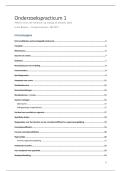
Content
Plato 1
Aristotle 2
Book of Nature 3
Kant & die Aufklärung (Enlightenment) 3
Hermeneutics 5
Schleiermacher 6
Dilthey 8
Nietzsche 9
Marx 11
Horxheimer 12
Plato
- rhetoric = kind of leading the soul by means of speech
- rhetoric isn’t shameful pursuit, isn’t enough for a speaker to master rhetorical tools
→ he must understand souls
- Socrates rejects the idea that goal of rhetoric is persuasion alone
- it is necessary to possess knowledge of a subject intended to tackle
- object of speaking is to persuade
- rejects the idea that the rhetoric should be primarily concerned with persuasion
alone
- skilled rhetorician has the ability to make the same thing appear at one time just &
at another time unjust
- rhetorical tools are indispensable for speaking and writing well
- each part should fit with each other part and the whole
- first, make a systematic division and grasp a particular character of each of these
two kinds of thing
How to structure speech/ argument for Plato
1. Preamble with which the speech must begin
2. statement of facts and evidence of witnesses concerning it
3. indirect evidence
4. claim to plausibility
5. (Confirmation)
1. Consider if an object is complex or simple
2. Investigate its power / virtue of its nature
3. Enumerate relations and forms / classify
4. Coordinate
,⇒ we don’t want to follow a long rough part when there is a short
Aristotle
- critique on Plato ⇒ dialectic/uses dialogues
- natural philosophy (study of physics = nature & philosophical universe)
Metaphysics
- ⇒ “das, was nach der Physik kommt”
- ⇒ befasst sich mit dem „Sein als Sein“ (study it regarding to its elements/living
beings/…)
- mistranslation (something that goes above “meta”)
- study of being qua being
- principle of non-contradiction
Principle of Non-contradiction:
- statement can not be true and false at the same time
- no one can doubt or deny the PNC
1. Ontological: impossible for the same attribute to belong & not belong to the same
thing and in the same relation
2. Doxastic (with regards to beliefs): “it is impossible for anyone to suppose that the
same thing is and is not.” “if it is impossible for contrary attributes to belong at the
same time to the same subject (the usual qualifications must be added to this
premiss also), and an opinion which contradicts another is contrary to it, then
clearly it is impossible for the same man to suppose at the same time that the same
thing is and is not”
3. Semantic: “Now it is impossible that "being man" should have the same meaning as
"not being man," that is, if "man" is not merely predicable of one subject but has one
meaning [...] except by equivocation”
Remark on 2: “what a man says does not necessarily represent what he believes”
- first principle: first basis from which a thing is known
PNC and language
- word has a meaning otherwise it is just a sound
- meaning means word has a definition
- that means excluding something
Opponents
● Presocratics
, ● Heraclitus: everything is in flux (alles ist im Fluss) (says that all things go and
nothing stays, and comparing existents to the flow of a river, he says you could not
step twice into the same river)
● Sophists (capacities are very limited for speaking about truth)
● Hauptvertreter: z.B. Protagoras: man is the measure of all things
● Language is convention
● Relativism
● Traditionen wurden kritisch beleuchtet und erschüttert, die Sprache untersucht, die
Redekunst (Rhetorik)
● Plato
● Not explicit enough?
Book of Nature
- Nature is a book that can be read to gain knowledge and understanding
- Nature as God's creation → god’s book
- you want to discover god
- divine page you must listen to/ observe
- it is the very appearance of things → you could look above, beyond, note and read
- reflects God and is open to everyone
- there was nature before scripture
- Scripture → can only be read by those who can read
- material bodies are like the book's characters
- there is no false or misinterpretation of the book of nature (Keine Ketzer)
- Jesus = word became flesh
- it needs a spiritual person to understand everything → spirit of god
- you are let to know God through images and created things
- When someone commits a sin this knowledge is lost, then you need a book of
cross (scripture) to get the knowledge back again → clearly recognizing god
Enlightenment
- religion of reason (authority) ≠ enlightenment
- religion of nature = Enlightenment
Kant & die Aufklärung (Enlightenment)
https://www.rosalux.de/fileadmin/rls_uploads/pdfs/159_kant.pdf
- Monarchy
- Frederick II (supporter of enlightened absolutism, stating that the ruler
should be the first servant of the state)
Plato 1
Aristotle 2
Book of Nature 3
Kant & die Aufklärung (Enlightenment) 3
Hermeneutics 5
Schleiermacher 6
Dilthey 8
Nietzsche 9
Marx 11
Horxheimer 12
Plato
- rhetoric = kind of leading the soul by means of speech
- rhetoric isn’t shameful pursuit, isn’t enough for a speaker to master rhetorical tools
→ he must understand souls
- Socrates rejects the idea that goal of rhetoric is persuasion alone
- it is necessary to possess knowledge of a subject intended to tackle
- object of speaking is to persuade
- rejects the idea that the rhetoric should be primarily concerned with persuasion
alone
- skilled rhetorician has the ability to make the same thing appear at one time just &
at another time unjust
- rhetorical tools are indispensable for speaking and writing well
- each part should fit with each other part and the whole
- first, make a systematic division and grasp a particular character of each of these
two kinds of thing
How to structure speech/ argument for Plato
1. Preamble with which the speech must begin
2. statement of facts and evidence of witnesses concerning it
3. indirect evidence
4. claim to plausibility
5. (Confirmation)
1. Consider if an object is complex or simple
2. Investigate its power / virtue of its nature
3. Enumerate relations and forms / classify
4. Coordinate
,⇒ we don’t want to follow a long rough part when there is a short
Aristotle
- critique on Plato ⇒ dialectic/uses dialogues
- natural philosophy (study of physics = nature & philosophical universe)
Metaphysics
- ⇒ “das, was nach der Physik kommt”
- ⇒ befasst sich mit dem „Sein als Sein“ (study it regarding to its elements/living
beings/…)
- mistranslation (something that goes above “meta”)
- study of being qua being
- principle of non-contradiction
Principle of Non-contradiction:
- statement can not be true and false at the same time
- no one can doubt or deny the PNC
1. Ontological: impossible for the same attribute to belong & not belong to the same
thing and in the same relation
2. Doxastic (with regards to beliefs): “it is impossible for anyone to suppose that the
same thing is and is not.” “if it is impossible for contrary attributes to belong at the
same time to the same subject (the usual qualifications must be added to this
premiss also), and an opinion which contradicts another is contrary to it, then
clearly it is impossible for the same man to suppose at the same time that the same
thing is and is not”
3. Semantic: “Now it is impossible that "being man" should have the same meaning as
"not being man," that is, if "man" is not merely predicable of one subject but has one
meaning [...] except by equivocation”
Remark on 2: “what a man says does not necessarily represent what he believes”
- first principle: first basis from which a thing is known
PNC and language
- word has a meaning otherwise it is just a sound
- meaning means word has a definition
- that means excluding something
Opponents
● Presocratics
, ● Heraclitus: everything is in flux (alles ist im Fluss) (says that all things go and
nothing stays, and comparing existents to the flow of a river, he says you could not
step twice into the same river)
● Sophists (capacities are very limited for speaking about truth)
● Hauptvertreter: z.B. Protagoras: man is the measure of all things
● Language is convention
● Relativism
● Traditionen wurden kritisch beleuchtet und erschüttert, die Sprache untersucht, die
Redekunst (Rhetorik)
● Plato
● Not explicit enough?
Book of Nature
- Nature is a book that can be read to gain knowledge and understanding
- Nature as God's creation → god’s book
- you want to discover god
- divine page you must listen to/ observe
- it is the very appearance of things → you could look above, beyond, note and read
- reflects God and is open to everyone
- there was nature before scripture
- Scripture → can only be read by those who can read
- material bodies are like the book's characters
- there is no false or misinterpretation of the book of nature (Keine Ketzer)
- Jesus = word became flesh
- it needs a spiritual person to understand everything → spirit of god
- you are let to know God through images and created things
- When someone commits a sin this knowledge is lost, then you need a book of
cross (scripture) to get the knowledge back again → clearly recognizing god
Enlightenment
- religion of reason (authority) ≠ enlightenment
- religion of nature = Enlightenment
Kant & die Aufklärung (Enlightenment)
https://www.rosalux.de/fileadmin/rls_uploads/pdfs/159_kant.pdf
- Monarchy
- Frederick II (supporter of enlightened absolutism, stating that the ruler
should be the first servant of the state)