1. FOUNDATIONS OF ES&S
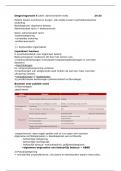
1. ENVIRONMENTAL VALUE SYSTEM (EVS)
• Environment: external surroundings that acts on a plant or an animal, and affect its survival.
• Society: is a group of individuals who share some common characteristics such as geographic location,
cultural background, historical frame, religious perspective or value system.
• System: separate parts that are linked together and affect each other.
• Environmental value system: is a set of examples that defines the way individuals or societies perceive
and evaluate environmental issues.
- Influenced by the cultural, economic, and sociopolitical context
• The EVS of an individual or society can be considered as a system because it has inputs and outputs:
- Inputs: education, experience, media influences, religious doctrines, friends and family
- Outputs: actions and decisions you make based on the inputs.
• Types of EVS
® Ecocentric:
- Nature centered: holistic view of the world
- Distrust modern technology
- “We are under nature control of the earth, not controlling it”
- Resources are limited
- “We must work with the earth, not against it”
- Nature has more value than humanity
® Technocentrism:
- Planetary management
- Technology centred
- They believe that we can control nature
- Human and technology will always be able to solve any problems
® Anthropocentric:
- Human- centred
- Believes humans must sustainibly manage the global system, this could be by the uses of taxes,
environmental regulation and legislation
- Humans are not dependent on nature but nature is there to benefit humans.
- Tend to include both viewpoints in their value systems
1
,• Subtypes of EVS:
® Cornucopians:
- View the world as a place with infinite resources to benefit humans
- Through technology we can solve any environmental problem and improve our living standards.
- Growth will provide the answers to improve, nothing should stand in the way of this.
® Environmental managers:
- See the earth as a garden that needs supervision.
- They have an ethical duty to protect the Earth.
- They know that there are problems and we need governments to legislate to protect the
environment and sources from overexploitation and make sustainable economies.
- They believe that if we look after the planet, it will look after us.
® Self reliant (soft ecologist):
- They accept the need of the environment
- They think that there should be personal and communal involvement in all decisions.
® Deep ecologists:
- Value nature over humanity.
- They believe in biorights: universal rights where all species and ecosystems have an incoherent
value and humans have no right to interfere with this.
- They would like policies to be altered so we can reduce our impact on the environment, this
includes a decrease in the human population and consuming less.
2
,2. SYSTEMS AND MODELS
• System: is a set of interrelated parts working together to make a complex whole. A system can be living
or non-living, and they can be on any scale, long or large.
• Biomes: groups of ecosystems with similar climates
• Model: simplified version of reality and can be used to understand how a system works and predict
how it will respond to change.
TRANSFERS AND TRANSFORMATIONS
• Transfers: when material and energy pass through ecosystems and their movement involves only a
change in location.
- when an animal eats another (transfer matter through the food chain)
- wind (transfer heat energy from one part of the world to another)
- water flows (transfer matter from a river to a sea)
• Transformation: when a flow involves a change in form or state
- matter to matter: decomposition of a living being into inorganic matter
- energy to energy: light energy to electrical energy in the solar panel
- energy to matter: light energy converted producing molecules of glucose in the photosynthesis
- matter to energy (burning coal to produce heat and light)
FLOWS AND STORAGES IN A SYSTEM
• All systems have:
- storages of matter and energy, represented by a box
- flows into, through and out the system represented by arrows
o inputs, represented by arrows in
o outputs, represented by arrows out
- boundaries, represented by lines
- processes which transfer or transform energy or matter from storage to storage
® The size of the boxes and arrows may represent the size or magnitude of the storage or flow.
3
, TYPES OF SYSTEMS
• Open systems:
- Exchange energy and matter with the environment.
- All ecosystems are opened systems.
• Closed systems:
- Exchanges energy, but not matter with its environment.
- Extremely rare in nature.
- Most examples of closed systems are artificial and for experiments as they usually don’t survive for
long as the system becomes unbalanced.
• Isolated system:
- Does not exchange either matter or energy with the environment.
- They don’t exist naturally, people may think of the entire universe as an isolated system.
THE SCALE OF A SYSTEM
• The scale of a system can range from a tree to the earth. The size doesn’t matter, all systems have
inputs and outputs.
• Emergent properties: features of a system that can not be present in the individual component parts.
MODEL OF SYSTEMS
• Model: simplified representation of reality.
• We use models to help us understand how systems work and to predict how systems respond to changes.
• Systems work in predictable ways.
• Scientists use models to show the flows, storages and link within an ecosystem.
• Models are able to compare and contrast different ecosystems.
• Advantages:
- easier to work with than the complex reality
- can be used to predict the effect of a change of input, calculating likely outcomes
- can be used to visualize really small things and really large things
• Disadvantages:
- accuracy is lost because the model is simplified
- if our assumptions are wrong, the model will be wrong
- models and predictions depend on the skills and experience of the people making them
- models may be interpreted differently by different scientists
- data may not be accurate and models can be manipulated for financial or political gain
4
1. ENVIRONMENTAL VALUE SYSTEM (EVS)
• Environment: external surroundings that acts on a plant or an animal, and affect its survival.
• Society: is a group of individuals who share some common characteristics such as geographic location,
cultural background, historical frame, religious perspective or value system.
• System: separate parts that are linked together and affect each other.
• Environmental value system: is a set of examples that defines the way individuals or societies perceive
and evaluate environmental issues.
- Influenced by the cultural, economic, and sociopolitical context
• The EVS of an individual or society can be considered as a system because it has inputs and outputs:
- Inputs: education, experience, media influences, religious doctrines, friends and family
- Outputs: actions and decisions you make based on the inputs.
• Types of EVS
® Ecocentric:
- Nature centered: holistic view of the world
- Distrust modern technology
- “We are under nature control of the earth, not controlling it”
- Resources are limited
- “We must work with the earth, not against it”
- Nature has more value than humanity
® Technocentrism:
- Planetary management
- Technology centred
- They believe that we can control nature
- Human and technology will always be able to solve any problems
® Anthropocentric:
- Human- centred
- Believes humans must sustainibly manage the global system, this could be by the uses of taxes,
environmental regulation and legislation
- Humans are not dependent on nature but nature is there to benefit humans.
- Tend to include both viewpoints in their value systems
1
,• Subtypes of EVS:
® Cornucopians:
- View the world as a place with infinite resources to benefit humans
- Through technology we can solve any environmental problem and improve our living standards.
- Growth will provide the answers to improve, nothing should stand in the way of this.
® Environmental managers:
- See the earth as a garden that needs supervision.
- They have an ethical duty to protect the Earth.
- They know that there are problems and we need governments to legislate to protect the
environment and sources from overexploitation and make sustainable economies.
- They believe that if we look after the planet, it will look after us.
® Self reliant (soft ecologist):
- They accept the need of the environment
- They think that there should be personal and communal involvement in all decisions.
® Deep ecologists:
- Value nature over humanity.
- They believe in biorights: universal rights where all species and ecosystems have an incoherent
value and humans have no right to interfere with this.
- They would like policies to be altered so we can reduce our impact on the environment, this
includes a decrease in the human population and consuming less.
2
,2. SYSTEMS AND MODELS
• System: is a set of interrelated parts working together to make a complex whole. A system can be living
or non-living, and they can be on any scale, long or large.
• Biomes: groups of ecosystems with similar climates
• Model: simplified version of reality and can be used to understand how a system works and predict
how it will respond to change.
TRANSFERS AND TRANSFORMATIONS
• Transfers: when material and energy pass through ecosystems and their movement involves only a
change in location.
- when an animal eats another (transfer matter through the food chain)
- wind (transfer heat energy from one part of the world to another)
- water flows (transfer matter from a river to a sea)
• Transformation: when a flow involves a change in form or state
- matter to matter: decomposition of a living being into inorganic matter
- energy to energy: light energy to electrical energy in the solar panel
- energy to matter: light energy converted producing molecules of glucose in the photosynthesis
- matter to energy (burning coal to produce heat and light)
FLOWS AND STORAGES IN A SYSTEM
• All systems have:
- storages of matter and energy, represented by a box
- flows into, through and out the system represented by arrows
o inputs, represented by arrows in
o outputs, represented by arrows out
- boundaries, represented by lines
- processes which transfer or transform energy or matter from storage to storage
® The size of the boxes and arrows may represent the size or magnitude of the storage or flow.
3
, TYPES OF SYSTEMS
• Open systems:
- Exchange energy and matter with the environment.
- All ecosystems are opened systems.
• Closed systems:
- Exchanges energy, but not matter with its environment.
- Extremely rare in nature.
- Most examples of closed systems are artificial and for experiments as they usually don’t survive for
long as the system becomes unbalanced.
• Isolated system:
- Does not exchange either matter or energy with the environment.
- They don’t exist naturally, people may think of the entire universe as an isolated system.
THE SCALE OF A SYSTEM
• The scale of a system can range from a tree to the earth. The size doesn’t matter, all systems have
inputs and outputs.
• Emergent properties: features of a system that can not be present in the individual component parts.
MODEL OF SYSTEMS
• Model: simplified representation of reality.
• We use models to help us understand how systems work and to predict how systems respond to changes.
• Systems work in predictable ways.
• Scientists use models to show the flows, storages and link within an ecosystem.
• Models are able to compare and contrast different ecosystems.
• Advantages:
- easier to work with than the complex reality
- can be used to predict the effect of a change of input, calculating likely outcomes
- can be used to visualize really small things and really large things
• Disadvantages:
- accuracy is lost because the model is simplified
- if our assumptions are wrong, the model will be wrong
- models and predictions depend on the skills and experience of the people making them
- models may be interpreted differently by different scientists
- data may not be accurate and models can be manipulated for financial or political gain
4