iCHEMISTRY
13/10/22
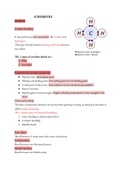
Covalent bonding:
Is formed between two nonmetals ; like carbon and
hydrogen.
This type of bond involves sharing electrons between
two atoms.
The 2 types of covalent bonds are :
1. Polar
2. non-polar
Properties of a covalent compound:
● Physical state- solid, liquid, gases
● Melting and boiling point- low melting point & low boiling point
● Conduction of electricity- bad conductor of electricity( except graphite)
● Rate of reaction-
● Bond length & bond strength- length is directly proportional to the strength of the
bond
Chemical bonding:
The force of attraction between two atoms either gaining or losing, or sharing of electrons is
called chemical bonding.
The 3 main types of chemical bonding:
● Ionic bonding or electrovalent bond
● Covalent bonding
● Metallic bond
Ionic Bond
Bond between A metal atom and a non- metal atom.
Covalent bond
Bond between two Nonmetal atoms.
Metallic bonding
Bond between two Metal atoms.
, Metallic Bonding:
● Metal atoms are held together by
metallic bonds
● Pure metals with regular
arrangement
● Electrons in the outermost shell
delocalized electrons.
● Metal ions in a sea of electrons
● Strong force of attraction
● This makes metals good thermal and electrical conductors
● Layers can slide over each other - bent and shapes
● High melting & boiling point.
Covalent Bonding:
● Sharing of electrons to be stable (-ve electrons attract the +ve nucleus in
atom.)
● Non metal and Nonmetal
● Forms Diatoms H2, F2
● Covalent bonds are very strong
● Full outer shell, helps molecule to be stable
Electronegativity- tendency of atom to attract a bonding pair of electrons
➔ Non polar covalent bond - strong electrostatic attraction between 2 nuclei and
shared pair of electrons between them.
➔
13/10/22
Covalent bonding:
Is formed between two nonmetals ; like carbon and
hydrogen.
This type of bond involves sharing electrons between
two atoms.
The 2 types of covalent bonds are :
1. Polar
2. non-polar
Properties of a covalent compound:
● Physical state- solid, liquid, gases
● Melting and boiling point- low melting point & low boiling point
● Conduction of electricity- bad conductor of electricity( except graphite)
● Rate of reaction-
● Bond length & bond strength- length is directly proportional to the strength of the
bond
Chemical bonding:
The force of attraction between two atoms either gaining or losing, or sharing of electrons is
called chemical bonding.
The 3 main types of chemical bonding:
● Ionic bonding or electrovalent bond
● Covalent bonding
● Metallic bond
Ionic Bond
Bond between A metal atom and a non- metal atom.
Covalent bond
Bond between two Nonmetal atoms.
Metallic bonding
Bond between two Metal atoms.
, Metallic Bonding:
● Metal atoms are held together by
metallic bonds
● Pure metals with regular
arrangement
● Electrons in the outermost shell
delocalized electrons.
● Metal ions in a sea of electrons
● Strong force of attraction
● This makes metals good thermal and electrical conductors
● Layers can slide over each other - bent and shapes
● High melting & boiling point.
Covalent Bonding:
● Sharing of electrons to be stable (-ve electrons attract the +ve nucleus in
atom.)
● Non metal and Nonmetal
● Forms Diatoms H2, F2
● Covalent bonds are very strong
● Full outer shell, helps molecule to be stable
Electronegativity- tendency of atom to attract a bonding pair of electrons
➔ Non polar covalent bond - strong electrostatic attraction between 2 nuclei and
shared pair of electrons between them.
➔