DNA: RNA is synthesized
Template strand – read at 3’ to 5’ from 5’ to 3’ end
Coding strand – same sequence as
RNA produces with U in place of T
Biosynthesis of
Requires ATP, GTP, RNA from DNA
CTP, UTP and Mg2+ DNA in form of chromosomes
(more compact) & presence of
histones --- more complicated
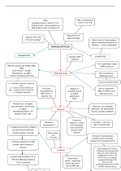
TRANSCRIPTION
PROKARYOTES
Catalyzes RNA EUKARYOTES
synthesis
Pol I: synthesizes major
RNA Pol: synthesizes mRNA, rRNA, rRNA precursors
tRNA
Core enzyme – α2ωββ’
Holoenzyme – α2ωββ’σ RNA Polymerase Pol II: synthesizes
σ subunit recognizes promoter mRNA precursors
Most extensively studied
α – assembles enzyme, recognizes
GTFs
ω – restores denatured RNA pol First base Region of Pol III: synthesizes
ββ’ – combine to form active site
incorporated to template strand tRNA, 5S rRNA, small
σ – recognizes promoter
RNA chain: +1 to which RNA precursors
position, TSS polymerase
binds
Pribnow box: -10 region
Core promoter: -35 element TATA box: -25; TATAAAA
or region Promoter GAAT box: -80; GGCCAATCT
Extended promoter: UP GC box: variable; GGGCGG
element (-40 to -60)
Consensus
Upstream: - sequence - shows Promoter – rich in AT
Downstream: + the nucleotides with 2 H-bonds only
σ recognizes promoter; bridging most commonly
core promoter to RNA pol; found at each
closed complex is formed Most studied position
and Formation of preinitiation
controlled
complex, which normally
σ initiates separation of DNA contains Pol II and general TFs
strands; open complex is
formed
TFIID recognizes TATA box;
Initiation TFIIA binds and interacts with
DNA and TFIID; TFIIB binds
bridging BP and Pol II; TIIF
β and β' bind to ssDNA; ATP or binds to Pol II to suppress
Transcription
GTP (first RNA base) binds to nonspecific binding; TFIIE
factor – regulating
TSS (+1 position) interacts with
protein but not a unphosphorylated Pol II; TFIIH
part of RNA pol exhibits helicase activity
Template strand – read at 3’ to 5’ from 5’ to 3’ end
Coding strand – same sequence as
RNA produces with U in place of T
Biosynthesis of
Requires ATP, GTP, RNA from DNA
CTP, UTP and Mg2+ DNA in form of chromosomes
(more compact) & presence of
histones --- more complicated
TRANSCRIPTION
PROKARYOTES
Catalyzes RNA EUKARYOTES
synthesis
Pol I: synthesizes major
RNA Pol: synthesizes mRNA, rRNA, rRNA precursors
tRNA
Core enzyme – α2ωββ’
Holoenzyme – α2ωββ’σ RNA Polymerase Pol II: synthesizes
σ subunit recognizes promoter mRNA precursors
Most extensively studied
α – assembles enzyme, recognizes
GTFs
ω – restores denatured RNA pol First base Region of Pol III: synthesizes
ββ’ – combine to form active site
incorporated to template strand tRNA, 5S rRNA, small
σ – recognizes promoter
RNA chain: +1 to which RNA precursors
position, TSS polymerase
binds
Pribnow box: -10 region
Core promoter: -35 element TATA box: -25; TATAAAA
or region Promoter GAAT box: -80; GGCCAATCT
Extended promoter: UP GC box: variable; GGGCGG
element (-40 to -60)
Consensus
Upstream: - sequence - shows Promoter – rich in AT
Downstream: + the nucleotides with 2 H-bonds only
σ recognizes promoter; bridging most commonly
core promoter to RNA pol; found at each
closed complex is formed Most studied position
and Formation of preinitiation
controlled
complex, which normally
σ initiates separation of DNA contains Pol II and general TFs
strands; open complex is
formed
TFIID recognizes TATA box;
Initiation TFIIA binds and interacts with
DNA and TFIID; TFIIB binds
bridging BP and Pol II; TIIF
β and β' bind to ssDNA; ATP or binds to Pol II to suppress
Transcription
GTP (first RNA base) binds to nonspecific binding; TFIIE
factor – regulating
TSS (+1 position) interacts with
protein but not a unphosphorylated Pol II; TFIIH
part of RNA pol exhibits helicase activity