. . . . . . . . . . . . . . . . . . . . . . . . . . . . . . . . . . . . . . . . . . . . . . . . .
*Information included in laboratory test may vary . Variable decelerations—Are noted as
slightly according to methods used V-shaped on the monitoring strip. Variable
. LDH: 100–190 U/L decelerations can occur anytime during
monitoring of the fetus. They are caused by
. CPK: 21–232 U/L cord compression. The intervention is to
. Uric acid: 3.5–7.5 mg/dL change the mother’s position; if pitocin is
. Triglyceride: 40–50 mg/dL infusing, stop the infusion; apply oxygen; and
increase the rate of IV fluids. Contact the
. Total cholesterol: 130–200 mg/dL
doctor if the problem persists.
. Bilirubin: < 1.0 mg/dL
. Late decelerations—Occur after the peak of
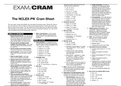
The NCLEX-PN Cram Sheet
®
. Protein: 6.2–8.1 g/dL the contraction and mirror the contraction in
. Albumin: 3.4–5.0 g/dL length and intensity. These are caused by
. . . . . . . . . . . . . . . . . . . . . . . . . . . . . . . . . . . . . . . . . . . . . . uteroplacental insuffiency. The intervention is
16. Therapeutic drug levels
to change the mother’s position; if pitocin is
. Digoxin: 0.5–2.0 ng/ml infusing, stop the infusion; apply oxygen;,
This cram sheet contains the distilled, key facts about the licensure exam. Review this informa-
. Lithium: 0.8–1.5 mEq/L and increase the rate of IV fluids. Contact the
tion just before you enter the testing center, paying special attention to those areas where you
doctor if the problem persists.
feel you need the most review. You can transfer any of these facts from your head onto a blank . Dilantin: 10–20 mcg/dL
sheet provided by the testing center. We also recommend reading the glossary as a last-minute 21. TORCHS syndrome in the neonate—This is
. Theophylline: 10–20 mcg/dL
cram tool before entering the testing center. Good luck. a combination of diseases. These include
17. Vital signs (adult) toxoplasmosis, rubella (German measles),
. Heart rate: 80–100 cytomegalovirus, herpes, and syphyllis. Pregnant
GENERAL TEST INFORMATION 11. Make an educated guess—If you are unsure nurses should not be assigned to care for the
after carefully reading the question and all the . Respiratory rate: 12–20
client with toxoplasmosis or cytomegalovirus.
1. Minimum 85/maximum 205—The maximum time answers, choose C or the answer with the most . Blood pressure: 110–120 (systolic);
allotted for the test is 5 hours. Don’t get frustrated 22. STOP—This is the treatment for maternal
information. 60–90 (diastolic)
if you need to take the entire number of items or hypotension after an epidural anesthesia:
. Temperature: 98.6° ?/–1
take the entire allotted time. Get up and move NORMAL LAB VALUES 1. Stop pitocin if infusing.
around and take breaks if you need a time-out. 18. Maternity normals
2. Turn the client on the left side.
12. Serum electrolytes—It is important for you to . FHR: 120–160 BPM.
2. Take deep breaths and imagine yourself 3. Administer oxygen.
remember these normal lab values because they
studying in your favorite location—Take a small . Variability: 6–10 BPM.
might be included in questions throughout the test. 4. If hypovolemia is present, push IV fluids.
item with you that you have had with you during
. Sodium: 135–145 mEq/L . Contractions: normal frequency 2–5 minutes
your study time. 23. Anticoagulant therapy and monitoring
apart; normal duration < 90 sec.; intensity
3. Read the question and all answers carefully— . Potassium: 3.5–5.5 mEq/L < 100 mm/hg. . Coumadin (sodium warfarin) PT: 10–12 sec.
Don’t jump to conclusions or make wild guesses. . Calcium: 8.5–10.9 mg/L (control).
. Amniotic fluid: 500–1200 ml (nitrozine
4. Look for keywords—Avoid answers that include . Chloride: 95–105 mEq/L urine-litmus paper green/amniotic fluid- . Antidote: The antidote for Coumadin is
always, never, all, every, only, must, no, except, litmus paper blue). vitamin K.
. Magnesium: 1.5–2.5 mEq/L
or none. . Heparin/Lovenox/Dalteparin PTT: 30–45 sec.
. Phosphorus: 2.5–4.5 mg/dL . Apgar scoring: A = appearance, P = pulses,
5. Watch for specific details—Avoid vague G = grimace, A = activity, R = reflexes (control).
answers. Look for adjectives and adverbs. 13. Hematology values (Done at 1 and 5 minutes with a score of . Antidote: The antidote for Heparin is
6. Eliminate answers that are clearly wrong or . RBC: 4.5–5.0 million 0 for absent, 1 for decreased, and 2 for protamine sulfate.
incorrect—Eliminating any incorrect answer . WBC: 5,000–10,000 strongly positive.)
. Therapeutic level: It is important to maintain
increases the probability of selecting the correct . AVA: The umbilical cord has two arteries and a bleeding time that is slightly prolonged so
. Plt.: 200,000–400,000
answer by 25%. one vein (Arteries carry deoxygenated blood. that clotting will not occur; therefore, the
. Hgb: 12–16 gms women; 14–18 gms men The vein carries oxygenated blood.)
7. Look for information given within the question bleeding time with mediication should be
and the answers—For example, the phrase 14. ABG values 19. FAB 9—Folic acid = B9. Hint: B stands for brain 1 1/2–2 times the control.
“client with diabetic ketoacidosis” should bring to . HCO3: 24–26 mEq/L (decreases the incidence of neural tube defects); *The control is the premedication bleeding time.
mind the range of 7.35–7.45 or normal pH. . CO2: 35–45 mEq/L the client should begin taking B9 three months
8. Look for the same or similar wording in the prior to becoming pregnant.
. PaO2: 80%–100% 24. Rule of nines for calculating TBSA for burns
question and the answers. 20. Abnormalities in the laboring obstetric client—
. SaO2: > 95% . Head = 9%
9. Watch for grammatical inconsistencies— Decelerations are abnormal findings on the fetal
Subjects and verbs should agree, meaning singular 15. Chemistry values monitoring strip. Decelerations are classified as . Arms = 18% (9% each)
subject, singular verb or plural subject, plural verb. . Glucose: 70–110 mg/dL . Early decelerations—Begin prior to the . Back = 18%
If the question is an incomplete sentence, the . Specific gravity: 1.010–1.030 peak of the contraction and end by the end . Legs = 36% (18% each)
correct answer should complete the question in a of the contraction. They are caused by head
grammatically correct manner. . BUN: 7–22 mg/dL . Genitalia = 1%
compression. There is no need for interven-
10. Don’t read into questions—Reading into the . Serum creatinine: 0.6–1.35 mg/dL tion if the variability is within normal range
question can create errors in judgment. If the (< 2 in older adults) (that is, there is a rapid return to the baseline
question asks for an immediate response or fetal heart rate) and the fetal heart rate is
*Information included in laboratory test may vary . Variable decelerations—Are noted as
slightly according to methods used V-shaped on the monitoring strip. Variable
. LDH: 100–190 U/L decelerations can occur anytime during
monitoring of the fetus. They are caused by
. CPK: 21–232 U/L cord compression. The intervention is to
. Uric acid: 3.5–7.5 mg/dL change the mother’s position; if pitocin is
. Triglyceride: 40–50 mg/dL infusing, stop the infusion; apply oxygen; and
increase the rate of IV fluids. Contact the
. Total cholesterol: 130–200 mg/dL
doctor if the problem persists.
. Bilirubin: < 1.0 mg/dL
. Late decelerations—Occur after the peak of
The NCLEX-PN Cram Sheet
®
. Protein: 6.2–8.1 g/dL the contraction and mirror the contraction in
. Albumin: 3.4–5.0 g/dL length and intensity. These are caused by
. . . . . . . . . . . . . . . . . . . . . . . . . . . . . . . . . . . . . . . . . . . . . . uteroplacental insuffiency. The intervention is
16. Therapeutic drug levels
to change the mother’s position; if pitocin is
. Digoxin: 0.5–2.0 ng/ml infusing, stop the infusion; apply oxygen;,
This cram sheet contains the distilled, key facts about the licensure exam. Review this informa-
. Lithium: 0.8–1.5 mEq/L and increase the rate of IV fluids. Contact the
tion just before you enter the testing center, paying special attention to those areas where you
doctor if the problem persists.
feel you need the most review. You can transfer any of these facts from your head onto a blank . Dilantin: 10–20 mcg/dL
sheet provided by the testing center. We also recommend reading the glossary as a last-minute 21. TORCHS syndrome in the neonate—This is
. Theophylline: 10–20 mcg/dL
cram tool before entering the testing center. Good luck. a combination of diseases. These include
17. Vital signs (adult) toxoplasmosis, rubella (German measles),
. Heart rate: 80–100 cytomegalovirus, herpes, and syphyllis. Pregnant
GENERAL TEST INFORMATION 11. Make an educated guess—If you are unsure nurses should not be assigned to care for the
after carefully reading the question and all the . Respiratory rate: 12–20
client with toxoplasmosis or cytomegalovirus.
1. Minimum 85/maximum 205—The maximum time answers, choose C or the answer with the most . Blood pressure: 110–120 (systolic);
allotted for the test is 5 hours. Don’t get frustrated 22. STOP—This is the treatment for maternal
information. 60–90 (diastolic)
if you need to take the entire number of items or hypotension after an epidural anesthesia:
. Temperature: 98.6° ?/–1
take the entire allotted time. Get up and move NORMAL LAB VALUES 1. Stop pitocin if infusing.
around and take breaks if you need a time-out. 18. Maternity normals
2. Turn the client on the left side.
12. Serum electrolytes—It is important for you to . FHR: 120–160 BPM.
2. Take deep breaths and imagine yourself 3. Administer oxygen.
remember these normal lab values because they
studying in your favorite location—Take a small . Variability: 6–10 BPM.
might be included in questions throughout the test. 4. If hypovolemia is present, push IV fluids.
item with you that you have had with you during
. Sodium: 135–145 mEq/L . Contractions: normal frequency 2–5 minutes
your study time. 23. Anticoagulant therapy and monitoring
apart; normal duration < 90 sec.; intensity
3. Read the question and all answers carefully— . Potassium: 3.5–5.5 mEq/L < 100 mm/hg. . Coumadin (sodium warfarin) PT: 10–12 sec.
Don’t jump to conclusions or make wild guesses. . Calcium: 8.5–10.9 mg/L (control).
. Amniotic fluid: 500–1200 ml (nitrozine
4. Look for keywords—Avoid answers that include . Chloride: 95–105 mEq/L urine-litmus paper green/amniotic fluid- . Antidote: The antidote for Coumadin is
always, never, all, every, only, must, no, except, litmus paper blue). vitamin K.
. Magnesium: 1.5–2.5 mEq/L
or none. . Heparin/Lovenox/Dalteparin PTT: 30–45 sec.
. Phosphorus: 2.5–4.5 mg/dL . Apgar scoring: A = appearance, P = pulses,
5. Watch for specific details—Avoid vague G = grimace, A = activity, R = reflexes (control).
answers. Look for adjectives and adverbs. 13. Hematology values (Done at 1 and 5 minutes with a score of . Antidote: The antidote for Heparin is
6. Eliminate answers that are clearly wrong or . RBC: 4.5–5.0 million 0 for absent, 1 for decreased, and 2 for protamine sulfate.
incorrect—Eliminating any incorrect answer . WBC: 5,000–10,000 strongly positive.)
. Therapeutic level: It is important to maintain
increases the probability of selecting the correct . AVA: The umbilical cord has two arteries and a bleeding time that is slightly prolonged so
. Plt.: 200,000–400,000
answer by 25%. one vein (Arteries carry deoxygenated blood. that clotting will not occur; therefore, the
. Hgb: 12–16 gms women; 14–18 gms men The vein carries oxygenated blood.)
7. Look for information given within the question bleeding time with mediication should be
and the answers—For example, the phrase 14. ABG values 19. FAB 9—Folic acid = B9. Hint: B stands for brain 1 1/2–2 times the control.
“client with diabetic ketoacidosis” should bring to . HCO3: 24–26 mEq/L (decreases the incidence of neural tube defects); *The control is the premedication bleeding time.
mind the range of 7.35–7.45 or normal pH. . CO2: 35–45 mEq/L the client should begin taking B9 three months
8. Look for the same or similar wording in the prior to becoming pregnant.
. PaO2: 80%–100% 24. Rule of nines for calculating TBSA for burns
question and the answers. 20. Abnormalities in the laboring obstetric client—
. SaO2: > 95% . Head = 9%
9. Watch for grammatical inconsistencies— Decelerations are abnormal findings on the fetal
Subjects and verbs should agree, meaning singular 15. Chemistry values monitoring strip. Decelerations are classified as . Arms = 18% (9% each)
subject, singular verb or plural subject, plural verb. . Glucose: 70–110 mg/dL . Early decelerations—Begin prior to the . Back = 18%
If the question is an incomplete sentence, the . Specific gravity: 1.010–1.030 peak of the contraction and end by the end . Legs = 36% (18% each)
correct answer should complete the question in a of the contraction. They are caused by head
grammatically correct manner. . BUN: 7–22 mg/dL . Genitalia = 1%
compression. There is no need for interven-
10. Don’t read into questions—Reading into the . Serum creatinine: 0.6–1.35 mg/dL tion if the variability is within normal range
question can create errors in judgment. If the (< 2 in older adults) (that is, there is a rapid return to the baseline
question asks for an immediate response or fetal heart rate) and the fetal heart rate is