Summary Financial management
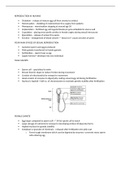
Class 1 - Balance sheet:
Balance sheet: Shows assets and liabilities (and equity) at a certain
moment what the firm possesses (owns).
Assets: What the firm possesses.
2 Categories:
Fixed assets: tangible (car, building, machines)
Current assets: time between purchase and usage of assets, usually few
months or less and present in business less than a year
Accounts receivable: customers who purchased goods on account
Inventories: raw materials, work-in-process products and finished goods
that are considered to be the portion of a business's assets that are ready or
will be ready for sale
Equity: Capital made available by the owner, share earnings retained and
Shareholder’s capital put into company.
Liabilities: Capital made available by creditors and temporary financial
resources
- Accounts payable: suppliers from whom the firm purchased goods on
account
- Expenses payable: obligations that a business has incurred, for
which no invoices have yet been received from suppliers
, Class 2 - Ledger Accounts:
Step one: Input all the totals from the balance sheet into the various ledger
accounts. If on the debit side enter there if on the credit side enter it there in
the ledger account of the relevant name.
Do the same thing with all the other totals (account receivable, cash, equity
and accounts payable).
Step two: Begin to assess the financial transactions step by step and input
them into the various ledger accounts.
If the ledger accounts increases with the transaction than stay with
recognized formula to allocate debits and credits. However, if the input into
the ledger decreases the account, then use formula on the right?
6 rules for ledger:
- Rule 1: An increase in assets is recorded on the debit side of an assets
account.
- Rule 2: An increase in liability (debt) is credited to a liability account.
- Rule 3: A decrease in an asset is credited to the asset account.
- Rule 4: A decrease in liability (debt) is debited to a liability account.
- Rule 5: An increase in equity is credited to a specialized equity
account.
- Rule 6: A decrease in equity is debited to a specialized equity account.
Class 1 - Balance sheet:
Balance sheet: Shows assets and liabilities (and equity) at a certain
moment what the firm possesses (owns).
Assets: What the firm possesses.
2 Categories:
Fixed assets: tangible (car, building, machines)
Current assets: time between purchase and usage of assets, usually few
months or less and present in business less than a year
Accounts receivable: customers who purchased goods on account
Inventories: raw materials, work-in-process products and finished goods
that are considered to be the portion of a business's assets that are ready or
will be ready for sale
Equity: Capital made available by the owner, share earnings retained and
Shareholder’s capital put into company.
Liabilities: Capital made available by creditors and temporary financial
resources
- Accounts payable: suppliers from whom the firm purchased goods on
account
- Expenses payable: obligations that a business has incurred, for
which no invoices have yet been received from suppliers
, Class 2 - Ledger Accounts:
Step one: Input all the totals from the balance sheet into the various ledger
accounts. If on the debit side enter there if on the credit side enter it there in
the ledger account of the relevant name.
Do the same thing with all the other totals (account receivable, cash, equity
and accounts payable).
Step two: Begin to assess the financial transactions step by step and input
them into the various ledger accounts.
If the ledger accounts increases with the transaction than stay with
recognized formula to allocate debits and credits. However, if the input into
the ledger decreases the account, then use formula on the right?
6 rules for ledger:
- Rule 1: An increase in assets is recorded on the debit side of an assets
account.
- Rule 2: An increase in liability (debt) is credited to a liability account.
- Rule 3: A decrease in an asset is credited to the asset account.
- Rule 4: A decrease in liability (debt) is debited to a liability account.
- Rule 5: An increase in equity is credited to a specialized equity
account.
- Rule 6: A decrease in equity is debited to a specialized equity account.