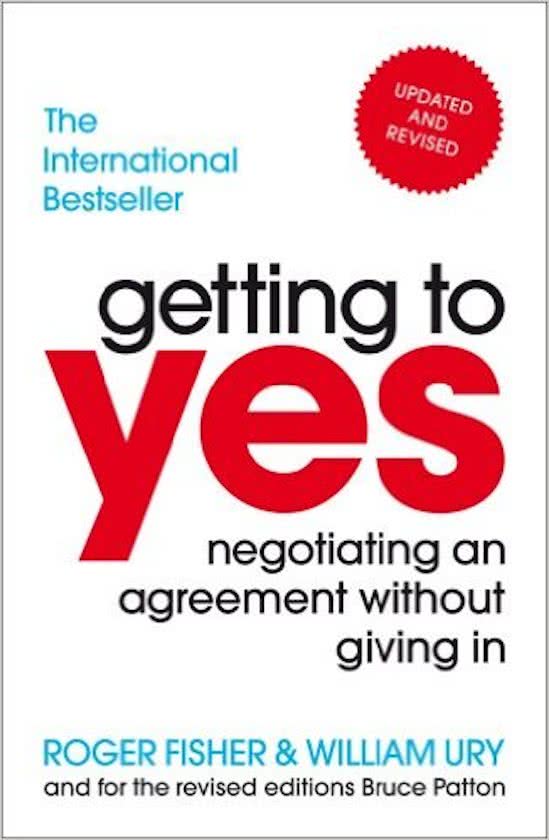
Managing negotiations: getting to yes
Lecture 1 Introduction and essentials
Negotiating is not about outsmarting/ tricking the other. It is ideal if your opponent
is also a trained negotiator, because best outcomes are achieved when both
negotiators are experts.
Negotiating = an interpersonal decision-making process necessary whenever we cannot achieve
our objectives single-handedly.
Distributive negotiation = single issue negotiation, only about the price of the good/ service.
Reservation point = maximum (for buyer)/ minimum (for seller) they want to pay/
receive.
Target/ aspiration point = price you would be happy with
Bargaining zone/ zone of possible agreements = range between reservation points of
both, where negotiating is possible.
How to determine aspiration point?
3 problems might arise with determining this
1. Underaspiring negotiator: settle for too low, first offer is accepted immediately
2. Overaspiring negotiator: wants to settle for too high, refuses to make concessions
3. Grass is greener negotiator: does not know what to settle for, he only knows it's more/
different than what the other is willing to offer (= reactive).
How to determine reservation point?
You should determine this before negotiating and consider the consequences of failing to reach
an agreement and know alternatives. You must determine your BATNA and quantify it.
BATNA = what is the best alternative immediately available. Stands for: Best
Alternative To a Negotiated Agreement. Example: another job offer you have or how
much rent you can ask when your house doesn't sell.
BATNA protects against accepting an agreement you should reject and rejecting an
agreement you should accept, BUT they are time-sensitive.
BATNA determines lowest value acceptable
If you do not reach an agreement > settle for BATNA
Any deal higher than BATNA is better than no impasse.
, Negotiation is NOT defined by wealth, connections, network, strengths, friends,
power or money, BUT by your alternative.
Falling in love rule = do not fall in love with one option (house, job, etc.) but always keep
multiple options open. Always try to improve your BATNA.
Lecture 2 PART I Rational and strategic:
Game theoretic approach I
Recap
Target/ aspiration point buyer = what you would like to pay
Reservation point = maximum you want to pay
o Least desirable outcome for both parties (worst acceptable outcome)
o Price at which you are indifferent between getting the deal or not getting the
deal.
Reservation point seller = minimum he wants to sell for
Target point seller = price he wants
Overlapping area > bargaining zone/zone of possible agreements, were the negotiation
happens
How to determine reservation point?
You should determine this before negotiating and consider the consequences of failing to reach
an agreement and know alternatives. You must determine your BATNA and quantify it.
BATNA should be based on facts
BATNA is not what you wish for, but objective best alternative. Don't let it be influenced by the
other party's persuasion techniques. It should only change as a result of objective facts and
evidence. However, in real life you deal with incomplete information, uncertainty, multi-
dimension agreements which do not make this easy. What you can do in practice:
1. Brainstorm alternatives
2. Evaluate each of them
, 3. Attempt to improve BATNA
4. Determine your reservation price
BATNA of the other side
The aspiration point of the other is often quite clear. More important is what their reservation
price is (to see their lowest/ highest price possible). Try to estimate their BATNA, but be aware
about what you really know (uncertainty aspect here).
What if bargaining zone is very small?
Also here a deal is possible, but it is not unlikely there won't be a deal. You need to be a very
skilled negotiator.
Lose-lose scenario (Benjamin Franklin) > it is better to strike as good a bargain as one's
bargaining position permits. The worst is when no bargain is struck and when a trade that could
have been advantageous to both parties does not come off.
Better deal, than no deal
What if there is no bargaining zone?
That means a negative bargaining zone, and thus no deal.
Negotiating is not about getting to yes at any cost, but reaching an agreement that is
better than what you would get without one. In many cases no agreement at all is better
then getting to yes (a bad deal).
When someone makes threats during negotiations, you must think of whether the threat
is credible or not and how to react to it. When it's credible you need to react, otherwise
not.
Introduction to Game theory
Created by US army during cold war to predict situations and economics took over for economic
situations.
Game theory = determining why people make specific decisions in strategic situations and
are mathematical models that describe strategic situations. Game theory is like a map (=
simplified reality), the city does not look like the map when you are in it/ the city is not actually
what you see on the map, but it helps you find the way.
Here you try to focus on abstracts and essential elements and take out factors that matter
in real life/ distracting elements (e.g., a map also doesn't show trees, colors of buildings,
etc.). The models/ theories are therefore not realistic, but it still is a great way to
predict decisions and it thus simplifies reality.
Lecture 1 Introduction and essentials
Negotiating is not about outsmarting/ tricking the other. It is ideal if your opponent
is also a trained negotiator, because best outcomes are achieved when both
negotiators are experts.
Negotiating = an interpersonal decision-making process necessary whenever we cannot achieve
our objectives single-handedly.
Distributive negotiation = single issue negotiation, only about the price of the good/ service.
Reservation point = maximum (for buyer)/ minimum (for seller) they want to pay/
receive.
Target/ aspiration point = price you would be happy with
Bargaining zone/ zone of possible agreements = range between reservation points of
both, where negotiating is possible.
How to determine aspiration point?
3 problems might arise with determining this
1. Underaspiring negotiator: settle for too low, first offer is accepted immediately
2. Overaspiring negotiator: wants to settle for too high, refuses to make concessions
3. Grass is greener negotiator: does not know what to settle for, he only knows it's more/
different than what the other is willing to offer (= reactive).
How to determine reservation point?
You should determine this before negotiating and consider the consequences of failing to reach
an agreement and know alternatives. You must determine your BATNA and quantify it.
BATNA = what is the best alternative immediately available. Stands for: Best
Alternative To a Negotiated Agreement. Example: another job offer you have or how
much rent you can ask when your house doesn't sell.
BATNA protects against accepting an agreement you should reject and rejecting an
agreement you should accept, BUT they are time-sensitive.
BATNA determines lowest value acceptable
If you do not reach an agreement > settle for BATNA
Any deal higher than BATNA is better than no impasse.
, Negotiation is NOT defined by wealth, connections, network, strengths, friends,
power or money, BUT by your alternative.
Falling in love rule = do not fall in love with one option (house, job, etc.) but always keep
multiple options open. Always try to improve your BATNA.
Lecture 2 PART I Rational and strategic:
Game theoretic approach I
Recap
Target/ aspiration point buyer = what you would like to pay
Reservation point = maximum you want to pay
o Least desirable outcome for both parties (worst acceptable outcome)
o Price at which you are indifferent between getting the deal or not getting the
deal.
Reservation point seller = minimum he wants to sell for
Target point seller = price he wants
Overlapping area > bargaining zone/zone of possible agreements, were the negotiation
happens
How to determine reservation point?
You should determine this before negotiating and consider the consequences of failing to reach
an agreement and know alternatives. You must determine your BATNA and quantify it.
BATNA should be based on facts
BATNA is not what you wish for, but objective best alternative. Don't let it be influenced by the
other party's persuasion techniques. It should only change as a result of objective facts and
evidence. However, in real life you deal with incomplete information, uncertainty, multi-
dimension agreements which do not make this easy. What you can do in practice:
1. Brainstorm alternatives
2. Evaluate each of them
, 3. Attempt to improve BATNA
4. Determine your reservation price
BATNA of the other side
The aspiration point of the other is often quite clear. More important is what their reservation
price is (to see their lowest/ highest price possible). Try to estimate their BATNA, but be aware
about what you really know (uncertainty aspect here).
What if bargaining zone is very small?
Also here a deal is possible, but it is not unlikely there won't be a deal. You need to be a very
skilled negotiator.
Lose-lose scenario (Benjamin Franklin) > it is better to strike as good a bargain as one's
bargaining position permits. The worst is when no bargain is struck and when a trade that could
have been advantageous to both parties does not come off.
Better deal, than no deal
What if there is no bargaining zone?
That means a negative bargaining zone, and thus no deal.
Negotiating is not about getting to yes at any cost, but reaching an agreement that is
better than what you would get without one. In many cases no agreement at all is better
then getting to yes (a bad deal).
When someone makes threats during negotiations, you must think of whether the threat
is credible or not and how to react to it. When it's credible you need to react, otherwise
not.
Introduction to Game theory
Created by US army during cold war to predict situations and economics took over for economic
situations.
Game theory = determining why people make specific decisions in strategic situations and
are mathematical models that describe strategic situations. Game theory is like a map (=
simplified reality), the city does not look like the map when you are in it/ the city is not actually
what you see on the map, but it helps you find the way.
Here you try to focus on abstracts and essential elements and take out factors that matter
in real life/ distracting elements (e.g., a map also doesn't show trees, colors of buildings,
etc.). The models/ theories are therefore not realistic, but it still is a great way to
predict decisions and it thus simplifies reality.