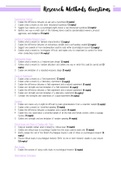
Research Methods Questions
Experimental Method:
1. Explain the difference between an aim and a hypothesis (2 marks)
2. Explain what is meant by the term ‘directional hypothesis’ (2 marks)
3. Suggest two reasons why a psychologist might choose a non-directional hypothesis (2 marks)
4. Identify one way in which each of the following terms could be operationalised: memory, physical
aggression, and intelligence (3 marks)
Control of Variables/Research Issues:
1. Outline what is meant by ‘demand characteristics’ (2 marks)
2. Explain the difference between an extraneous variable and a confounding variable (2 marks)
3. Suggest one example of how randomisation could be used within psychological research (2 marks)
4. Outline what is meant by ‘investigator effects’ and explain why it is important to control for these
when conducting research (4 marks)
Experimental Design:
1. Outline what is meant by a ‘matched pairs design’ (2 marks)
2. Outline what is meant by ‘random allocation’ and outline one way in which this could be carried out (3
marks)
3. Explain one limitation of a repeated measures design (3 marks)
Types of Experiment:
1. Explain what is meant by a ‘field experiment’ (2 marks)
2. Explain what is meant by a ‘laboratory experiment’ (3 marks)
3. Explain the difference between a field experiment and a natural experiment (3 marks)
4. Explain one strength and one limitation of a field experiment (4 marks)
5. Explain the difference between a field experiment and a natural experiment (4 marks)
6. Explain one strength and one limitation of a laboratory experiment (4 marks)
7. Consider the strengths and weaknesses of a quasi-experiment (4 marks)
Sampling:
1. Explain one reason why it might be difficult to make generalisations from a volunteer sample (2 marks)
2. Explain what is meant by ‘stratified sampling’ (3 marks)
3. Explain the difference between a population and a sample (3 marks)
4. Explain how you would select a stratified sample of all the male and female workers within a sausage
factory (3 marks)
5. Outline one strength and one limitation of random sampling (4 marks)
Ethical Issues and Ways of Dealing with Them:
1. Using an example, explain what is meant by ‘ethical issue’ (3 marks)
2. Outline one ethical issue in psychology. Explain how this issue could be dealt with. (3 marks)
3. Briefly explain the role of the British Psychological Society’s code of ethics in psychological research (4
marks)
4. Discuss ethical issues in psychological research. Refer to one or more research studies in your answer
(16 marks)
Pilot Studies:
1. Explain the purpose of using a pilot study in psychological research (2 marks)
Observational Techniques:
, 1. Outline the difference between a covert and an overt observation (2 marks)
2. Explain the difference between a naturalistic observation and a controlled observation (4 marks)
3. Explain one strength and one limitation of a non-participant observation (4 marks)
4. Briefly evaluate the use of naturalistic observations in psychological research (4 marks)
5. Identify two types of observation and state one limitation of each (4 marks)
6. Explain one strength and one limitation of participant observation (4 marks)
Observational Design:
1. Imagine you are conducting an observation of the ‘confidence’ shown by students in a lesson.
Operationalise the behaviour ‘confidence’ using three behavioural categories (3 marks)
2. Explain how you would use time sampling in an observation of children’s aggression in the playground (4
marks)
Self-Report Techniques:
1. Explain the difference between a questionnaire and an interview (2 marks)
2. Explain what is meant by the term ‘self-report’ (2 marks)
3. Explain what is meant by an ‘unstructured interview’ (2 marks)
4. Explain why a researcher may decide to use a structured interview rather than an unstructured
interview (2 marks)
5. Briefly evaluate the use of interviews in psychological research (4 marks)
6. Outline one strength and one limitation of using structured interviews (4 marks)
7. Explain one strength and one limitation of collecting data using a questionnaire (6 marks)
Self-Report Design:
1. Using the example of a questionnaire that measures stress in the workplace, explain the difference
between closed and open questions (4 marks).
2. Explain two issues that should be considered when designing interviews (4 marks)
3. Explain two issues that should be considered when designing questionnaires (4 marks)
Correlations:
1. Explain what is meant by the term ‘co-variable’ (2 marks)
2. Explain what is meant by a ‘correlation’ (2 marks)
3. Explain one difference between a correlation and an experiment (2 marks)
4. Explain one strength and one limitation of using correlations in psychological research (4 marks)
5. Using an example for each, explain the difference between a positive and a negative correlation (4
marks)
Types of Data:
1. Referring to an example, explain what is meant by ‘qualitative data’ (2 marks)
2. Explain why a ‘meta-analysis’ is used in psychological research (3 marks)
3. Explain the difference between primary data and secondary data (4 marks)
4. Outline one strength and one limitation of collecting secondary data in psychological research (4 marks)
5. Explain one strength and one limitation of qualitative data (6 marks)
6. Referring to one example, briefly discuss the use of meta-analysis in psychology (6 marks)
Measures of Central Tendency and Dispersion:
1. Explain what is meant by the term ‘measure of central tendency’ (2 marks)
2. Explain what is meant by the ‘standard deviation’ (2 marks)
3. Explain how a researcher might calculate the mean (2 marks)
4. State one strength and one limitation of the median as a measure of central tendency (3 marks)
Experimental Method:
1. Explain the difference between an aim and a hypothesis (2 marks)
2. Explain what is meant by the term ‘directional hypothesis’ (2 marks)
3. Suggest two reasons why a psychologist might choose a non-directional hypothesis (2 marks)
4. Identify one way in which each of the following terms could be operationalised: memory, physical
aggression, and intelligence (3 marks)
Control of Variables/Research Issues:
1. Outline what is meant by ‘demand characteristics’ (2 marks)
2. Explain the difference between an extraneous variable and a confounding variable (2 marks)
3. Suggest one example of how randomisation could be used within psychological research (2 marks)
4. Outline what is meant by ‘investigator effects’ and explain why it is important to control for these
when conducting research (4 marks)
Experimental Design:
1. Outline what is meant by a ‘matched pairs design’ (2 marks)
2. Outline what is meant by ‘random allocation’ and outline one way in which this could be carried out (3
marks)
3. Explain one limitation of a repeated measures design (3 marks)
Types of Experiment:
1. Explain what is meant by a ‘field experiment’ (2 marks)
2. Explain what is meant by a ‘laboratory experiment’ (3 marks)
3. Explain the difference between a field experiment and a natural experiment (3 marks)
4. Explain one strength and one limitation of a field experiment (4 marks)
5. Explain the difference between a field experiment and a natural experiment (4 marks)
6. Explain one strength and one limitation of a laboratory experiment (4 marks)
7. Consider the strengths and weaknesses of a quasi-experiment (4 marks)
Sampling:
1. Explain one reason why it might be difficult to make generalisations from a volunteer sample (2 marks)
2. Explain what is meant by ‘stratified sampling’ (3 marks)
3. Explain the difference between a population and a sample (3 marks)
4. Explain how you would select a stratified sample of all the male and female workers within a sausage
factory (3 marks)
5. Outline one strength and one limitation of random sampling (4 marks)
Ethical Issues and Ways of Dealing with Them:
1. Using an example, explain what is meant by ‘ethical issue’ (3 marks)
2. Outline one ethical issue in psychology. Explain how this issue could be dealt with. (3 marks)
3. Briefly explain the role of the British Psychological Society’s code of ethics in psychological research (4
marks)
4. Discuss ethical issues in psychological research. Refer to one or more research studies in your answer
(16 marks)
Pilot Studies:
1. Explain the purpose of using a pilot study in psychological research (2 marks)
Observational Techniques:
, 1. Outline the difference between a covert and an overt observation (2 marks)
2. Explain the difference between a naturalistic observation and a controlled observation (4 marks)
3. Explain one strength and one limitation of a non-participant observation (4 marks)
4. Briefly evaluate the use of naturalistic observations in psychological research (4 marks)
5. Identify two types of observation and state one limitation of each (4 marks)
6. Explain one strength and one limitation of participant observation (4 marks)
Observational Design:
1. Imagine you are conducting an observation of the ‘confidence’ shown by students in a lesson.
Operationalise the behaviour ‘confidence’ using three behavioural categories (3 marks)
2. Explain how you would use time sampling in an observation of children’s aggression in the playground (4
marks)
Self-Report Techniques:
1. Explain the difference between a questionnaire and an interview (2 marks)
2. Explain what is meant by the term ‘self-report’ (2 marks)
3. Explain what is meant by an ‘unstructured interview’ (2 marks)
4. Explain why a researcher may decide to use a structured interview rather than an unstructured
interview (2 marks)
5. Briefly evaluate the use of interviews in psychological research (4 marks)
6. Outline one strength and one limitation of using structured interviews (4 marks)
7. Explain one strength and one limitation of collecting data using a questionnaire (6 marks)
Self-Report Design:
1. Using the example of a questionnaire that measures stress in the workplace, explain the difference
between closed and open questions (4 marks).
2. Explain two issues that should be considered when designing interviews (4 marks)
3. Explain two issues that should be considered when designing questionnaires (4 marks)
Correlations:
1. Explain what is meant by the term ‘co-variable’ (2 marks)
2. Explain what is meant by a ‘correlation’ (2 marks)
3. Explain one difference between a correlation and an experiment (2 marks)
4. Explain one strength and one limitation of using correlations in psychological research (4 marks)
5. Using an example for each, explain the difference between a positive and a negative correlation (4
marks)
Types of Data:
1. Referring to an example, explain what is meant by ‘qualitative data’ (2 marks)
2. Explain why a ‘meta-analysis’ is used in psychological research (3 marks)
3. Explain the difference between primary data and secondary data (4 marks)
4. Outline one strength and one limitation of collecting secondary data in psychological research (4 marks)
5. Explain one strength and one limitation of qualitative data (6 marks)
6. Referring to one example, briefly discuss the use of meta-analysis in psychology (6 marks)
Measures of Central Tendency and Dispersion:
1. Explain what is meant by the term ‘measure of central tendency’ (2 marks)
2. Explain what is meant by the ‘standard deviation’ (2 marks)
3. Explain how a researcher might calculate the mean (2 marks)
4. State one strength and one limitation of the median as a measure of central tendency (3 marks)