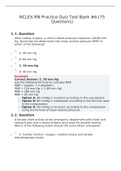
NCLEX-RN Practice Quiz Test Bank #6 (75 Questions)
NCLEX-RN Practice Quiz Test Bank #6 (75 Questions) 1. 1. Question After cardiac surgery, a client’s blood pressure measures 126/80 mm Hg. Nurse Katrina determines that mean arterial pressure (MAP) is which of the following? o A. 46 mm Hg o B. 80 mm Hg o C. 95 mm Hg o D. 90 mm Hg Incorrect Correct Answer: C. 95 mm Hg Use the following formula to calculate MAP MAP = systolic + 2 (diastolic) MAP = 126 mm Hg + 2 (80 mm Hg) MAP = 286 mm Hg MAP = 95 mm Hg • Option A: 46 mmHg is incorrect according to the calculations. • Option B: 80 mmHg is inadequate according to the formula used in the computation. • Option D: 90 mmHg is incorrect according to the computation using the formula of mean arterial pressure. 2. 2. Question A female client arrives at the emergency department with chest and stomach pain and a report of black tarry stool for several months. Which of the following orders should the nurse Oliver anticipate? • A. Cardiac monitor, oxygen, creatine kinase and lactate dehydrogenase levels • B. Prothrombin time, partial thromboplastin time, fibrinogen and fibrin split product values • C. Electrocardiogram, complete blood count, testing for occult blood, comprehensive serum metabolic panel • D. Electroencephalogram, alkaline phosphatase, and aspartate aminotransferase levels, basic serum metabolic panel Incorrect Correct Answer: C. Electrocardiogram, complete blood count, testing for occult blood, comprehensive serum metabolic panel. An electrocardiogram evaluates the complaints of chest pain, laboratory tests determine anemia, and the stool test for occult blood determines blood in the stool. • Option A: Cardiac monitoring, oxygen, and creatine kinase, and lactate dehydrogenase levels are appropriate for a cardiac primary problem. A basic metabolic panel and alkaline phosphatase and aspartate aminotransferase levels assess liver function. • Option B: Prothrombin time, partial thromboplastin time, fibrinogen and fibrin split products are measured to verify bleeding dyscrasias. • Option D: An electroencephalogram evaluates brain electrical activity. 3. 3. Question Olivia had coronary artery bypass graft (CABG) surgery 3 days ago. Which of the following conditions is suspected by the nurse when a decrease in platelet count from 230,000 ul to 5,000 ul is noted? • A. Pancytopenia • B. Idiopathic thrombocytopenic purpura (ITP) • C. Disseminated intravascular coagulation (DIC) • D. Heparin-associated thrombosis and thrombocytopenia (HATT) Incorrect Correct Answer: D. Heparin-associated thrombosis and thrombocytopenia (HATT) HATT may occur after CABG surgery due to heparin use during surgery. • Option B: ITP is a bleeding condition of unknown cause in which the blood fails to clot adequately because of a low circulating platelet count and a shortened platelet lifespan. • Option C: Although DIC causes platelet aggregation and bleeding, it is common in a client after revascularization surgery. • Option A: Pancytopenia is a reduction in all blood cells. 4. 4. Question Which of the following drugs would be ordered by the physician to improve the platelet count in a male client with idiopathic thrombocytopenic purpura (ITP)? • A. Acetylsalicylic acid (ASA) • B. Corticosteroids • C. Methotrexate • D. Vitamin K Incorrect Correct Answer: B. Corticosteroids Corticosteroid therapy can decrease antibody production and phagocytosis of the antibody-coated platelets, retaining more functioning platelets. • Option A: ASA blocks prostaglandin synthesis. Inhibition of COX-1 results in the inhibition of platelet aggregation for about 7-10 days (average platelet lifespan). • Option C: Methotrexate inhibits enzymes responsible for nucleotide synthesis which prevents cell division and leads to anti-inflammatory actions. It causes thrombocytopenia. • Option D: Vitamin K is used to treat an excessive anticoagulate state from warfarin overload. 5. 5. Question A female client is scheduled to receive a heart valve replacement with a porcine valve. Which of the following types of transplant is this? • A. Allogeneic • B. Autologous • C. Syngeneic • D. Xenogeneic Incorrect Correct Answer: D. Xenogeneic A xenogeneic transplant is between a human and another species. • Option A: Allogeneic transplant is between two humans, • Option B: Autologous is a transplant from the same individual. • Option C: A syngeneic transplant is between identical twins. 6. 6. Question Marco falls off his bicycle and injures his ankle. Which of the following actions shows the initial response to the injury in the extrinsic pathway? • A. Release of Calcium • B. Release of tissue thromboplastin • C. Conversion of factors XII to factor XIIa • D. Conversion of factor VIII to factor VIIIa Incorrect Correct Answer: B. Release of tissue thromboplastin Tissue thromboplastin is released when damaged tissue comes in contact with clotting factors. • Option A: Calcium is released to assist the conversion of factors X to Xa. • Option C: Conversion of factors XII to XIIa are part of the intrinsic pathway. • Option D: Conversion factors VIII to VIIIa are part of the intrinsic pathway. 7. 7. Question Instructions for a client with systemic lupus erythematosus (SLE) would include information about which of the following blood dyscrasias? • A. Dressler’s syndrome • B. Polycythemia • C. Essential thrombocytopenia • D. Von Willebrand’s disease Incorrect Correct Answer: C. Essential thrombocytopenia Essential thrombocytopenia is linked to immunologic disorders, such as SLE and the human immunodeficiency virus. • Option A: Dressler’s syndrome is pericarditis that occurs after myocardial infarction and isn’t linked to SLE. • Option B: Moderate to severe anemia is associated with SLE, not polycythemia. It is found in about 50% of patients, with anemia of chronic disease being the most common form. • Option D: Von Willebrand disease is a blood disorder in which the blood doesn’t clot properly. Blood contains many proteins that help the body stop bleeding. One of these proteins is called von Willebrand factor. 8. 8. Question The nurse is aware that the following symptom is most commonly an early indication of stage 1 Hodgkin’s disease? • A. Pericarditis • B. Night sweat • C. Splenomegaly • D. Persistent hypothermia Incorrect Correct Answer: B. Night sweat In stage 1, symptoms include a single enlarged lymph node (usually), unexplained fever, night sweats, malaise, and generalized pruritus. • Option A: Pericarditis refers to the inflammation of the pericardium, two thin layers of a sac-like tissue that surround the heart, hold it in place, and help it work. Pericarditis isn’t associated with Hodgkin’s disease, nor is hypothermia. Moreover, splenomegaly and pericarditis aren’t symptoms. • Option C: The spleen is involved in 20%-30% of cases of Hodgkin’s disease. Patients are usually asymptomatic. • Option D: Persistent hypothermia is associated with Hodgkin’s but isn’t an early sign of the disease. 9. 9. Question Francis with leukemia has neutropenia. Which of the following functions must be frequently assessed? • A. Blood pressure • B. Bowel sounds • C. Heart sounds • D. Breath sounds Incorrect Correct Answer: D. Breath sounds Pneumonia, both viral and fungal, is a common cause of death in clients with neutropenia, so frequent assessment of respiratory rate and breath sounds is required. • Option A: Blood pressure should be monitored regularly, but it is not a priority with neutropenia. • Option B: Assessing bowel sounds is not associated with neutropenia. Leukemia may affect the small and large bowel and they are usually hemorrhagic or infiltrative. • Option C: Although assessing heart sounds is important, it won’t help detect neutropenia. Patients with acute leukemia develop a higher rate of congestive heart failure than patients with other cancers. 10. 10. Question The nurse knows that neurologic complications of multiple myeloma (MM) usually involve which of the following body systems? • A. Brain • B. Muscle spasm • C. Renal dysfunction • D. Myocardial irritability Incorrect Correct Answer: B. Muscle spasm Back pain or paresthesia in the lower extremities may indicate impending spinal cord compression from a spinal tumor. This should be recognized and treated promptly as the progression of the tumor may result in paraplegia. • Option A: The reasons underlying the relative paucity of CNS invasion by multiple myeloma in comparison with other tumors, whether solid or hematological, remain unknown, but this phenomenon might be the result of underlying biological characteristics, or lack thereof, of malignant plasma cells. • Option C: In some cases, renal impairment is caused by the accumulation and precipitation of light chains, which form casts in the distal tubules, resulting in renal obstruction. • Option D: Some of the treatments used in MM may also affect cardiovascular health, however, with careful risk assessment, monitoring, and prophylactic therapy, many of these cardiovascular complications can be managed or treated successfully. 11. 11. Question Nurse Patricia is aware that the average length of time from human immunodeficiency virus (HIV) infection to the development of acquired immunodeficiency syndrome (AIDS)? • A. Less than 5 years • B. 5 to 7 years • C. 10 years • D. More than 10 years Incorrect Correct Answer: C. 10 years Epidemiologic studies show the average time from initial contact with HIV to the development of AIDS is 10 years. The interval from HIV infection to the diagnosis of AIDS ranges from about 9 months to 20 years or longer, with a median of 12 years. • Option A: Less than 5 years is too short a time for the development of AIDS. • Option B: 5 to 7 years is not the average time when an HIV infection develops into AIDS. • Option D: More than 10 years is more than the average time for HIV to develop into AIDS. 12. 12. Question An 18-year-old male client admitted with heat stroke begins to show signs of disseminated intravascular coagulation (DIC). Which of the following laboratory findings is most consistent with DIC? • A. Low platelet count • B. Elevated fibrinogen levels • C. Low levels of fibrin degradation products • D. Reduced prothrombin time Incorrect Correct Answer: A. Low platelet count In DIC, platelets and clotting factors are consumed, resulting in microthrombi and excessive bleeding. As clots form, fibrinogen levels decrease and the prothrombin time increases. • Option B: Severe, rapidly evolving DIC is diagnosed by demonstrating thrombocytopenia, an elevated partial thromboplastin time and prothrombin time, increased levels of plasma D-dimers, and a decreasing plasma fibrinogen level. • Option C: Fibrin degradation products increase as fibrinolysis takes place. • Option D: Both PT and aPTT seem prolonged in about 50% of DIC cases which is attributed to the consumption of coagulation factors but can also be prolonged in impaired synthesis of coagulation factors and in massive bleeding. 13. 13. Question Mario comes to the clinic complaining of fever, drenching night sweats, and unexplained weight loss over the past 3 months. Physical examination reveals a single enlarged supraclavicular lymph node. Which of the following is the most probable diagnosis? • A. Influenza • B. Sickle cell anemia • C. Leukemia • D. Hodgkin’s disease Incorrect Correct Answer: D. Hodgkin’s disease Hodgkin’s disease typically causes fever night sweats, weight loss, and lymph node enlargement. • Option A: The incubation period ranges from 1 to 4 days. Peak virus shedding usually occurs from 1 day before the onset of symptoms to 3 days after. • Option B: Clients with sickle cell anemia manifest signs and symptoms of chronic anemia with pallor of the mucous membrane, fatigue, and decreased tolerance for exercise; they don’t show fever, night sweats, weight loss or lymph node enlargement. • Option C: In some cases, the signs of leukemia may include noticeable swelling of the neck, armpit, or groin. This occurs when leukemia has spread to the lymph nodes. 14. 14. Question A male client with a gunshot wound requires an emergency blood transfusion. His blood type is AB negative. Which blood type would be the safest for him to receive? • A. AB Rh-positive • B. A Rh-positive • C. A Rh-negative • D. O Rh-positive Incorrect Correct Answer: C. A Rh-negative Human blood can sometimes contain an inherited D antigen. Persons with the D antigen have Rh-positive blood type; those lacking the antigen have Rh-negative blood. It’s important that a person with Rh-negative blood receives Rh-negative blood. • Option A: A person with Rh-negative blood should also receive Rh-negative blood. • Option B: If Rh-positive blood is administered to an Rh-negative person, the recipient develops anti-Rh agglutinins, and subsequent transfusions with Rh-positive blood may cause serious reactions with clumping and hemolysis of red blood cells. • Option D: This blood type is still not compatible because it is Rh-positive. 15. 15. Question Stacy was diagnosed with acute lymphoid leukemia (ALL). She was discharged from the hospital following her chemotherapy treatments. Which statement of Stacy’s mother indicated that she understands when she will contact the physician? • A. “I should contact the physician if Stacy has difficulty in sleeping”. • B. “I will call my doctor if Stacy has persistent vomiting and diarrhea”. • C. “My physician should be called if Stacy is irritable and unhappy”. • D. “Should Stacy have continued hair loss, I need to call the doctor”. Incorrect Correct Answer: B. “I will call my doctor if Stacy has persistent vomiting and diarrhea”. Persistent (more than 24 hours) vomiting, anorexia, and diarrhea are signs of toxicity and the patient should stop the medication and notify the healthcare provider. • Option A: Oftentimes, chemotherapy drugs cause patients to feel tired and sleepy throughout the day. Therefore, patients on chemotherapy can end up napping or sleeping during the day and that leads to difficulty sleeping at night or through the night. • Option C: Chemotherapy medications can directly impact the way people feel emotionally and physically. • Option D: Chemotherapy drugs are powerful medications that attack rapidly growing cancer cells. Unfortunately, these drugs also attack other rapidly growing cells in the body, including those in the hair roots. 16. 16. Question Molly Sue is diagnosed with acute lymphoid leukemia (ALL) and beginning chemotherapy. Her mother states to the nurse that it is hard to see Molly Sue with no hair. The best response for the nurse is: • A. “Molly Sue looks very nice wearing a hat”. • B. “You should not worry about her hair, just be glad that she is alive”. • C. “Yes, it is upsetting. But try to cover up your feelings when you are with her or else she may be upset”. • D. “This is only temporary; Molly Sue will re-grow new hair in 3-6 months but may be different in texture”. Incorrect Correct Answer: D. “This is only temporary; Stacy will re-grow new hair in 3-6 months but may be different in texture”. This is the appropriate response. The nurse should help the mother how to cope with her own feelings regarding the child’s disease so as not to affect the child negatively. When the hair grows back, it is still of the same color and texture. • Option A: It can be an option for the client to use a hat, but the nurse should be open about explanations regarding the side effects of chemotherapy. • Option B: Avoid reassuring the client. Statements of fact would be a good response. • Option C: The mother should be open and honest with the child, and providing an honest and true response would be a big help to both of them. 17. 17. Question Brittany who is undergoing chemotherapy for her throat cancer is experiencing stomatitis. To promote oral hygiene and comfort, the nurse-in-charge should: 0. Provide frequent mouthwash with normal saline. o A. Provide frequent mouthwash with normal saline. o B. Apply viscous Lidocaine to oral ulcers as needed. o C. Use lemon glycerine swabs every 2 hours. o D. Rinse mouth with Hydrogen Peroxide. Incorrect Correct Answer: B. Apply viscous Lidocaine to oral ulcers as needed. Stomatitis can cause pain and this can be relieved by applying topical anesthetics such as lidocaine before mouth care. • Option A: Before providing oral care, ensure that the patient is comfortable with the procedure first. • Option C: Use saline solution mixed with equal parts of water or hydrogen peroxide or oral care. • Option D: When the patient is already comfortable, the nurse can proceed with providing the patient with oral rinses of saline solution mixed with equal parts of water or hydrogen peroxide mixed water in 1:3 concentrations to promote oral hygiene. Every 2-4 hours. 18. 18. Question During the administration of chemotherapy agents, Nurse Oliver observed that the IV site is red and swollen when the IV is touched Stacy shouts in pain. The first nursing action to take is: • A. Notify the physician. • B. Flush the IV line with saline solution. • C. Immediately discontinue the infusion. • D. Apply an ice pack to the site, followed by warm compress. Incorrect Correct Answer: C. Immediately discontinue the infusion. Edema or swelling at the IV site is a sign that the needle has been dislodged and the IV solution is leaking into the tissues causing the edema. The patient feels pain as the nerves are irritated by pressure and the IV solution. The first action of the nurse would be to discontinue the infusion right away to prevent further edema and other complications. • Option A: After discontinuing the infusion, the nurse should notify the physician. • Option B: Flushing may aggravate the edema since the IV cannula might be dislodged. • Option D: Compresses may be given as indicated by the physician. 19. 19. Question The term “blue bloater” refers to a male client which of the following conditions? • A. Adult respiratory distress syndrome (ARDS) • B. Asthma • C. Chronic obstructive bronchitis • D. Emphysema Incorrect Correct Answer: C. Chronic obstructive bronchitis Clients with chronic obstructive bronchitis appear bloated; they have large barrel chest and peripheral edema, cyanotic nail beds, and at times, circumoral cyanosis. • Option A: Clients with ARDS are acutely short of breath and frequently need intubation for mechanical ventilation and large amounts of oxygen. • Option B: Clients with asthma don’t exhibit characteristics of chronic disease. • Option D: Clients with emphysema appear pink and cachectic. 20. 20. Question The term “pink puffer” refers to the female client with which of the following conditions? • A. Adult respiratory distress syndrome (ARDS) • B. Asthma • C. Chronic obstructive bronchitis • D. Emphysema Incorrect Correct Answer: D. Emphysema Because of the large amount of energy it takes to breathe, clients with emphysema are usually cachectic. They’re pink and usually breathe through pursed lips, hence the term “puffer.” • Option A: Clients with ARDS are usually acutely short of breath. • Option B: Clients with asthma don’t have any particular characteristics. • Option C: Clients with chronic obstructive bronchitis are bloated and cyanotic in appearance. 21. 21. Question Jose is in danger of respiratory arrest following the administration of a narcotic analgesic. An arterial blood gas value is obtained. Nurse Oliver would expect the paco2 to be which of the following values? • A. 15 mm Hg • B. 30 mm Hg • C. 40 mm Hg • D. 80 mm Hg Incorrect Correct Answer: D. 80 mm Hg A client about to go into respiratory arrest will have inefficient ventilation and will be retaining carbon dioxide. The value expected would be around 80 mm Hg. All other values are lower than expected. • Option A: 15 mmHg is a low value for a client about to go into respiratory arrest. • Option B: 30 mmHg is lower than the expected value because of inefficient ventilation. • Option C: 40 mmHg is still less than the expected value for a client who is about to go into respiratory arrest. 22. 22. Question Timothy’s arterial blood gas (ABG) results are as follows; pH 7.16; Paco2 80 mm Hg; Pao2 46 mm Hg; HCO3- 24 mEq/L; Sao2 81%. This ABG result represents which of the following conditions? • A. Metabolic acidosis • B. Metabolic alkalosis • C. Respiratory acidosis • D. Respiratory alkalosis Incorrect Correct Answer: C. Respiratory acidosis Because Paco2 is high at 80 mm Hg and the metabolic measure, HCO3- is normal, the client has respiratory acidosis. • Option A: If the HCO3- was below 22 mEq/L the client would have metabolic acidosis. • Option B: The result of the ABG is less than 7.35, which makes metabolic alkalosis incorrect. • Option D: The pH is less than 7.35, academic, which eliminates respiratory alkalosis as a possibility. 23. 23. Question Norma has started a new drug for hypertension. Thirty minutes after she takes the drug, she develops chest tightness and becomes short of breath and tachypnea. She has a decreased level of consciousness. These signs indicate which of the following conditions? • A. Asthma attack • B. Pulmonary embolism • C. Respiratory failure • D. Rheumatoid arthritis Incorrect Correct Answer: C. Respiratory failure The client was reacting to the drug with respiratory signs of impending anaphylaxis, which could lead to eventually respiratory failure. • Option A: The symptoms may look like an asthma attack, but it may change because of the new drug ingested. • Option B: Although the signs are also related to a pulmonary embolism, consider the new drug first. • Option D: Rheumatoid arthritis is an autoimmune and inflammatory disease, which means that the immune system attacks healthy cells in the body by mistake, causing inflammation in the affected parts of the body. 24. 24. Question Mr. Gonzales was admitted to the hospital with ascites and jaundice. To rule out cirrhosis of the liver which laboratory test indicates liver cirrhosis? • A. Decreased red blood cell count • B. Decreased serum acid phosphatase level • C. Elevated white blood cell count • D. Elevated serum aminotransferase Incorrect Correct Answer: D. Elevated serum aminotransferase Hepatic cell death causes the release of liver enzymes alanine aminotransferase (ALT), aspartate aminotransferase (AST), and lactate dehydrogenase (LDH) into the circulation. Liver cirrhosis is a chronic and irreversible disease of the liver characterized by generalized inflammation and fibrosis of the liver tissues. • Option A: Decreased red blood cell count may indicate anemia. • Option B: Serum acid phosphatase is an enzyme that acts to liberate phosphate under acidic conditions. Until now, low values cannot be determined with certainty. • Option C: A high white blood cell count usually indicates increased production of white blood cells to fight infection. 25. 25. Question The biopsy of Mr. Gonzales confirms the diagnosis of cirrhosis. Mr. Gonzales is at increased risk for excessive bleeding primarily because of: • A. Impaired clotting mechanism • B. Varix formation • C. Inadequate nutrition • D. Trauma of invasive procedure Incorrect Correct Answer: A. Impaired clotting mechanism Cirrhosis of the liver results in decreased Vitamin K absorption and formation of clotting factors resulting in impaired clotting mechanism. • Option B: Esophageal varices sometimes form when blood flow to the liver is blocked, most often by scar tissue in the liver caused by liver disease. • Option C: Inadequate nutrition alone cannot cause excessive bleeding in cirrhosis. • Option D: An invasive procedure may cause trauma that may result in bleeding, but the client has not yet undergone any invasive procedure. 26. 26. Question Mr. Jay develops hepatic encephalopathy. Which clinical manifestation is most common with this condition? • A. Increased urine output • B. Altered level of consciousness • C. Decreased tendon reflex • D. Hypotension Incorrect Correct Answer: B. Altered level of consciousness Changes in behavior and level of consciousness are the first signs of hepatic encephalopathy. Hepatic encephalopathy is caused by liver failure and develops when the liver is unable to convert protein metabolic product ammonia to urea. This results in accumulation of ammonia and other toxic in the blood that damages the cells. • Option A: The main cause of renal dysfunction in inpatients with liver disease is prerenal failure; specifically, the cause is a reduction in perfusion of the kidneys. • Option C: It must be emphasized that the flapping tremor of the extremities is also observed in patients with uremia, pulmonary insufficiency, and barbiturate toxicity. • Option D: A diseased liver can cause portal hypertension, which is high blood pressure in the portal vein. The portal vein supplies the liver with blood. Over time, this pressure causes blood vessels to grow, called collateral blood vessels. These vessels act as channels to divert the blood under high pressure. 27. 27. Question Patrick who is diagnosed with liver cirrhosis is experiencing symptoms of hepatic encephalopathy. The physician ordered 50 ml of Lactulose p.o. every 2 hours. Patrick suddenly develops diarrhea. The nurse best action would be: • A. “I’ll see if your physician is in the hospital”. • B. “Maybe you’re reacting to the drug; I will withhold the next dose”. • C. “I’ll lower the dosage as ordered so the drug causes only 2 to 4 stools a day”. • D. “Frequently, bowel movements are needed to reduce sodium level”. Incorrect Correct Answer: C. “I’ll lower the dosage as ordered so the drug causes only 2 to 4 stools a day”. Lactulose is given to a patient with hepatic encephalopathy to reduce absorption of ammonia in the intestines by binding with ammonia and promoting more frequent bowel movements. If the patient experiences diarrhea, it indicates overdosage and the nurse must reduce the amount of medication given to the patient. The stool will be mushy or soft. Lactulose is also very sweet and may cause cramping and bloating. • Option A: The nurse may inform the physician so that he may order a lower dosage. • Option B: Withholding the next dose is unnecessary; the nurse may lower the dosage as ordered. • Option D: Lactulose, in this case, is given to reduce absorption of ammonia in the intestines. 28. 28. Question Which of the following groups of symptoms indicates a ruptured abdominal aortic aneurysm? • A. Lower back pain, increased blood pressure, decreased red blood cell (RBC) count, increased white blood (WBC) count. • B. Severe lower back pain, decreased blood pressure, decreased RBC count, increased WBC count. • C. Severe lower back pain, decreased blood pressure, decreased RBC count, decreased RBC count, decreased WBC count. • D. Intermittent lower back pain, decreased blood pressure, decreased RBC count, increased WBC count. Incorrect Correct Answer: B. Severe lower back pain, decreased blood pressure, decreased RBC count, increased WBC count. Severe lower back pain indicates an aneurysm rupture, secondary to pressure being applied within the abdominal cavity. When rupture occurs, the pain is constant because it can’t be alleviated until the aneurysm is repaired. Blood pressure decreases due to the loss of blood. After the aneurysm ruptures, the vasculature is interrupted and blood volume is lost, so blood pressure wouldn’t increase. For the same reason, the RBC count has decreased – not increased. The WBC count increases as cells migrate to the site of injury. • Option A: The pain is severe due to the ruptured aneurysm; the blood pressure is decreased due to blood loss. • Option C: The increase in WBC count is due to the cells migrating to the site of the injury. • Option D: The pain in a ruptured aneurysm is constant and can only be alleviated if the aneurysm is repaired. 29. 29. Question After undergoing a cardiac catheterization, Tracy has a large puddle of blood under his buttocks. Which of the following steps should the nurse take first? • A. Call for help. • B. Obtain vital signs. • C. Ask the client to “lift up”. • D. Apply gloves and assess the groin site. Incorrect Correct Answer: D. Apply gloves and assess the groin site. Observing standard precautions is the first priority when dealing with any blood fluid. Assessment of the groin site is the second priority. This establishes where the blood is coming from and determines how much blood has been lost. The goal in this situation is to stop the bleeding. • Option A: The nurse would call for help if it were warranted after the assessment of the situation. • Option B: After determining the extent of the bleeding, vital signs assessment is important. • Option C: The nurse should never move the client, in case a clot has formed. Moving can disturb the clot and cause rebleeding. 30. 30. Question Which of the following treatments is a suitable surgical intervention for a client with unstable angina? • A. Cardiac catheterization • B. Echocardiogram • C. Nitroglycerin • D. Percutaneous transluminal coronary angioplasty (PTCA) Incorrect Correct Answer: D. Percutaneous transluminal coronary angioplasty (PTCA) PTCA can alleviate the blockage and restore blood flow and oxygenation. • Option A: Cardiac catheterization is a diagnostic tool – not a treatment. It is a procedure used to diagnose and treat certain cardiovascular conditions. • Option B: An echocardiogram is a non-invasive diagnostic test. It is a graphic outline of the heart’s movement. • Option C: Nitroglycerin is an oral sublingual medication. It is a vasodilatory drug used primarily to provide relief from anginal chest pain. 31. 31. Question The nurse is aware that the following terms used to describe reduced cardiac output and perfusion impairment due to ineffective pumping of the heart is: • A. Anaphylactic shock • B. Cardiogenic shock • C. Distributive shock • D. Myocardial infarction (MI) Incorrect Correct Answer: B. Cardiogenic shock Cardiogenic shock is shock related to ineffective pumping of the heart. • Option A: Anaphylactic shock results from an allergic reaction. This severe reaction happens when an over-release of chemicals puts the person into shock. • Option C: Distributive shock results from changes in the intravascular volume distribution and is usually associated with increased cardiac output. • Option D: MI isn’t a shock state, though in most cases, a lack of oxygen to the heart, usually from a heart attack, damages its main pumping chamber. Without oxygen-rich blood circulating to that area of the heart, the heart muscle can weaken and go into cardiogenic shock. 32. 32. Question A client with hypertension asks the nurse which factors can cause blood pressure to drop to normal levels? • A. Kidneys’ excretion to sodium only. • B. Kidneys’ retention of sodium and water. • C. Kidneys’ excretion of sodium and water. • D. Kidneys’ retention of sodium and excretion of water. Incorrect Correct Answer: C. Kidneys’ excretion of sodium and water. The kidneys respond to rise in blood pressure by excreting sodium and excess water. This response ultimately affects systolic blood pressure by regulating blood volume. • Option A: As the kidneys excrete sodium, water also goes along with it. • Option B: Sodium or water retention would only further increase blood pressure. • Option D: Sodium and water travel together across the membrane in the kidneys; one can’t travel without the other. 33. 33. Question Nurse Rose is aware that the statement that best explains why furosemide (Lasix) is administered to treat hypertension is: • A. It dilates peripheral blood vessels. • B. It decreases sympathetic cardio acceleration. • C. It inhibits the angiotensin-converting enzymes. • D. It inhibits the reabsorption of sodium and water in the loop of Henle. Incorrect Correct Answer: D. It inhibits the reabsorption of sodium and water in the loop of Henle. Furosemide is a loop diuretic that inhibits sodium and water reabsorption in the loop Henle, thereby causing a decrease in blood pressure. • Option A: Vasodilators cause dilation of peripheral blood vessels, directly relaxing vascular smooth muscle and decreasing blood pressure. • Option B: Adrenergic blockers decrease sympathetic cardio acceleration and decrease blood pressure. • Option C: Angiotensin-converting enzyme inhibitors decrease blood pressure due to their action on angiotensin. 34. 34. Question Nurse Nikki knows that laboratory results supports the diagnosis of systemic lupus erythematosus (SLE) is: • A. Elevated serum complement level • B. Thrombocytosis, elevated sedimentation rate • C. Pancytopenia, elevated antinuclear antibody (ANA) titer • D. Leukocytosis, elevated blood urea nitrogen (BUN) and creatinine levels Incorrect Correct Answer: C. Pancytopenia, elevated antinuclear antibody (ANA) titer Laboratory findings for clients with SLE usually show pancytopenia, elevated ANA titer, and decreased serum complement levels. • Option A: Decreased levels of serum complement is usually associated with SLE. The cause of complement activation in SLE is the formation of immune complexes, which in turn activate complement, predominantly by means of the classical pathway. • Option B: Thrombocytopenia is one of the components of pancytopenia. It is a condition in which the platelet count is decreased. • Option D: Clients may have elevated BUN and creatinine levels from nephritis, but the increase does not indicate SLE. The part of the kidney most frequently troubled by SLE is part of the nephron called the glomerulus, a tuft of capillaries that functions to filter substances from the blood. For this reason, the type of kidney inflammation most commonly experienced in lupus is glomerulonephritis. 35. 35. Question Arnold, a 19-year-old client with a mild concussion is discharged from the emergency department. Before discharge, he complains of a headache. When offered acetaminophen, his mother tells the nurse the headache is severe and she would like her son to have something stronger. Which of the following responses by the nurse is appropriate? • A. “Your son had a mild concussion, acetaminophen is strong enough.” • B. “Aspirin is avoided because of the danger of Reye’s syndrome in children or young adults.” • C. “Narcotics are avoided after a head injury because they may hide a worsening condition.” • D. Stronger medications may lead to vomiting, which increases the intracranial pressure (ICP).” Incorrect Correct Answer: C. Narcotics are avoided after a head injury because they may hide a worsening condition. Narcotics may mask changes in the level of consciousness that indicate increased ICP. • Option A: Acetaminophen is strong enough ignores the mother’s question and therefore isn’t appropriate. • Option B: Aspirin is contraindicated in conditions that may have bleeding, such as trauma, and for children or young adults with viral illnesses due to the danger of Reye’s syndrome. • Option D: Stronger medications may not necessarily lead to vomiting but will sedate the client, thereby masking changes in his level of consciousness. 36. 36. Question When evaluating an arterial blood gas from a male client with a subdural hematoma, the nurse notes the Paco2 is 30 mm Hg. Which of the following responses best describes the result? • A. Appropriate; lowering carbon dioxide (CO2) reduces intracranial pressure (ICP). • B. Emergent; the client is poorly oxygenated. • C. Normal. • D. Significant; the client has alveolar hypoventilation. Incorrect Correct Answer: A. Appropriate; lowering carbon dioxide (CO2) reduces intracranial pressure (ICP) A normal Paco2 value is 35 to 45 mm Hg CO2 has vasodilating properties; therefore, lowering Paco2 through hyperventilation will lower ICP caused by dilated cerebral vessels. • Option B: Oxygenation is evaluated through Pao2 and oxygen saturation. • Option C: The normal PaCO2 level is between 35 to 45 mmHg. PaCO2 or the partial pressure of carbon dioxide is the measure of carbon dioxide within arterial or venous blood. • Option D: Alveolar hypoventilation would be reflected in an increased Paco2. Alveolar hypoventilation is defined as insufficient ventilation leading to hypercapnia, which is an increase in the partial pressure of carbon dioxide as measured by arterial blood gas analysis. 37. 37. Question When prioritizing care, which of the following clients should the nurse Olivia assess first? • A. A 17-year-old client 24-hours post appendectomy. • B. A 33-year-old client with a recent diagnosis of Guillain-Barre syndrome. • C. A 50-year-old client 3 days post myocardial infarction. • D. A 50-year-old client with diverticulitis. Incorrect Correct Answer: B. A 33-year-old client with a recent diagnosis of Guillain-Barre syndrome Guillain-Barre syndrome is characterized by ascending paralysis and potential respiratory failure. The order of client assessment should follow client priorities, with disorder of airways, breathing, and then circulation. • Option A: The client who is post appendectomy has no signs of hemorrhage or unstable vital signs. Possible complications of appendectomy are bleeding, wound infection, peritonitis, blocked bowels, and injury to nearby organs. • Option C: There’s no information to suggest the postmyocardial infarction client has an arrhythmia or other complication. About 90% of patients who have an acute MI develop some form of cardiac arrhythmia during or immediately after the event. • Option D: There’s no evidence to suggest perforation for the client with diverticulitis as a priority of care. Diverticula are small, bulging pouches that can form in the lining of the digestive one or more of the pouches become inflamed, and in some cases infected, that condition is known as diverticulitis. 38. 38. Question JP has been diagnosed with gout and wants to know why colchicine is used in the treatment of gout. Which of the following actions of colchicines explains why it’s effective for gout? • A. Replaces estrogen. • B. Decreases infection. • C. Decreases inflammation. • D. Decreases bone demineralization. Incorrect Correct Answer: C. Decreases inflammation. The action of colchicines is to decrease inflammation by reducing the migration of leukocytes to synovial fluid. • Option A: Colchicine does not replace estrogen. Colchicine works by reducing the inflammation caused by crystals of uric acid in the joints. • Option B: Decreasing infection is not a mechanism of action of colchicine. The primary mechanism of action of colchicine is tubulin disruption. This leads to subsequent downregulation of multiple inflammatory pathways and modulation of innate immunity. • Option D: Colchicine doesn’t decrease bone demineralization. The toxic effects of colchicine are related to this anti-mitotic activity within proliferating tissue such as skin, hair, and bone marrow. 39. 39. Question Norma asks for information about osteoarthritis. Which of the following statements about osteoarthritis is correct? • A. Osteoarthritis is rarely debilitating. • B. Osteoarthritis is a rare form of arthritis. • C. Osteoarthritis is the most common form of arthritis. • D. Osteoarthritis affects people over 60. Incorrect Correct Answer: C. Osteoarthritis is the most common form of arthritis Osteoarthritis is the most common form of arthritis and can be extremely debilitating. It can afflict people of any age, although most are elderly. • Option A: Osteoarthritis is an extremely debilitating disease. The cartilage within a joint begins to break down and the underlying bone begins to change. • Option B: It is the most common form of arthritis. It affects over 32.5 million US adults. • Option D: Osteoarthritis can affect people of any age, but are most common among the elderly. Women are more likely to develop QA than men, especially after the age of 50. 40. 40. Question Ruby is receiving thyroid replacement therapy, develops the flu, and forgets to take her thyroid replacement medicine. The nurse understands that skipping this medication will put the client at risk for developing which of the following life-threatening complications? • A. Exophthalmos • B. Thyroid storm • C. Myxedema coma • D. Tibial myxedema Incorrect Correct Answer: C. Myxedema coma Myxedema coma, severe hypothyroidism, is a life-threatening condition that may develop if thyroid replacement medication isn’t taken. • Option A: Exophthalmos, protrusion of the eyeballs, is seen with hyperthyroidism. If a person’s immune system attacks the thyroid gland, it may react by producing extra hormones. The autoimmune antibodies can attack the muscles and soft tissue surrounding the eyes, which can cause them to protrude from the sockets. • Option B: Thyroid storm is life-threatening but is caused by severe hyperthyroidism. It is also referred to as thyrotoxic crisis, an acute, life-threatening hypermetabolic state induced by excessive release of thyroid hormones. • Option D: Tibial myxedema, peripheral mucinous edema involving the lower leg, is associated with hypothyroidism but isn’t life-threatening 41. 41. Question Nurse Sugar is assessing a client with Cushing’s syndrome. Which observation should the nurse report to the physician immediately? • A. Pitting edema of the legs • B. An irregular apical pulse • C. Dry mucous membranes • D. Frequent urination Incorrect Correct Answer: B. An irregular apical pulse Because Cushing’s syndrome causes aldosterone overproduction, which increases urinary potassium loss, the disorder may lead to hypokalemia. Therefore, the nurse should immediately report signs and symptoms of hypokalemia, such as an irregular apical pulse, to the physician. • Option A: Edema is an expected finding because aldosterone overproduction causes sodium and fluid retention. • Option C: Dry mucous membranes is not a symptom of Cushing’s syndrome. Thinning of the skin and mucous membranes occur because cortisol causes the breakdown of some dermal proteins along with the weakening of small blood vessels. • Option D: Frequent urination signals dehydration, which isn’t associated with Cushing’s syndrome. Short term administration of adrenocorticotropic hormone or glucocorticoids causes an increased glomerular filtration rate. Glomerular dysfunction leads to proteinuria and albuminuria. 42. 42. Question Cyrill with severe head trauma sustained in a car accident is admitted to the intensive care unit. Thirty-six hours later, the client’s urine output suddenly rises above 200 ml/hour, leading the nurse to suspect diabetes insipidus. Which laboratory findings support the nurse’s suspicion of diabetes insipidus? • A. Above-normal urine and serum osmolality levels. • B. Below-normal urine and serum osmolality levels. • C. Above-normal urine osmolality level, below-normal serum osmolality level. • D. Below-normal urine osmolality level, above-normal serum osmolality level. Incorrect Correct Answer: D. Below-normal urine osmolality level, above-normal serum osmolality level In diabetes insipidus, excessive polyuria causes dilute urine, resulting in a below-normal urine osmolality level. At the same time, polyuria depletes the body of water, causing dehydration that leads to an above-normal serum osmolality level. • Option A: Urine osmolality level should be below normal because of excessive polyuria. • Option B: Serum osmolality levels should be above normal because of dehydration. • Option C: For the same reasons, diabetes insipidus doesn’t cause above-normal urine osmolality or below-normal serum osmolality levels. 43. 43. Question Jomari is diagnosed with hyperosmolar hyperglycemic nonketotic syndrome (HHNS) is stabilized and prepared for discharge. When preparing the client for discharge and home management, which of the following statements indicates that the client understands her condition and how to control it? • A. “I can avoid getting sick by not becoming dehydrated and by paying attention to my need to urinate, drink, or eat more than usual.” • B. “If I experience trembling, weakness, and headache, I should drink a glass of soda that contains sugar.” • C. “I will have to monitor my blood glucose level closely and notify the physician if it’s constantly elevated.” • D. “If I begin to feel especially hungry and thirsty, I’ll eat a snack high in carbohydrates.” Incorrect Correct Answer: A. “I can avoid getting sick by not becoming dehydrated and by paying attention to my need to urinate, drink, or eat more than usual.” Inadequate fluid intake during hyperglycemic episodes often leads to HHNS. By recognizing the signs of hyperglycemia (polyuria, polydipsia, and polyphagia) and increasing fluid intake, the client may prevent HHNS. • Option B: Drinking a glass of non-diet soda would be appropriate for hypoglycemia. • Option C: A client whose diabetes is controlled with oral antidiabetic agents usually doesn’t need to monitor blood glucose levels. • Option D: A high carbohydrate diet would exacerbate the client’s condition, particularly if fluid intake is low. 44. 44. Question A 66-year-old client has been complaining of sleeping more, increased urination, anorexia, weakness, irritability, depression, and bone pain that interferes with her going outdoors. Based on these assessment findings, the nurse would suspect which of the following disorders? • A. Diabetes mellitus • B. Diabetes insipidus • C. Hypoparathyroidism • D. Hyperparathyroidism Incorrect Correct Answer: D. Hyperparathyroidism Hyperparathyroidism is most common in older women and is characterized by bone pain and weakness from excess parathyroid hormone (PTH). Clients also exhibit hypercalciuria-causing polyuria. • Option A: Common symptoms of diabetes mellitus include polyuria, polydipsia, and polyphagia • Option B: While clients with diabetes insipidus also have polyuria, they don’t have bone pain and increased sleeping. • Option C: Hypoparathyroidism is characterized by urinary frequency rather than polyuria. 45. 45. Question Nurse Lourdes is teaching a client recovering from Addisonian crisis about the need to take fludrocortisone acetate and hydrocortisone at home. Which statement by the client indicates an understanding of the instructions? • A. “I’ll take my hydrocortisone in the late afternoon, before dinner.” • B. “I’ll take all of my hydrocortisone in the morning, right after I wake up.” • C. “I’ll take two-thirds of the dose when I wake up and one-third in the late afternoon.” • D. “I’ll take the entire dose at bedtime.” Incorrect Correct Answer: C. “I’ll take two-thirds of the dose when I wake up and one-third in the late afternoon.” Hydrocortisone, a glucocorticoid, should be administered according to a schedule that closely reflects the body’s own secretion of this hormone; therefore, two-thirds of the dose of hydrocortisone should be taken in the morning and one-third in the late afternoon. This dosage schedule reduces adverse effects. • Option A: Taking the medicine at this schedule may cause adverse effects. • Option B: The dosage should be according to the imitation of when the body secretes glucocorticoids. • Option D: Taking an entire dose might cause severe adverse effects. 46. 46. Question Which of the following laboratory test results would suggest to the nurse Len that a client has a corticotropin-secreting pituitary adenoma? • A. High corticotropin and low cortisol levels • B. Low corticotropin and high cortisol levels • C. High corticotropin and high cortisol levels • D. Low corticotropin and low cortisol levels Incorrect Correct Answer: C. High corticotropin and high cortisol levels A corticotropin-secreting pituitary tumor would cause high corticotropin and high cortisol levels. • Option A: Cortisol levels should also be elevated in corticotropin-secreting pituitary adenoma. • Option B: Low corticotropin and high cortisol levels would be seen if there was a primary defect in the adrenal glands. • Option D: A low corticotropin level with a low cortisol level would be associated with hypocortisolism. 47. 47. Question A male client is scheduled for a transsphenoidal hypophysectomy to remove a pituitary tumor. Preoperatively, the nurse should assess for potential complications by doing which of the following? • A. Testing for ketones in the urine. • B. Testing urine specific gravity. • C. Checking temperature every 4 hours. • D. Performing capillary glucose testing every 4 hours. Incorrect Correct Answer: D. Performing capillary glucose testing every 4 hours. The nurse should perform capillary glucose testing every 4 hours because excess cortisol may cause insulin resistance, placing the client at risk for hyperglycemia. • Option A: Urine ketone testing isn’t indicated because the client does secrete insulin and, therefore, isn’t at risk for ketosis. • Option B: Urine specific gravity isn’t indicated because although fluid balance can be compromised, it usually isn’t dangerously imbalanced. • Option C: Temperature regulation may be affected by excess cortisol and isn’t an accurate indicator of infection. 48. 48. Question Capillary glucose monitoring is being performed every 4 hours for a client diagnosed with diabetic ketoacidosis. Insulin is administered using a scale of regular insulin according to glucose results. At 2 p.m., the client has a capillary glucose level of 250 mg/dl for which he receives 8 U of regular insulin. Nurse Mariner should expect the dose’s: • A. Onset to be at 2 p.m. and its peak to be at 3 p.m. • B. Onset to be at 2:15 p.m. and its peak to be at 3 p.m. • C. Onset to be at 2:30 p.m. and its peak to be at 4 p.m. • D. Onset to be at 4 p.m. and its peak to be at 6 p.m. Incorrect Correct Answer: C. Onset to be at 2:30 p.m. and its peak to be at 4 p.m. Regular insulin, which is a short-acting insulin, has an onset of 15 to 30 minutes and a peak of 2 to 4 hours. Because the nurse gave the insulin at 2 p.m., the expected onset would be from 2:15 p.m. to 2:30 p.m. and the peak from 4 p.m. to 6 p.m. • Option A: 2 p.m. is when the insulin was given; onset does not occur at the same time as the medication was given • Option B: The peak starts 2 to 4 hours after the insulin was given, which will be at 4 p.m. • Option D: Onset of 4 p.m. is very late; 15 to 30 minutes is the expected onset of insulin. Peak shoud start at 4 p.m. 49. 49. Question The physician orders laboratory tests to confirm hyperthyroidism in a female client with classic signs and symptoms of this disorder. Which test result would confirm the diagnosis? • A. No increase in the thyroid-stimulating hormone (TSH) level after 30 minutes during the TSH stimulation test. • B. A decreased TSH level. • C. An increase in the TSH level after 30 minutes during the TSH stimulation test. • D. Below-normal levels of serum triiodothyronine (T3) and serum thyroxine (T4) as detected by radioimmunoassay. Incorrect Correct Answer: A. No increase in the thyroid-stimulating hormone (TSH) level after 30 minutes during the TSH stimulation test In the TSH test, failure of the TSH level to rise after 30 minutes confirms hyperthyroidism. • Option B: A decreased TSH level indicates a pituitary deficiency of this hormone. • Option C: If the TSH level rises after 30 minutes, then the client has no hyperthyroidism. • Option D: Below-normal levels of T3 and T4, as detected by radioimmunoassay, signal hypothyroidism. A below-normal T4 level also occurs in malnutrition and liver disease and may result from the administration of phenytoin and certain other drugs. 50. 50. Question Rico with diabetes mellitus must learn how to self-administer insulin. The physician has prescribed 10 U of U-100 regular insulin and 35 U of U-100 isophane insulin suspension (NPH) to be taken before breakfast. When teaching the client how to select and rotate insulin injection sites, the nurse should provide which instruction? • A. “Inject insulin into healthy tissue with large blood vessels and nerves.” • B. “Rotate injection sites within the same anatomic region, not among different regions.” • C. “Administer insulin into areas of scar tissue or hypertrophy whenever possible.” • D. “Administer insulin into sites above muscles that you plan to exercise heavily later that day.” Incorrect Correct Answer: B. “Rotate injection sites within the same anatomic region, not among different regions.” The nurse should instruct the client to rotate injection sites within the same anatomic region. Rotating sites among different regions may cause excessive day-to-day variations in the blood glucose level; also, insulin absorption differs from one region to the next. • Option A: Insulin should be injected only into healthy tissue lacking large blood vessels, nerves, or scar tissue, or other deviations. • Option C: Injecting insulin into areas of hypertrophy may delay absorption. The client shouldn’t inject insulin into areas of lipodystrophy (such as hypertrophy or atrophy); to prevent lipodystrophy, the client should rotate injection sites systematically. • Option D: Exercise speeds drug absorption, so the client shouldn’t inject insulin into sites above muscles that will be exercised heavily. 51. 51. Question Nurse Sarah expects to note an elevated serum glucose level in a client with hyperosmolar hyperglycemic nonketotic syndrome (HHNS). Which other laboratory finding should the nurse anticipate? • A. Elevated serum acetone level. • B. Serum ketone bodies. • C. Serum alkalosis. • D. Below-normal serum potassium level. Incorrect Correct Answer: D. Below-normal serum potassium level. A client with HHNS has an overall body deficit of potassium resulting from diuresis, which occurs secondary to the hyperosmolar, hyperglycemic state caused by the relative insulin deficiency. • Option A: An elevated serum acetone level is a symptom of diabetic ketoacidosis. Hepatic metabolism of free fatty acids as an alternative energy source results in accumulation of acidic intermediate and end metabolites (ie, ketones). Ketone bodies have generally included acetone, a true ketone. • Option B: Serum ketone bodies are characteristic of diabetic ketoacidosis. Ketone bodies are produced from acetyl coenzyme A mainly in the mitochondria within hepatocytes when carbohydrate utilization is impaired because of relative or absolute insulin deficiency, such that energy must be obtained from fatty acid metabolism. • Option C: Metabolic acidosis, not serum alkalosis, may occur in HHNS. A wide anion gap can be observed in patients with HHNS. The mild acidosis in HHNS is often multifactorial and results, in part, from the accumulation of minimal ketoacids in the absence of effective insulin activity. 52. 52. Question For a client with Graves’ disease, which nursing intervention promotes comfort? • A. Restricting intake of oral fluids. • B. Placing extra blankets on the client’s bed. • C. Limiting intake of high-carbohydrate foods. • D. Maintaining room temperature in the low-normal range. Incorrect Correct Answer: D. Maintaining room temperature in the low-normal range. Graves’ disease causes signs and symptoms of hypermetabolism, such as heat intolerance, diaphoresis, excessive thirst and appetite, and weight loss. To reduce heat intolerance and diaphoresis, the nurse should keep the client’s room temperature in the low-normal range. • Option A: To replace fluids lost via diaphoresis, the nurse should encourage, not restrict, intake of oral fluids. • Option B: Placing extra blankets on the bed of a client with heat intolerance would cause discomfort. • Option C: To provide needed energy and calories, the nurse should encourage the client to eat high-carbohydrate foods. 53. 53. Question Patrick is treated in the emergency department for a Colles’ fracture sustained during a fall. What is a Colles’ fracture? • A. Fracture of the distal radius. • B. Fracture of the olecranon. • C. Fracture of the humerus. • D. Fracture of the carpal scaphoid. Incorrect Correct Answer: A. Fracture of the distal radius. Colles’ fracture is a fracture of the distal radius, such as from a fall on an outstretched hand. It’s most common in women. • Option B: Colles’ fracture does not involve the olecranon. Most Colles fractures are secondary to a fall on an outstretched hand with a pronated forearm in dorsiflexion. • Option C: The humerus is not affected in Colles’ fracture. It is a complete fracture of the radius bone of the forearm close to the wrist resulting in an upward displacement of the radius and obvious deformity. • Option D: Colles’ fracture doesn’t refer to a fracture of the carpal scaphoid. A scaphoid fracture is a break in one of the small bones of the wrist. 54. 54. Question Cleo is diagnosed with osteoporosis. Which electrolytes are involved in the development of this disorder? • A. Calcium and sodium • B. Calcium and phosphorous • C. Phosphorus and potassium • D. Potassium and sodium Incorrect Correct Answer: B. Calcium and phosphorous In osteoporosis, bones lose calcium and phosphate salts, becoming porous, brittle, and abnormally vulnerable to fracture. • Option A: Sodium increases calcium excretion and higher calcium excretion is associated with lower bone mineral density, a predictor of osteoporotic fractures. • Option C: Potassium is not involved in osteoporosis. Potassium salts aid in bone health. A study, published in the journal Osteoporosis International, also revealed that high intake of potassium salts significantly reduces the excretion of calcium and acid in urine. • Option D: Sodium, in the form of sodium chloride, elevates urinary calcium excretion and, at prevailing calcium intakes, evokes compensatory responses that may lead to increased bone remodeling and bone loss. However, potassium was inversely associated with both urinary calcium excretion and intestinal calcium absorption, yielding no significant net change in calcium balance. 55. 55. Question Johnny, a firefighter, was involved in extinguishing a house fire and is being treated for smoke inhalation. He developed severe hypoxia 48 hours after the incident, requiring intubation and mechanical ventilation. He most likely has developed which of the following conditions? • A. Adult respiratory distress syndrome (ARDS) • B. Atelectasis • C. Bronchitis • D. Pneumonia Incorrect Correct Answer: A. Adult respiratory distress syndrome (ARDS) Severe hypoxia after smoke inhalation is typically related to ARDS. • Option B: Atelectasis is not associated with smoke inhalation. Inhaling harmful smoke can inflame the lungs and airway, causing them to swell and block oxygen. This can lead to acute respiratory distress syndrome and failure. • Option C: Bronchitis does not develop due to smoke inhalation. However, if the client already has bronchitis, inhalational injuries can worsen its condition. • Option D: Pneumonia isn’t typically associated with smoke inhalation and severe hypoxia. 56. 56. Question A 67-year-old client develops acute shortness of breath and progressive hypoxia requiring right femur. The hypoxia was probably caused by which of the following conditions? • A. Asthma attack • B. Atelectasis • C. Bronchitis • D. Fat embolism Incorrect Correct Answer: D. Fat embolism Long bone fractures are correlated with fat emboli, which cause shortness of breath and hypoxia. • Option A: Asthma attacks do not develop following a femoral fracture. • Option B: He could develop atelectasis but it typically doesn’t produce progressive hypoxia. • Option C: It’s unlikely the client has developed bronchitis without a previous history. 57. 57. Question A client with shortness of breath has decreased to absent breath sounds on the right side, from the apex to the base. Which of the following conditions would best explain this? • A. Acute asthma • B. Chronic bronchitis • C. Pneumonia • D. Spontaneous pneumothorax Incorrect Correct Answer: D. Spontaneous pneumothorax A spontaneous pneumothorax occurs when the client’s lung collapses, causing an acute decrease in the amount of functional lung used in oxygenation. The sudden collapse was the cause of his chest pain and shortness of breath. • Option A: An asthma attack would show wheezing breath sounds. • Option B: Bronchitis would have rhonchi. • Option C: Pneumonia would have bronchial breath sounds over the area of consolidation. 58. 58. Question A 62-year-old male client was in a motor vehicle accident as an unrestrained driver. He’s now in the emergency department complaining of difficulty of breathing and chest pain. On auscultation of his lung field, no breath sounds are present in the upper lobe. This client may have which of the following conditions? • A. Bronchitis • B. Pneumonia • C. Pneumothorax • D. Tuberculosis (TB) Incorrect Correct Answer: C. Pneumothorax Pneumothorax is defined as the presence of air or gas in the pleural cavity, which can impair oxygenation and/or ventilation. • Option A: Rhonchi is heard with bronchitis. • Option B: From the trauma the client experienced, it’s unlikely he has pneumonia. Pneumonia may produce crackling, bubbling, and rumbling sounds when inhaling upon auscultation. • Option D: Bronchial breath sounds with TB would be heard. 59. 59. Question If a client requires a pneumonectomy, what fills the area of the thoracic cavity? • A. The space remains filled with air only. • B. The surgeon fills the space with a gel. • C. Serous fluids fill the space and consolidate the region. • D. The tissue from the other lung grows over to the other side. Incorrect Correct Answer: C. Serous fluids fill the space and consolidate the region Serous fluid fills the space and eventually consolidates, preventing extensive mediastinal shift of the heart and remaining lung. • Option A: Air can’t be left in space. Air in the chest cavity is called a pneumothorax, and it may cause the lungs to collapse. • Option B: There’s no gel that can be placed in the pleural space. The pleural cavity is the space that lies between the pleura, the two thin membranes that line and surround the lungs. It contains a small amount of liquid known as pleural fluid. • Option D: The tissue from the other lung can’t cross the mediastinum, although a temporary mediastinal shift exists until space is filled. 60. 60. Question Hemoptysis may be present in the client with a pulmonary embolism because of which of the following reasons? • A. Alveolar damage in the infarcted area. • B. Involvement of major blood vessels in the occluded area. • C. Loss of lung parenchyma. • D. Loss of lung tissue. Incorrect Correct Answer: A. Alveolar damage in the infarcted area. The infarcted area produces alveolar damage that can lead to the production of bloody sputum, sometimes in massive amounts. • Option B: Clot formation usually occurs in the legs. This is called deep vein thrombosis, which occurs in one or more of the deep veins in the legs. • Option C: Loss of lung parenchyma is not found with hemoptysis in pulmonary embolism. The lung parenchyma comprises a large number of thin-walled alveoli, forming an enormous surface area, which serves to maintain proper gas exchange. • Option D: A regional loss of surfactant is one of the consequences in pulmonary embolism. 61. 61. Question Alvin with a massive pulmonary embolism will have an arterial blood gas analysis performed to determine the extent of
Escuela, estudio y materia
- Institución
- Rasmussen College
- Grado
- NCLEX-RN Practice Quiz Test Bank #6
Información del documento
- Subido en
- 22 de diciembre de 2021
- Número de páginas
- 55
- Escrito en
- 2021/2022
- Tipo
- Examen
- Contiene
- Preguntas y respuestas
Temas
-
nclex rn practice quiz test bank 6 75 questions 1 1 question after cardiac surgery
-
a client’s blood pressure measures 12680 mm hg nurse katrina determines that mean arterial pressure map is
Documento también disponible en un lote