Contents
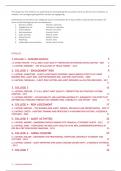
Chapter 1 The Corporation 1
Chapter 2 Introduction to Financial Statement Analysis 4
Chapter 3 Arbitrage and Financial Decision Making 16
Chapter 4 The Time Value of Money 26
Chapter 5 Interest Rates 50
Chapter 6 Investment Decision Rules 69
Chapter 7 Fundamentals of Capital Budgeting 89
Chapter 8 Valuing Bonds 106
Chapter 9 Valuing Stocks 123
Chapter 10 Capital Markets and the Pricing of Risk 134
Chapter 11 Optimal Portfolio Choice and the Capital Asset Pricing Model 148
Chapter 12 Estimating the Cost of Capital 166
Chapter 13 Investor Behavior and Capital Market Efficiency 175
Chapter 14 Capital Structure in a Perfect Market 184
Chapter 15 Debt and Taxes 193
Chapter 16 Financial Distress, Managerial Incentives, and Information 202
Chapter 17 Payout Policy 216
Chapter 18 Capital Budgeting and Valuation with Leverage 225
Chapter 19 Valuation and Financial Modeling: A Case Study 244
Chapter 20 Financial Options 253
Chapter 21 Option Valuation 263
Chapter 22 Real Options 274
Chapter 23 Raising Equity Capital 300
Chapter 24 Debt Financing 306
Chapter 25 Leasing 310
Chapter 26 Working Capital Management 317
Chapter 27 Short-Term Financial Planning 324
Chapter 28 Mergers and Acquisitions 331
Chapter 29 Corporate Governance 337
Chapter 30 Risk Management 340
Chapter 31 International Corporate Finance 352
©2011 Pearson Education, Inc. Publishing as Prentice Hall
,
, Chapter 1
The Corporation
1-1. What is the most important difference between a corporation and all other organization forms?
A corporation is a legal entity separate from its owners.
1-2. What does the phrase limited liability mean in a corporate context?
Owners’ liability is limited to the amount they invested in the firm. Stockholders are not responsible
for any encumbrances of the firm; in particular, they cannot be required to pay back any debts incurred
by the firm.
1-3. Which organization forms give their owners limited liability?
Corporations and limited liability companies give owners limited liability. Limited partnerships
provide limited liability for the limited partners, but not for the general partners.
1-4. What are the main advantages and disadvantages of organizing a firm as a corporation?
Advantages: Limited liability, liquidity, infinite life
Disadvantages: Double taxation, separation of ownership and control
1-5. Explain the difference between an S corporation and a C corporation.
C corporations much pay corporate income taxes; S corporations do not pay corporate taxes but must
pass through the income to shareholders to whom it is taxable. S corporations are also limited to 75
shareholders and cannot have corporate or foreign stockholders.
1-6. You are a shareholder in a C corporation. The corporation earns $2 per share before taxes. Once
it has paid taxes it will distribute the rest of its earnings to you as a dividend. The corporate tax
rate is 40% and the personal tax rate on (both dividend and non-dividend) income is 30%. How
much is left for you after all taxes are paid?
First the corporation pays the taxes. After taxes, $2 ! (1 " 0.4) = $1.20 is left to pay dividends. Once the
dividend is paid, personal tax on this must be paid, which leaves $1.20 ! (1 " 0.3) = $0.84 . So after all
the taxes are paid, you are left with 84¢.
1-7. Repeat Problem 6 assuming the corporation is an S corporation.
An S corporation does not pay corporate income tax. So it distributes $2 to its stockholders. These
stockholders must then pay personal income tax on the distribution. So they are left with
$2 ! (1 " 0.3) = $1.40 .
©2011 Pearson Education, Inc. Publishing as Prentice Hall
Chapter 1 The Corporation 1
Chapter 2 Introduction to Financial Statement Analysis 4
Chapter 3 Arbitrage and Financial Decision Making 16
Chapter 4 The Time Value of Money 26
Chapter 5 Interest Rates 50
Chapter 6 Investment Decision Rules 69
Chapter 7 Fundamentals of Capital Budgeting 89
Chapter 8 Valuing Bonds 106
Chapter 9 Valuing Stocks 123
Chapter 10 Capital Markets and the Pricing of Risk 134
Chapter 11 Optimal Portfolio Choice and the Capital Asset Pricing Model 148
Chapter 12 Estimating the Cost of Capital 166
Chapter 13 Investor Behavior and Capital Market Efficiency 175
Chapter 14 Capital Structure in a Perfect Market 184
Chapter 15 Debt and Taxes 193
Chapter 16 Financial Distress, Managerial Incentives, and Information 202
Chapter 17 Payout Policy 216
Chapter 18 Capital Budgeting and Valuation with Leverage 225
Chapter 19 Valuation and Financial Modeling: A Case Study 244
Chapter 20 Financial Options 253
Chapter 21 Option Valuation 263
Chapter 22 Real Options 274
Chapter 23 Raising Equity Capital 300
Chapter 24 Debt Financing 306
Chapter 25 Leasing 310
Chapter 26 Working Capital Management 317
Chapter 27 Short-Term Financial Planning 324
Chapter 28 Mergers and Acquisitions 331
Chapter 29 Corporate Governance 337
Chapter 30 Risk Management 340
Chapter 31 International Corporate Finance 352
©2011 Pearson Education, Inc. Publishing as Prentice Hall
,
, Chapter 1
The Corporation
1-1. What is the most important difference between a corporation and all other organization forms?
A corporation is a legal entity separate from its owners.
1-2. What does the phrase limited liability mean in a corporate context?
Owners’ liability is limited to the amount they invested in the firm. Stockholders are not responsible
for any encumbrances of the firm; in particular, they cannot be required to pay back any debts incurred
by the firm.
1-3. Which organization forms give their owners limited liability?
Corporations and limited liability companies give owners limited liability. Limited partnerships
provide limited liability for the limited partners, but not for the general partners.
1-4. What are the main advantages and disadvantages of organizing a firm as a corporation?
Advantages: Limited liability, liquidity, infinite life
Disadvantages: Double taxation, separation of ownership and control
1-5. Explain the difference between an S corporation and a C corporation.
C corporations much pay corporate income taxes; S corporations do not pay corporate taxes but must
pass through the income to shareholders to whom it is taxable. S corporations are also limited to 75
shareholders and cannot have corporate or foreign stockholders.
1-6. You are a shareholder in a C corporation. The corporation earns $2 per share before taxes. Once
it has paid taxes it will distribute the rest of its earnings to you as a dividend. The corporate tax
rate is 40% and the personal tax rate on (both dividend and non-dividend) income is 30%. How
much is left for you after all taxes are paid?
First the corporation pays the taxes. After taxes, $2 ! (1 " 0.4) = $1.20 is left to pay dividends. Once the
dividend is paid, personal tax on this must be paid, which leaves $1.20 ! (1 " 0.3) = $0.84 . So after all
the taxes are paid, you are left with 84¢.
1-7. Repeat Problem 6 assuming the corporation is an S corporation.
An S corporation does not pay corporate income tax. So it distributes $2 to its stockholders. These
stockholders must then pay personal income tax on the distribution. So they are left with
$2 ! (1 " 0.3) = $1.40 .
©2011 Pearson Education, Inc. Publishing as Prentice Hall