Bookkeeping glossary
Bookkeepers: Someone whose job is keeping an exact record of the money that
has been spent or received by a business or other organization.
Transactions: An occasion when someone buys or sells something, or when
money is exchanged or the activity of buying or selling something.
Account: an arrangement with a bank to keep your money there and to allow
you to take it out when you need to
Double-entry bookkeeping: a system that a business uses to record its financial
situation, where each sum of money is shown as money received in one part
and money spent in the other part.
Debit: (a record of) money taken out of a bank account.
Credit: a method of paying for goods or services at a later time, usually paying
interest as well as the original money.
Raw materials: any material, such as oil, cotton, or sugar in its natural
condition, before it has been processed for use.
Stock: a supply of something for use or sale.
Debtors: someone who owes money.
Day books / journals: a record kept by a business of the money it gains or
spends each day.
Nominal ledgers: is a journal or an electronic file that contains all of the
transactions relating to a company’s accounts.
Bought ledger: is a system in accounting by which a business records and
monitors its creditors.
Accounting period: a period of time at the end of which a company prepares a
financial report, for example after three, six, or twelve months.
Trial balance: in double-entry bookkeeping, the act of adding the credit and
debit columns of all accounts to check that they are equal in order to show that
the accounts are correct
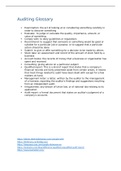
https://debitoor.com/dictionary/
https://dictionary.cambridge.org/
Bookkeepers: Someone whose job is keeping an exact record of the money that
has been spent or received by a business or other organization.
Transactions: An occasion when someone buys or sells something, or when
money is exchanged or the activity of buying or selling something.
Account: an arrangement with a bank to keep your money there and to allow
you to take it out when you need to
Double-entry bookkeeping: a system that a business uses to record its financial
situation, where each sum of money is shown as money received in one part
and money spent in the other part.
Debit: (a record of) money taken out of a bank account.
Credit: a method of paying for goods or services at a later time, usually paying
interest as well as the original money.
Raw materials: any material, such as oil, cotton, or sugar in its natural
condition, before it has been processed for use.
Stock: a supply of something for use or sale.
Debtors: someone who owes money.
Day books / journals: a record kept by a business of the money it gains or
spends each day.
Nominal ledgers: is a journal or an electronic file that contains all of the
transactions relating to a company’s accounts.
Bought ledger: is a system in accounting by which a business records and
monitors its creditors.
Accounting period: a period of time at the end of which a company prepares a
financial report, for example after three, six, or twelve months.
Trial balance: in double-entry bookkeeping, the act of adding the credit and
debit columns of all accounts to check that they are equal in order to show that
the accounts are correct
https://debitoor.com/dictionary/
https://dictionary.cambridge.org/