Geography Hazards Notes
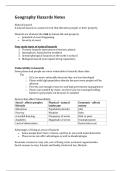
Natural hazard:
A natural hazard is a natural event that threatens people or their property
Hazards are all about the risk to human life and property
• potential of event happening
• Severity of event
Four main types of natural hazards
1. Tectonic hazards (movement of tectonic plates)
2. Atmospheric hazards (the weather)
3. Geomorphological hazard (on the earth’s surface)
4. Biological hazard (can impact living organisms)
Vulnerability to hazards
Some places and people are more vulnerable to hazards than other
E.g.
o LICs are more vulnerable because they are less developed
o Places with high population density because more people will be
affected
o Poverty, not enough resources and bad government management
o Places surrounded by water, sea level can rise causing flooding,
harder to get people out because its isolated
Factors that affect Vulnerability:
Social - affects peoples Physical - natural Economic - affects
lifestyle landscape money
Education Population density Jobs
Poverty Weather Debt
crowded housing Frequency of event Rich or poor
disability Magnitude of event Unemployment
Lack of information Destruction cost
Advantages of living at areas of hazards
• Some people don’t have a choice, and live in area with natural hazards
• These areas can offer advantages as well as disadvantages
Economic reasons to stay: job, cost of living crisis, economic opportunities
Social reasons to stay: friends and family, historical ties, lifestyle
, Areas around natural hazards can be used at touristic places, mining
opportunities (after volcanic eruptions, fertile soil products (beside volcanoes),
fishing (after tsunamis) to earn money.
Different Climates
Why are there different climates?
• Atmospheric temperature - circulation of cold/warm air
• Distance from equator
• Shape of land
• Distance from the sun - curvature of the earth
• Amount of sunlight
• Height above sea level
• Distance from coastline
Tropical storms
Powerful weather hazards (atmospheric hazard)
• Atlantic and east Pacific Ocean = hurricane
• Indian Ocean = cyclone
• West Pacific Ocean = typhoon
Do not happen at the equator
Conditions for a tropical storm
1. High sea temperature above 27 degrees
o water evaporates and rises upwards
o Creates an updraft
2. Rising air creates area of LOW PRESSURE
o the rising air cools and condenses
o Forms large cumulonimbus clouds
o Warm air continues to rise feeding the storm
Natural hazard:
A natural hazard is a natural event that threatens people or their property
Hazards are all about the risk to human life and property
• potential of event happening
• Severity of event
Four main types of natural hazards
1. Tectonic hazards (movement of tectonic plates)
2. Atmospheric hazards (the weather)
3. Geomorphological hazard (on the earth’s surface)
4. Biological hazard (can impact living organisms)
Vulnerability to hazards
Some places and people are more vulnerable to hazards than other
E.g.
o LICs are more vulnerable because they are less developed
o Places with high population density because more people will be
affected
o Poverty, not enough resources and bad government management
o Places surrounded by water, sea level can rise causing flooding,
harder to get people out because its isolated
Factors that affect Vulnerability:
Social - affects peoples Physical - natural Economic - affects
lifestyle landscape money
Education Population density Jobs
Poverty Weather Debt
crowded housing Frequency of event Rich or poor
disability Magnitude of event Unemployment
Lack of information Destruction cost
Advantages of living at areas of hazards
• Some people don’t have a choice, and live in area with natural hazards
• These areas can offer advantages as well as disadvantages
Economic reasons to stay: job, cost of living crisis, economic opportunities
Social reasons to stay: friends and family, historical ties, lifestyle
, Areas around natural hazards can be used at touristic places, mining
opportunities (after volcanic eruptions, fertile soil products (beside volcanoes),
fishing (after tsunamis) to earn money.
Different Climates
Why are there different climates?
• Atmospheric temperature - circulation of cold/warm air
• Distance from equator
• Shape of land
• Distance from the sun - curvature of the earth
• Amount of sunlight
• Height above sea level
• Distance from coastline
Tropical storms
Powerful weather hazards (atmospheric hazard)
• Atlantic and east Pacific Ocean = hurricane
• Indian Ocean = cyclone
• West Pacific Ocean = typhoon
Do not happen at the equator
Conditions for a tropical storm
1. High sea temperature above 27 degrees
o water evaporates and rises upwards
o Creates an updraft
2. Rising air creates area of LOW PRESSURE
o the rising air cools and condenses
o Forms large cumulonimbus clouds
o Warm air continues to rise feeding the storm