US Notes
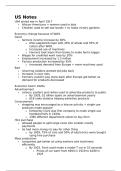
USA joined war in April 1917
African Americans + women used in jobs
Children used to sell war bonds + to make victory gardens
Economy change because of WW1
Good
farmers income increase by 30%
o USA supplied Europe with 30% of wheat and 55% of
cotton after WW1
o Increased use of machines
o Farmers took loans from banks to make farms bigger
Wages for unskilled work rose by 20%
Employment increased by 1.3 million
Factory production increased by 35%
o Increased demand from Europe + more machines used
Bad
returning soldiers wanted old jobs back
Increase in race riots
Farmers couldn’t pay loans back after Europe got better as
demand for products decreased
Economic boom 1920s
Advertisement
colours, posters and radios used to advertise products to public
o By 1929, $2 billion spent on advertisement yearly
o 618 radio stations helping advertise products
Consumerism
shopping was encouraged as a leisure activity + single use
products made popular
o Kimberley Clark was first company to make single use
handkerchiefs in 1920s.
o 1395 different department stores to buy form
Hire purchase
allowed people to split large costs into smaller mostly
payments
So had more money to pay for other thing
o by 1929, 75% of cars and 50% of electronics were bought
using hire purchase
Mass production
companies got better at using workers and machinery
efficiently
o By 1925, Ford could make a model T car in 10 seconds
Prices of car went from $950 in 1919 to $290 in
1925
, Share purchasing
anyone could take loans from banks to pay for shares and then
sell shares to make profit + pay loans back
o Shares usually increased
Radio corp: $0.94 share price in 1928 —> $5.05
share price in Sep 1929
Problem for banks as if people lost money in stocks they
wouldn’t be able to pay loans back
o Could make them go bankrupt
Weakens US economy
Leisure boom 1920s
10 million radio listeners in 1929, compared to 60,000 listeners
in 1920
40 million cinema tickets sold in 1924
First film with sound made in 1927
First film with colour in 1922
First animation film in 1928
Charleston dance popularised by musical “Running Wild” in
1923
Sports:
Bobby Jones - won first grand slam in 1930
Bill Tilden - won seven US Championships
Jack Dempsey - fighter who sold $2 million in ticket in 1927
Cars:
cars were only made in one colour and model
General Motors made new, more expensive in 1925
o Made cars into a sport
Women’s Freedom
Industry
2 million women in workforce in 1920s
Had access to 537 jobs out of 572
Women could work in politics
o 145 in state government
2 women in House of Representatives
But…
still given stereotypical jobs
Only 12% of married women still working by end of 1920s
Women paid $12 less than men per week
Rights
19th Amendment gave women right to vote in 1920
USA joined war in April 1917
African Americans + women used in jobs
Children used to sell war bonds + to make victory gardens
Economy change because of WW1
Good
farmers income increase by 30%
o USA supplied Europe with 30% of wheat and 55% of
cotton after WW1
o Increased use of machines
o Farmers took loans from banks to make farms bigger
Wages for unskilled work rose by 20%
Employment increased by 1.3 million
Factory production increased by 35%
o Increased demand from Europe + more machines used
Bad
returning soldiers wanted old jobs back
Increase in race riots
Farmers couldn’t pay loans back after Europe got better as
demand for products decreased
Economic boom 1920s
Advertisement
colours, posters and radios used to advertise products to public
o By 1929, $2 billion spent on advertisement yearly
o 618 radio stations helping advertise products
Consumerism
shopping was encouraged as a leisure activity + single use
products made popular
o Kimberley Clark was first company to make single use
handkerchiefs in 1920s.
o 1395 different department stores to buy form
Hire purchase
allowed people to split large costs into smaller mostly
payments
So had more money to pay for other thing
o by 1929, 75% of cars and 50% of electronics were bought
using hire purchase
Mass production
companies got better at using workers and machinery
efficiently
o By 1925, Ford could make a model T car in 10 seconds
Prices of car went from $950 in 1919 to $290 in
1925
, Share purchasing
anyone could take loans from banks to pay for shares and then
sell shares to make profit + pay loans back
o Shares usually increased
Radio corp: $0.94 share price in 1928 —> $5.05
share price in Sep 1929
Problem for banks as if people lost money in stocks they
wouldn’t be able to pay loans back
o Could make them go bankrupt
Weakens US economy
Leisure boom 1920s
10 million radio listeners in 1929, compared to 60,000 listeners
in 1920
40 million cinema tickets sold in 1924
First film with sound made in 1927
First film with colour in 1922
First animation film in 1928
Charleston dance popularised by musical “Running Wild” in
1923
Sports:
Bobby Jones - won first grand slam in 1930
Bill Tilden - won seven US Championships
Jack Dempsey - fighter who sold $2 million in ticket in 1927
Cars:
cars were only made in one colour and model
General Motors made new, more expensive in 1925
o Made cars into a sport
Women’s Freedom
Industry
2 million women in workforce in 1920s
Had access to 537 jobs out of 572
Women could work in politics
o 145 in state government
2 women in House of Representatives
But…
still given stereotypical jobs
Only 12% of married women still working by end of 1920s
Women paid $12 less than men per week
Rights
19th Amendment gave women right to vote in 1920