THE PHARYNX
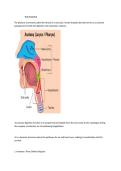
The pharynx (commonly called the throat) is a muscular, funnel-shaped tube that serves as a common
passageway for both the digestive and respiratory systems.
Its primary digestive function is to propel food and liquids from the oral cavity to the esophagus during
the complex, involuntary act of swallowing (deglutition).
It is a dynamic structure where the pathways for air and food cross, making its coordination vital for
survival.
1. Anatomy: Three Distinct Regions
, The pharynx is approximately 13 cm long and is subdivided into three parts, based on location and
anterior relations:
a. Nasopharynx:
Posterior to the nasal cavity and above the soft palate.
· Digestive Role:
Not involved in normal digestion. It is a purely respiratory passage for air.
During swallowing, the soft palate elevates to close off the nasopharynx (velopharyngeal closure),
preventing food or liquid from regurgitating into the nose.
b. Oropharynx:
Posterior to the oral cavity, from the soft palate to the epiglottis.
· Boundaries:
Anteriorly by the fauces (the opening from the mouth), posteriorly by the pharyngeal wall, and laterally
by the palatine tonsils (in the tonsillar fossae).
· Digestive Role:
This is the first segment actively involved in digestion. It receives the bolus (chewed and saliva-mixed
food) from the mouth via the tongue.
It is a major site for the initiation of the involuntary swallowing reflex.
· c. Laryngopharynx (Hypopharynx): Extends from the tip of thew epiglottis to the level of the cricoid
cartilage, where it becomes continuous with the esophagus posteriorly and the larynx anteriorly.
The pharynx (commonly called the throat) is a muscular, funnel-shaped tube that serves as a common
passageway for both the digestive and respiratory systems.
Its primary digestive function is to propel food and liquids from the oral cavity to the esophagus during
the complex, involuntary act of swallowing (deglutition).
It is a dynamic structure where the pathways for air and food cross, making its coordination vital for
survival.
1. Anatomy: Three Distinct Regions
, The pharynx is approximately 13 cm long and is subdivided into three parts, based on location and
anterior relations:
a. Nasopharynx:
Posterior to the nasal cavity and above the soft palate.
· Digestive Role:
Not involved in normal digestion. It is a purely respiratory passage for air.
During swallowing, the soft palate elevates to close off the nasopharynx (velopharyngeal closure),
preventing food or liquid from regurgitating into the nose.
b. Oropharynx:
Posterior to the oral cavity, from the soft palate to the epiglottis.
· Boundaries:
Anteriorly by the fauces (the opening from the mouth), posteriorly by the pharyngeal wall, and laterally
by the palatine tonsils (in the tonsillar fossae).
· Digestive Role:
This is the first segment actively involved in digestion. It receives the bolus (chewed and saliva-mixed
food) from the mouth via the tongue.
It is a major site for the initiation of the involuntary swallowing reflex.
· c. Laryngopharynx (Hypopharynx): Extends from the tip of thew epiglottis to the level of the cricoid
cartilage, where it becomes continuous with the esophagus posteriorly and the larynx anteriorly.