THE GALLBLADDER: A RESERVOIR FOR BILE.
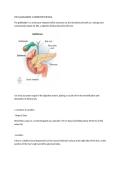
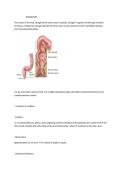
The gallbladder is a small, pear-shaped, hollow muscular sac that functions primarily as a storage and
concentration depot for bile, a digestive fluid produced by the liver.
It is a key accessory organ of the digestive system, playing a crucial role in the emulsification and
absorption of dietary fats.
1. Anatomy & Location
· Shape & Size:
Resembles a pear or a small elongated sac, typically 7-10 cm long and holding about 30-50 mL of bile
when full.
· Location:
It lies in a shallow fossa (depression) on the visceral (inferior) surface of the right lobe of the liver, at the
junction of the liver's right and left anatomical lobes.
, · Anatomical Relations:
· Anteriorly:
The anterior abdominal wall and the inferior edge of the liver.
· Posteriorly:
The transverse colon and the first part of the duodenum.
· Structural Parts:
1. Fundus:
The rounded, blind end that projects slightly beyond the liver's inferior border.
It is typically located at the level of the 9th costal cartilage in the midclavicular line.
2. Body:
The main, central portion that lies in contact with the liver.
3. Neck:
The tapered, narrow portion that connects to the cystic duct. It often makes an "S"-shaped curve.
4. Cystic Duct:
The short duct (3-4 cm) that connects the neck of the gallbladder to the common hepatic duct (from the
liver) to form the common bile duct (CBD).
The gallbladder is a small, pear-shaped, hollow muscular sac that functions primarily as a storage and
concentration depot for bile, a digestive fluid produced by the liver.
It is a key accessory organ of the digestive system, playing a crucial role in the emulsification and
absorption of dietary fats.
1. Anatomy & Location
· Shape & Size:
Resembles a pear or a small elongated sac, typically 7-10 cm long and holding about 30-50 mL of bile
when full.
· Location:
It lies in a shallow fossa (depression) on the visceral (inferior) surface of the right lobe of the liver, at the
junction of the liver's right and left anatomical lobes.
, · Anatomical Relations:
· Anteriorly:
The anterior abdominal wall and the inferior edge of the liver.
· Posteriorly:
The transverse colon and the first part of the duodenum.
· Structural Parts:
1. Fundus:
The rounded, blind end that projects slightly beyond the liver's inferior border.
It is typically located at the level of the 9th costal cartilage in the midclavicular line.
2. Body:
The main, central portion that lies in contact with the liver.
3. Neck:
The tapered, narrow portion that connects to the cystic duct. It often makes an "S"-shaped curve.
4. Cystic Duct:
The short duct (3-4 cm) that connects the neck of the gallbladder to the common hepatic duct (from the
liver) to form the common bile duct (CBD).