

Financial indicators
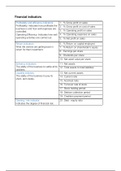
Profitability and efficiency indicators 1. % Gross profit on sales
Profitability: Indicates how profitable the 2. % Gross profit on cost of sales
business is and how well expenses are
controlled. 3. % Operating profit on sales
Operating Efficiency: Indicates how well 4. % Operating expenses on sales
operating activities are carried out. 5. % Net profit on sales
Return indicators 6. % Return on capital employed
What the owners are getting back in 7. % Return on shareholder’s equity
return for their investment.
8. Earnings per share
9. Dividends per share
10. Net asset value per share
Solvency indicators 11. Net assets
The ability of the business to settle all its 12. Total assets to total liabilities
liabilities.
Liquidity indictors 13. Net current assets
The ability of the business to pay its 14. Current ratio
short- term debts.
15. Acid-test ratio
16. Turnover rate of stock
17. Stock holding period
18. Debtors collection period
19. Creditors payment period
Gearing / risk indicator 20. Debt : equity ratio
Indicates the degree of financial risk.
,Purpose of indictors:
= Communicate information to various users of Financial Statements
(Done to make informed decision regarding the Company.
1. Shareholders
2. Directors and Auditors
3. Financial institutions, Creditors
4. SARS and Competitors
Comparison of indicators:
- to the previous year’s (Check whether there is growth or stagnation in the business)
- to a competitor (Check results with competitors performance)
- to alternative courses of action (E.g. alternative investments)
- to a desired aim or objective
- to generally accepted norms (To general economic indicators in the country or globally)
Five main parts:
1. Income Statement (Statement of Comprehensive Income)
2. Balance sheet (Statement of Financial Position)
3. Cash Flow Statement
4. Director’s Repot
5. Auditor’s Report
When calculating show formulas and all calculations (e.g. working out an average).
Round to 2 decimals always, expect when working with days, then only whole numbers.
When commenting always state whether the figure has increased or decreased from last year.
State what the number itself means. Comment on what that means for the business in the
future.
, Profitability & Operating efficiency
All figures can be found in the Income Statement.
1. % Gross profit on sales
Gross profit = the amount by which sales exceed the cost of sales
𝑔𝑟𝑜𝑠𝑠 𝑝𝑟𝑜𝑓𝑖𝑡 100
= 𝑠𝑎𝑙𝑒𝑠
x 1
2. % Gross profit on cost of sales (mark-up)
Gross profit = the amount by which sales exceed the cost of sales
𝑔𝑟𝑜𝑠𝑠 𝑝𝑟𝑜𝑓𝑖𝑡 100
= 𝑐𝑜𝑠𝑡 𝑜𝑓 𝑠𝑎𝑙𝑒𝑠
x 1
Commenting of 1 & 2:
(If the mark-up achieved is lower than the intended mark-up)
- Granting trade discount too easily
- Poorly controlled seasonal sales
- Mistake in marking prices
- Mistakes on the source documents
- Incorrectly recorded in the books
3. % Operating profit on cost of sales
Operating profit = the amount by which operating income exceeds operating expenses
𝑜𝑝𝑒𝑟𝑎𝑡𝑖𝑛𝑔 𝑝𝑟𝑜𝑓𝑖𝑡 100
= 𝑐𝑜𝑠𝑡 𝑜𝑓 𝑠𝑎𝑙𝑒𝑠
x 1
This can be compared to gross profit on sales to determine the influence of operating expenses
on profit.
This can also be compared to the previous year’s to indicate a positive or negative trend in
results.
These comparisons indicate:
- What % gross profit is spent on operating expenses
- Whether the business is prospering or deteriorating
- How effective the purchasing policy, the sales policy and the control of expenses are
4. % Operating expenses on cost of sales
𝑜𝑝𝑒𝑟𝑎𝑡𝑖𝑛𝑔 𝑒𝑥𝑝𝑒𝑛𝑠𝑒𝑠 100
= 𝑐𝑜𝑠𝑡 𝑜𝑓 𝑠𝑎𝑙𝑒𝑠
x 1
(Can be compared to the previous year’s or to a competitor)
This indicates whether the operating expenses have remained constant and whether they are
effectively controlled.
Profitability and efficiency indicators 1. % Gross profit on sales
Profitability: Indicates how profitable the 2. % Gross profit on cost of sales
business is and how well expenses are
controlled. 3. % Operating profit on sales
Operating Efficiency: Indicates how well 4. % Operating expenses on sales
operating activities are carried out. 5. % Net profit on sales
Return indicators 6. % Return on capital employed
What the owners are getting back in 7. % Return on shareholder’s equity
return for their investment.
8. Earnings per share
9. Dividends per share
10. Net asset value per share
Solvency indicators 11. Net assets
The ability of the business to settle all its 12. Total assets to total liabilities
liabilities.
Liquidity indictors 13. Net current assets
The ability of the business to pay its 14. Current ratio
short- term debts.
15. Acid-test ratio
16. Turnover rate of stock
17. Stock holding period
18. Debtors collection period
19. Creditors payment period
Gearing / risk indicator 20. Debt : equity ratio
Indicates the degree of financial risk.
,Purpose of indictors:
= Communicate information to various users of Financial Statements
(Done to make informed decision regarding the Company.
1. Shareholders
2. Directors and Auditors
3. Financial institutions, Creditors
4. SARS and Competitors
Comparison of indicators:
- to the previous year’s (Check whether there is growth or stagnation in the business)
- to a competitor (Check results with competitors performance)
- to alternative courses of action (E.g. alternative investments)
- to a desired aim or objective
- to generally accepted norms (To general economic indicators in the country or globally)
Five main parts:
1. Income Statement (Statement of Comprehensive Income)
2. Balance sheet (Statement of Financial Position)
3. Cash Flow Statement
4. Director’s Repot
5. Auditor’s Report
When calculating show formulas and all calculations (e.g. working out an average).
Round to 2 decimals always, expect when working with days, then only whole numbers.
When commenting always state whether the figure has increased or decreased from last year.
State what the number itself means. Comment on what that means for the business in the
future.
, Profitability & Operating efficiency
All figures can be found in the Income Statement.
1. % Gross profit on sales
Gross profit = the amount by which sales exceed the cost of sales
𝑔𝑟𝑜𝑠𝑠 𝑝𝑟𝑜𝑓𝑖𝑡 100
= 𝑠𝑎𝑙𝑒𝑠
x 1
2. % Gross profit on cost of sales (mark-up)
Gross profit = the amount by which sales exceed the cost of sales
𝑔𝑟𝑜𝑠𝑠 𝑝𝑟𝑜𝑓𝑖𝑡 100
= 𝑐𝑜𝑠𝑡 𝑜𝑓 𝑠𝑎𝑙𝑒𝑠
x 1
Commenting of 1 & 2:
(If the mark-up achieved is lower than the intended mark-up)
- Granting trade discount too easily
- Poorly controlled seasonal sales
- Mistake in marking prices
- Mistakes on the source documents
- Incorrectly recorded in the books
3. % Operating profit on cost of sales
Operating profit = the amount by which operating income exceeds operating expenses
𝑜𝑝𝑒𝑟𝑎𝑡𝑖𝑛𝑔 𝑝𝑟𝑜𝑓𝑖𝑡 100
= 𝑐𝑜𝑠𝑡 𝑜𝑓 𝑠𝑎𝑙𝑒𝑠
x 1
This can be compared to gross profit on sales to determine the influence of operating expenses
on profit.
This can also be compared to the previous year’s to indicate a positive or negative trend in
results.
These comparisons indicate:
- What % gross profit is spent on operating expenses
- Whether the business is prospering or deteriorating
- How effective the purchasing policy, the sales policy and the control of expenses are
4. % Operating expenses on cost of sales
𝑜𝑝𝑒𝑟𝑎𝑡𝑖𝑛𝑔 𝑒𝑥𝑝𝑒𝑛𝑠𝑒𝑠 100
= 𝑐𝑜𝑠𝑡 𝑜𝑓 𝑠𝑎𝑙𝑒𝑠
x 1
(Can be compared to the previous year’s or to a competitor)
This indicates whether the operating expenses have remained constant and whether they are
effectively controlled.





