

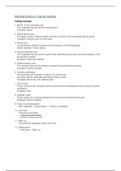
Manufacturing or Cost accounting
Costing concepts
1. Direct or raw materials cost
1. The materials that go into the final product.
1. Example: Wood
2. Direct labour cost
2. The labour costs of those workers directly involved in the manufacturing of goods.
2. Example: Workers who cut the wood
3. Prime cost
3. Costs that are directly involved in the production of finished goods.
3. Direct material + Direct labour
4. Indirect material cost
4. The materials that do not form part of the finished product, but are still necessary in the
4. production process.
4. Example: Cleaning materials
5. Indirect labour cost
5. The workers that are not directly involved in the production process
5. Example: Factory manger
6. Factory overheads
6. All costs that are incurred in order to run the factory.
6. Includes indirect materials and indirect labour costs.
6. Example: Electricity, rent, depreciation
7. Fixed costs
7. These costs remain constant within a period of time irrespective of the amount of good
7. produced.
7. Example: Rent
8. Variable costs
8. These costs vary in direct proportion to the amount of goods produced.
8. Example: Direct materials
9. Total cost of production
9. = Raw materials + Direct labour + Factory overheads
10. Unit cost
10. The cost of one item.
𝑇𝑜𝑡𝑎𝑙 𝑐𝑜𝑠𝑡 𝑜𝑓 𝑝𝑟𝑜𝑑𝑢𝑐𝑡𝑖𝑜𝑛
10. = 𝑁𝑢𝑚𝑏𝑒𝑟 𝑜𝑓 𝑢𝑛𝑖𝑡𝑠 𝑝𝑟𝑜𝑑𝑢𝑐𝑒𝑑
11. Mark up
11. The profit the business adds to the cost.
12. Selling price
12. = Cost price + Mark up
, Breakeven point
The number of items that need to be sold so that neither a profit or loss is achieved
𝑓𝑖𝑥𝑒𝑑 𝑐𝑜𝑠𝑡𝑠
=
𝑆𝑃 𝑝𝑒𝑟 𝑢𝑛𝑖𝑡 − 𝑉𝐶 𝑝𝑒𝑟 𝑢𝑛𝑖𝑡
Contribution per unit
= Selling price per unit – Variable cost per unit
Example:
Selling price Variable cost Contribution Fixed cost Breakeven
per item per item per item point
24 16 8 160 20
40 25 15 750 50
80 54 26 624 24
80 68 12 144 12
Productivity
= The ratio between a certain amount of output and a certain amount of input
Number of products produced : Number of hours worked
The higher the productivity the better.
The workers are therefore producing more with the same input.
Increasing productivity of people, results in higher profits.
Costing concepts
1. Direct or raw materials cost
1. The materials that go into the final product.
1. Example: Wood
2. Direct labour cost
2. The labour costs of those workers directly involved in the manufacturing of goods.
2. Example: Workers who cut the wood
3. Prime cost
3. Costs that are directly involved in the production of finished goods.
3. Direct material + Direct labour
4. Indirect material cost
4. The materials that do not form part of the finished product, but are still necessary in the
4. production process.
4. Example: Cleaning materials
5. Indirect labour cost
5. The workers that are not directly involved in the production process
5. Example: Factory manger
6. Factory overheads
6. All costs that are incurred in order to run the factory.
6. Includes indirect materials and indirect labour costs.
6. Example: Electricity, rent, depreciation
7. Fixed costs
7. These costs remain constant within a period of time irrespective of the amount of good
7. produced.
7. Example: Rent
8. Variable costs
8. These costs vary in direct proportion to the amount of goods produced.
8. Example: Direct materials
9. Total cost of production
9. = Raw materials + Direct labour + Factory overheads
10. Unit cost
10. The cost of one item.
𝑇𝑜𝑡𝑎𝑙 𝑐𝑜𝑠𝑡 𝑜𝑓 𝑝𝑟𝑜𝑑𝑢𝑐𝑡𝑖𝑜𝑛
10. = 𝑁𝑢𝑚𝑏𝑒𝑟 𝑜𝑓 𝑢𝑛𝑖𝑡𝑠 𝑝𝑟𝑜𝑑𝑢𝑐𝑒𝑑
11. Mark up
11. The profit the business adds to the cost.
12. Selling price
12. = Cost price + Mark up
, Breakeven point
The number of items that need to be sold so that neither a profit or loss is achieved
𝑓𝑖𝑥𝑒𝑑 𝑐𝑜𝑠𝑡𝑠
=
𝑆𝑃 𝑝𝑒𝑟 𝑢𝑛𝑖𝑡 − 𝑉𝐶 𝑝𝑒𝑟 𝑢𝑛𝑖𝑡
Contribution per unit
= Selling price per unit – Variable cost per unit
Example:
Selling price Variable cost Contribution Fixed cost Breakeven
per item per item per item point
24 16 8 160 20
40 25 15 750 50
80 54 26 624 24
80 68 12 144 12
Productivity
= The ratio between a certain amount of output and a certain amount of input
Number of products produced : Number of hours worked
The higher the productivity the better.
The workers are therefore producing more with the same input.
Increasing productivity of people, results in higher profits.




