

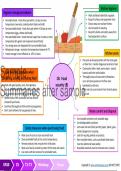
Kitchen hygiene
Hygienic storage procedures
• Wash and bleach dishcloths regularly
• Perishable foods – foods that spoil within 1-3 days at room • Keep all surfaces and equipment clean
temperature (raw meat, cooked protein foods and milk). • Choose easy-care surface finishes
• Semi-perishable foods – foods that spoil within 4-10 days at room • Use hot water for washing
temperature (eggs, cheese and bread). • Keep dirty dishes and cutlery away from
• Non-perishable foods – foods that last longer than 2 weeks at room food preparation surfaces.
temperature (dry grains and unopened canned foods). • .
• Dry storage areas are designated for non-perishable foods. • .
• Refrigerator storage - maintain the temperature between 0-4°C.
• Freezer storage is most effective at -18°C or lower. • Kitchen pests
• Flies•pick up decaying matter with the sticky pads
on their feet - transfer dangerous bacteria to food.
Sample
•
Safe handling practices when
preparing,
• serving and eating food C8: Food
•
•
Cockroaches hide in dark, warm places - spread
bacteria with their sticky bodies.
Thoroughly clean all areas where infestations
occur and spray poison on the floor near
• Work with good quality, clean, fresh produce. security (B) baseboards and drains.
Summaries after sample
•
•
Be very careful when preparing meat, poultry, and
dairy products due to microbial contamination.
Handle food as little as possible and use utensils
instead of your hands.
•
•
•
Mice and rats carry bacteria from the dirty places
they visit.
.
.
• Cook food thoroughly to kill harmful microorganisms.
• Don’t store leftovers for long periods of time. • Waste control and disposal
• .
• . • Use •reusable containers and resealable bags.
• Use biodegradable containers.
• Safety measures when purchasing food • Sort waste into wet (food) and dry (paper, plastic, glass,
metal) categories for recycling.
• • Make sure the store is clean and smells fresh. • Look for recycling symbols on products.
• Store perishable foods at the correct temperatures. • Non-recyclable items, such as perishable food waste,
• Remove products that are past their sell-by date. must be collected at least weekly.
• Make sure food is covered to protect it from dust and insects. • Recyclable materials must be removed every 2 weeks.
• Use stores with fast turnover for perishable foods. • .
• . • .
• .
GR10 CS • . T2-T3 Mindmap Focus • Copyright © www.summariessa.co.za (DO NOT COPY)
,Sample
Summaries after sample
, The AIDA model The aim of marketing
• Attention – advertisements with music, bold • Identify potential buyers.
headlines, bright colours or humour. • Select target markets.
• Interest - emphasises the benefits of the • Assess needs.
product/service. • Develop appropriate products/services.
• Desire - convinces the customer that the • Understand buyer preferences.
product/service will meet their needs by using • Analyse competitor actions.
images and statements. • Pricing.
• Action - motivates the consumer to take action • Determine methods for distribution and promotion.
and buy the product or service. C5: • .
• .
• Marketing (A) •
The difference between
Marketing
•
communication channels •
marketing and selling
Sample •
•
Marketing communications are essential to informing
consumers about products and services.
Effective communication requires you to understand
consumer behaviour to improve marketing strategies.
•
•
Conversion - the process of closing a purchase transaction
where potential customers become actual customers.
Marketing involves market research - identifying target
customers' needs and preferences.
Summaries after sample •
•
•
Successful marketing campaigns use multiple marketing
communication channels for a broader reach.
.
•
•
Salespeople must overcome objections that hinder
purchases.
Research during the marketing process identifies potential
objections and helps design strategies to address them.
The 5Ps in the 5P marketing mix model • .
•
•
• Product – what it is; its physical characteristics; what it does; quality;
how it differs from competitors; and its benefits. Marketing strategies for consumer products
•
• Price – adjust the price to remain competitive but still make a profit.
• Marketing strategies are aimed at meeting consumer needs –
• Place – where the business sells its products/services and how it
segmenting, targeting and positioning activities.
reaches its consumers.
• Market segmentation - the process of dividing a market into distinct
• Promotion – is used to introduce the features and benefits of the
segments based on the characteristics of consumers.
product/ service to your target market (advertising).
• Market segmentation – demographics, geography, psychographics,
• People - people who deliver the service being marketed; and who
behaviour and benefit.
help spread the word about the business.
• Target market - a specific group of consumers at whom a company
• .
aims its products and services.
•
•
•GR10 CS T2-T1 Mindmap Focus
• Copyright © www.summariessa.co.za (DO NOT COPY)
Hygienic storage procedures
• Wash and bleach dishcloths regularly
• Perishable foods – foods that spoil within 1-3 days at room • Keep all surfaces and equipment clean
temperature (raw meat, cooked protein foods and milk). • Choose easy-care surface finishes
• Semi-perishable foods – foods that spoil within 4-10 days at room • Use hot water for washing
temperature (eggs, cheese and bread). • Keep dirty dishes and cutlery away from
• Non-perishable foods – foods that last longer than 2 weeks at room food preparation surfaces.
temperature (dry grains and unopened canned foods). • .
• Dry storage areas are designated for non-perishable foods. • .
• Refrigerator storage - maintain the temperature between 0-4°C.
• Freezer storage is most effective at -18°C or lower. • Kitchen pests
• Flies•pick up decaying matter with the sticky pads
on their feet - transfer dangerous bacteria to food.
Sample
•
Safe handling practices when
preparing,
• serving and eating food C8: Food
•
•
Cockroaches hide in dark, warm places - spread
bacteria with their sticky bodies.
Thoroughly clean all areas where infestations
occur and spray poison on the floor near
• Work with good quality, clean, fresh produce. security (B) baseboards and drains.
Summaries after sample
•
•
Be very careful when preparing meat, poultry, and
dairy products due to microbial contamination.
Handle food as little as possible and use utensils
instead of your hands.
•
•
•
Mice and rats carry bacteria from the dirty places
they visit.
.
.
• Cook food thoroughly to kill harmful microorganisms.
• Don’t store leftovers for long periods of time. • Waste control and disposal
• .
• . • Use •reusable containers and resealable bags.
• Use biodegradable containers.
• Safety measures when purchasing food • Sort waste into wet (food) and dry (paper, plastic, glass,
metal) categories for recycling.
• • Make sure the store is clean and smells fresh. • Look for recycling symbols on products.
• Store perishable foods at the correct temperatures. • Non-recyclable items, such as perishable food waste,
• Remove products that are past their sell-by date. must be collected at least weekly.
• Make sure food is covered to protect it from dust and insects. • Recyclable materials must be removed every 2 weeks.
• Use stores with fast turnover for perishable foods. • .
• . • .
• .
GR10 CS • . T2-T3 Mindmap Focus • Copyright © www.summariessa.co.za (DO NOT COPY)
,Sample
Summaries after sample
, The AIDA model The aim of marketing
• Attention – advertisements with music, bold • Identify potential buyers.
headlines, bright colours or humour. • Select target markets.
• Interest - emphasises the benefits of the • Assess needs.
product/service. • Develop appropriate products/services.
• Desire - convinces the customer that the • Understand buyer preferences.
product/service will meet their needs by using • Analyse competitor actions.
images and statements. • Pricing.
• Action - motivates the consumer to take action • Determine methods for distribution and promotion.
and buy the product or service. C5: • .
• .
• Marketing (A) •
The difference between
Marketing
•
communication channels •
marketing and selling
Sample •
•
Marketing communications are essential to informing
consumers about products and services.
Effective communication requires you to understand
consumer behaviour to improve marketing strategies.
•
•
Conversion - the process of closing a purchase transaction
where potential customers become actual customers.
Marketing involves market research - identifying target
customers' needs and preferences.
Summaries after sample •
•
•
Successful marketing campaigns use multiple marketing
communication channels for a broader reach.
.
•
•
Salespeople must overcome objections that hinder
purchases.
Research during the marketing process identifies potential
objections and helps design strategies to address them.
The 5Ps in the 5P marketing mix model • .
•
•
• Product – what it is; its physical characteristics; what it does; quality;
how it differs from competitors; and its benefits. Marketing strategies for consumer products
•
• Price – adjust the price to remain competitive but still make a profit.
• Marketing strategies are aimed at meeting consumer needs –
• Place – where the business sells its products/services and how it
segmenting, targeting and positioning activities.
reaches its consumers.
• Market segmentation - the process of dividing a market into distinct
• Promotion – is used to introduce the features and benefits of the
segments based on the characteristics of consumers.
product/ service to your target market (advertising).
• Market segmentation – demographics, geography, psychographics,
• People - people who deliver the service being marketed; and who
behaviour and benefit.
help spread the word about the business.
• Target market - a specific group of consumers at whom a company
• .
aims its products and services.
•
•
•GR10 CS T2-T1 Mindmap Focus
• Copyright © www.summariessa.co.za (DO NOT COPY)


