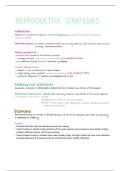
REPRODUCTION
ofanewgenerationoforganismsfromanexistinggeneration lifeprocessthatensuresthecontinuous
Production
survivalof a species
Goalofeachspecies toproducemaximumnumberofsurvivingoffspringwhileusingtheleastamount
ofenergy reproductiveeffort
Asexualreproduction
foundinlesscomplex microscopicanimals
energyefficient onlyinvolves asingleparent lowreproductiveeffort
nogametesrequired animaldevelopsbymitosis
sexualreproduction
happens in allvertebrates morecomplex
highenergyinputneeded involves twoparents highreproductiveeffort
gametesrequired meiosisandmitosistakeplace
REPRODUCTIVE STRATEGIES
structural functional behavioural adaptionsthatincreasethechancesoffertilisation
Reproductivebehaviours ensure thatsexuallymatureindividuals of thesamespecies
advantagoustothespecies meet
Recogniseeachotheras thesamespecies
Mate leaveenoughviableoffspring tomaximizereproductivesuccess
indifferentenvironments
Courtship
Behaviouralpatternsofmale femaleanimals of the samespecies that lead to maturing
production ofoffspring
Purpose
• Ensures that both male and female are ready for mating
• Helps females to identify mating partners of the same species and so prevent unsuccessful mating
between different species which saves energy
• Helps females choose a suitable male mate (usually larger, stronger males that have more attractive
physical features that increases chances of producing many healthy offspring)
, Rituals
seriesofbehavioursforcommunicationthat areperformedinthe same
waybyall themales femal
inthatspecies
simplecourtshipstrategies
Ihémical
bymeansofpheromones
visualbymeansofbrightlycolouredbodyparts
Auditorystimulibysongscallsorgrunts
Examples ininsectfrog birdspecies
• Females of some insect species such as moths:
◦ Produce species-specific pheromones (chemical) that guide males towards them
• Most frogs have to return to the water for mating and breeding
◦ Once the males reach the breeding ground they sing (grunt, croak) to attract females
◦ Each species has its own song (auditory) that only attracts females of that same species
• Male birds advertise when they are ready to mate by singing a species-specific song (auditory) that
attracts the female
◦ Once they meet, the male must then impress and stimulate the female sexually
◦ This is often achieved by special plumage (visual)
◦ Examples include the metallic-green breeding plumage of the male Malachite sunbird or extra-
long tail feathers of widowbirds
complexcourtship strategies
Moreelaborateformsofcourtshipareunique toeachspecies
Femalesfavourmalesthatare
larger helpsthefemaletochoosethe better
havemoreelaboratephysicalfeatures malethatcanreinforce pair bonding
displaymoreenergy incourtshipactivity producehealthieroffspring
Examples inbird springbokspecies
• The Blue Cranes' courtship displays include:
◦ A complex and extended series of calls
◦ Elaborate dances by the males
• Springbok have an annual rut (a period of sexual excitement), usually when the animals are in peak
condition
◦ To attract females, males defend territories with loud grunts, attack vegetation with their horns
and deposit urine and dung in a ritualised display
ofanewgenerationoforganismsfromanexistinggeneration lifeprocessthatensuresthecontinuous
Production
survivalof a species
Goalofeachspecies toproducemaximumnumberofsurvivingoffspringwhileusingtheleastamount
ofenergy reproductiveeffort
Asexualreproduction
foundinlesscomplex microscopicanimals
energyefficient onlyinvolves asingleparent lowreproductiveeffort
nogametesrequired animaldevelopsbymitosis
sexualreproduction
happens in allvertebrates morecomplex
highenergyinputneeded involves twoparents highreproductiveeffort
gametesrequired meiosisandmitosistakeplace
REPRODUCTIVE STRATEGIES
structural functional behavioural adaptionsthatincreasethechancesoffertilisation
Reproductivebehaviours ensure thatsexuallymatureindividuals of thesamespecies
advantagoustothespecies meet
Recogniseeachotheras thesamespecies
Mate leaveenoughviableoffspring tomaximizereproductivesuccess
indifferentenvironments
Courtship
Behaviouralpatternsofmale femaleanimals of the samespecies that lead to maturing
production ofoffspring
Purpose
• Ensures that both male and female are ready for mating
• Helps females to identify mating partners of the same species and so prevent unsuccessful mating
between different species which saves energy
• Helps females choose a suitable male mate (usually larger, stronger males that have more attractive
physical features that increases chances of producing many healthy offspring)
, Rituals
seriesofbehavioursforcommunicationthat areperformedinthe same
waybyall themales femal
inthatspecies
simplecourtshipstrategies
Ihémical
bymeansofpheromones
visualbymeansofbrightlycolouredbodyparts
Auditorystimulibysongscallsorgrunts
Examples ininsectfrog birdspecies
• Females of some insect species such as moths:
◦ Produce species-specific pheromones (chemical) that guide males towards them
• Most frogs have to return to the water for mating and breeding
◦ Once the males reach the breeding ground they sing (grunt, croak) to attract females
◦ Each species has its own song (auditory) that only attracts females of that same species
• Male birds advertise when they are ready to mate by singing a species-specific song (auditory) that
attracts the female
◦ Once they meet, the male must then impress and stimulate the female sexually
◦ This is often achieved by special plumage (visual)
◦ Examples include the metallic-green breeding plumage of the male Malachite sunbird or extra-
long tail feathers of widowbirds
complexcourtship strategies
Moreelaborateformsofcourtshipareunique toeachspecies
Femalesfavourmalesthatare
larger helpsthefemaletochoosethe better
havemoreelaboratephysicalfeatures malethatcanreinforce pair bonding
displaymoreenergy incourtshipactivity producehealthieroffspring
Examples inbird springbokspecies
• The Blue Cranes' courtship displays include:
◦ A complex and extended series of calls
◦ Elaborate dances by the males
• Springbok have an annual rut (a period of sexual excitement), usually when the animals are in peak
condition
◦ To attract females, males defend territories with loud grunts, attack vegetation with their horns
and deposit urine and dung in a ritualised display