

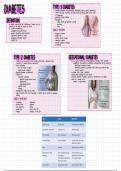
DIABETES TYPE I DIABETES
-
usually associated
causes
of
the body to
with autoimmune
destroy the bata
phenomenon
insulin
when
producing
a genetic abnormality
sells of the Islets
Langerhans
-
generally affects children
D EFINTrised managed by :
-
>
-
daily insulin by injection or
pump
by a deficiency of insulin or by a >
-
exercise
inability of the baby to respond to insulin >
-
diet
-
it is often associated by
SIGNS SYMPTOMS
>
-
polydipsia /increased thirsty
>
-
palyuria (excessive voine excretion) -
frequent urination
-
>
glucsuria (glucose in urinel -
weight loss
>
-
Polyphagia /excessive hunger) -
extreme thirst hunger
>
-
weight loss -
vomiting nausea
-
extreme weakness 3 fatigue
-
iroitability
TYPE 2 DIABETES GESTATIONAL DIABETES
-
results from a progressive insulin secretary deficiency decreased tissue -
form of g lucose intolerance during pregnancy normally in 3rd trimester
,
sensitivity to insulin (insulin resistances >
-
inability of the mother to metabolize Carbohydrates during pregnancy
-
insulin resistance ·
deficiency of mother's insulin
> too
-
few insulin osceptors ·
hormones secreted by placenta that blocks the action of the
>
-
faulty insulin receptors mother's insulin
in adulthood increases risk of type 2 diabetes
typically develops
- -
-
related to : -
resolves after delivery for most women
>
-
metabolic syndrome -
excessive simants of mother's glucose is transferred to the fatus
·
excessive weight around waist where it is stored as fat
·
hypertension >
-
results in large babies
·
hypercholesterolemia
>
-
genetic factors
>
-
obesity
-
managed with meds exercise diet ,
-
type 2 diabetes seen more foequently in children due to increase in shildhood
obesity
SIGNS 3 SYMPTOMS
-
irritability -
glycosuria
-
blurred vision -
polyuria
-
skin infections -
thirst
-
weight loss -
dry 3 itchy skin
-
hunger -
numbers in the skin
, DIABETESSECONDARY TO OTHER CONDITIONI
-
conditions that damage the pancreas including :
>
-
chronic pancreatitis
>
-
carcinoma of the pancreas
>
-
pancreatectomy
> infections
-
>
-
pregnancy (gestational)
>
-
cortisol works against the action of insulin , such as Cushing's syndrome
-
drugs or medications
KIDNEY FAILLIRE
-
glomeruli become scleratic
>
-
necrosis of the papillary tissue
>
-
remal failure
CEREBROVASCULAR DISEASE ,
S
STROKE 3 HYPERTENSION
lipolysis raises fat level in the blood
EYES
-
>
>
-
increased risk of atherosclerosis coronary
artery disease
-
high blood glucose levels damage vessels ,
-
misooangiopathy /small vessel disease) restricts leading to blindness
blood flow ; is associated with serebrovascular -
cataracts form from forstose , sorbital in
disease stroke the lens
COMPLICATIONS OF
DIABETES
> NEUROPATHY
PERIPHERAL VASCULAR DISEASE
-
often affects peripheral nerves
>
-
diminished sensation 3 function
-
secondary to atherosclerosis in the extremities
-
need for amputation
INFECTION
-
decreased immune system
-
usually associated
causes
of
the body to
with autoimmune
destroy the bata
phenomenon
insulin
when
producing
a genetic abnormality
sells of the Islets
Langerhans
-
generally affects children
D EFINTrised managed by :
-
>
-
daily insulin by injection or
pump
by a deficiency of insulin or by a >
-
exercise
inability of the baby to respond to insulin >
-
diet
-
it is often associated by
SIGNS SYMPTOMS
>
-
polydipsia /increased thirsty
>
-
palyuria (excessive voine excretion) -
frequent urination
-
>
glucsuria (glucose in urinel -
weight loss
>
-
Polyphagia /excessive hunger) -
extreme thirst hunger
>
-
weight loss -
vomiting nausea
-
extreme weakness 3 fatigue
-
iroitability
TYPE 2 DIABETES GESTATIONAL DIABETES
-
results from a progressive insulin secretary deficiency decreased tissue -
form of g lucose intolerance during pregnancy normally in 3rd trimester
,
sensitivity to insulin (insulin resistances >
-
inability of the mother to metabolize Carbohydrates during pregnancy
-
insulin resistance ·
deficiency of mother's insulin
> too
-
few insulin osceptors ·
hormones secreted by placenta that blocks the action of the
>
-
faulty insulin receptors mother's insulin
in adulthood increases risk of type 2 diabetes
typically develops
- -
-
related to : -
resolves after delivery for most women
>
-
metabolic syndrome -
excessive simants of mother's glucose is transferred to the fatus
·
excessive weight around waist where it is stored as fat
·
hypertension >
-
results in large babies
·
hypercholesterolemia
>
-
genetic factors
>
-
obesity
-
managed with meds exercise diet ,
-
type 2 diabetes seen more foequently in children due to increase in shildhood
obesity
SIGNS 3 SYMPTOMS
-
irritability -
glycosuria
-
blurred vision -
polyuria
-
skin infections -
thirst
-
weight loss -
dry 3 itchy skin
-
hunger -
numbers in the skin
, DIABETESSECONDARY TO OTHER CONDITIONI
-
conditions that damage the pancreas including :
>
-
chronic pancreatitis
>
-
carcinoma of the pancreas
>
-
pancreatectomy
> infections
-
>
-
pregnancy (gestational)
>
-
cortisol works against the action of insulin , such as Cushing's syndrome
-
drugs or medications
KIDNEY FAILLIRE
-
glomeruli become scleratic
>
-
necrosis of the papillary tissue
>
-
remal failure
CEREBROVASCULAR DISEASE ,
S
STROKE 3 HYPERTENSION
lipolysis raises fat level in the blood
EYES
-
>
>
-
increased risk of atherosclerosis coronary
artery disease
-
high blood glucose levels damage vessels ,
-
misooangiopathy /small vessel disease) restricts leading to blindness
blood flow ; is associated with serebrovascular -
cataracts form from forstose , sorbital in
disease stroke the lens
COMPLICATIONS OF
DIABETES
> NEUROPATHY
PERIPHERAL VASCULAR DISEASE
-
often affects peripheral nerves
>
-
diminished sensation 3 function
-
secondary to atherosclerosis in the extremities
-
need for amputation
INFECTION
-
decreased immune system


