Gas Exchange
This lecture considers the following big questions.
What is actually going on when we breathe and what can go wrong?
What mechanisms can lead to hypoxaemia? (There are only four).
What do we really mean by the terms hyperventilation and
hypoventilation?
How does mismatch of ventilation (V) to perfusion (Qc) occur in the
lungs, and what mechanisms compensate for the mismatch?
In some patients with dyspnoea, supplemental oxygen doesn't have
any beneficial effect. Why?
Respiration is dynamic!
After your breathe out, there is still air in the lungs in the alveoli and dead space to
stop them collapsing.
When we breathe in, the atmospheric air will mix with what is in the lungs already. Air
at the bottom of the lungs is a mix of CO2 and O2, importantly alveolar air is different to
atmospheric air.
PaO2 –
Between 10-13.1 kPa, haemoglobin is saturated at this point. I.e. this is the normal
range. There is not much point in having higher O2 as it won’t make any difference.
Hypoxaemia (low PO2 of blood) is when partial pressure of O2 falls below 10kPa. (note
hypoxia is low PO2 delivery to tissues).
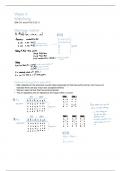
We can see this, with the example of Emily, in the graph below—
, So Emily has a PO2 of 8.0kPa, this means her O2 saturation is 91% which is bad and as
she is below 10.0kPa she is hypoxemic
Carbon Dioxide – Regulates blood pH
PaCO2 normal value is between 4.9 - 6.1 kPa
Hypocapnia is when PaCO2 falls below 4.9kPa
-In this case you lose CO2, lose acid and pH is increased (i.e. alkalosis)
Hypercapnia is when PaCO2 rises above 6.1 kPa
-CO2 is being retained, acid is retained, pH decreases (acidosis)
Respiratory Failure
There are two types of respiratory failure, type I and type II –
In type I, CO2 levels are okay and within range, but O2 is not good and the patient is
hypoxaemic (i.e. below 10kPa)
This may worsen to type II
In type II, O2 isn’t good AND CO2 is also beginning to accumulate in the body, this is
hypercapnia (CO2 above 6.1kPa)
This lecture considers the following big questions.
What is actually going on when we breathe and what can go wrong?
What mechanisms can lead to hypoxaemia? (There are only four).
What do we really mean by the terms hyperventilation and
hypoventilation?
How does mismatch of ventilation (V) to perfusion (Qc) occur in the
lungs, and what mechanisms compensate for the mismatch?
In some patients with dyspnoea, supplemental oxygen doesn't have
any beneficial effect. Why?
Respiration is dynamic!
After your breathe out, there is still air in the lungs in the alveoli and dead space to
stop them collapsing.
When we breathe in, the atmospheric air will mix with what is in the lungs already. Air
at the bottom of the lungs is a mix of CO2 and O2, importantly alveolar air is different to
atmospheric air.
PaO2 –
Between 10-13.1 kPa, haemoglobin is saturated at this point. I.e. this is the normal
range. There is not much point in having higher O2 as it won’t make any difference.
Hypoxaemia (low PO2 of blood) is when partial pressure of O2 falls below 10kPa. (note
hypoxia is low PO2 delivery to tissues).
We can see this, with the example of Emily, in the graph below—
, So Emily has a PO2 of 8.0kPa, this means her O2 saturation is 91% which is bad and as
she is below 10.0kPa she is hypoxemic
Carbon Dioxide – Regulates blood pH
PaCO2 normal value is between 4.9 - 6.1 kPa
Hypocapnia is when PaCO2 falls below 4.9kPa
-In this case you lose CO2, lose acid and pH is increased (i.e. alkalosis)
Hypercapnia is when PaCO2 rises above 6.1 kPa
-CO2 is being retained, acid is retained, pH decreases (acidosis)
Respiratory Failure
There are two types of respiratory failure, type I and type II –
In type I, CO2 levels are okay and within range, but O2 is not good and the patient is
hypoxaemic (i.e. below 10kPa)
This may worsen to type II
In type II, O2 isn’t good AND CO2 is also beginning to accumulate in the body, this is
hypercapnia (CO2 above 6.1kPa)