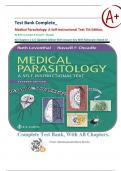
LCP4807 October
November Portfolio
(COMPLETE ANSWERS)
Semester 2 2025 - DUE
31 October 2025
NO PLAGIARISIM
[School]
[Course title]
, Exam (elaborations)
LCP4807 October November Portfolio (COMPLETE ANSWERS) Semester 2 2025 -
DUE 31 October 2025
Institution
University of South Africa (Unisa)
Course
International Human Rights Law
LCP4807 October November Portfolio (COMPLETE ANSWERS) Semester 2 2025 - DUE 31
October 2025; 100% TRUSTED Complete, trusted solutions and explanations.
QUESTION 1 “Whatever the jurisprudential basis for the application of international law in
municipal law may be, the undeniable fact is that international law is today applied in municipal
courts with more frequency than in the past. In so doing courts seldom question the theoretical
explanation for their recourse to international law.” 1.1. With the above background, critically
discuss the two approaches and the application of international law in South Africa. (25)
Question 1.1
Introduction
International law regulates relations between states and other international actors, while
municipal (domestic) law governs individuals within a state. The relationship between these two
systems has long been debated, with different theories explaining how international norms
become part of domestic legal systems. The quotation recognises that, regardless of theoretical
debates, domestic courts today apply international law more frequently — including in South
Africa.
This essay will critically discuss the two main approaches—monism and dualism—and examine
the application of international law in South Africa, focusing on constitutional provisions, case
law, and current practice.
1. Theoretical Framework: Monism and Dualism
, 1.1 Monism
Definition: The monist approach holds that international law and municipal law form
part of a single legal system.
Implication: International law automatically becomes part of domestic law without the
need for incorporation by national legislation.
Justification: States are bound by international law as soon as they consent to it, and
individuals within the state should benefit directly from these norms.
Example: Under a monist system (e.g., the Netherlands), treaties can be applied directly
by domestic courts once ratified, provided they are self-executing.
1.2 Dualism
Definition: The dualist theory views international law and municipal law as separate
legal systems operating independently.
Implication: International law does not automatically form part of domestic law; it must
be incorporated through legislation before it can be enforced by national courts.
Justification: The sources, subjects, and enforcement mechanisms of the two systems
differ—international law governs states, while municipal law governs individuals.
Example: In the United Kingdom, treaties must be enacted by Parliament before they
have domestic effect.
2. The South African Approach to International Law
South Africa’s Constitution of 1996 establishes a unique hybrid system that combines both
monist and dualist features, depending on the nature of the international norm (customary law
vs. treaty law).
2.1 Customary International Law
Constitutional provision:
o Section 232 of the Constitution states that “Customary international law is law in
the Republic unless it is inconsistent with the Constitution or an Act of
Parliament.”
Interpretation:
November Portfolio
(COMPLETE ANSWERS)
Semester 2 2025 - DUE
31 October 2025
NO PLAGIARISIM
[School]
[Course title]
, Exam (elaborations)
LCP4807 October November Portfolio (COMPLETE ANSWERS) Semester 2 2025 -
DUE 31 October 2025
Institution
University of South Africa (Unisa)
Course
International Human Rights Law
LCP4807 October November Portfolio (COMPLETE ANSWERS) Semester 2 2025 - DUE 31
October 2025; 100% TRUSTED Complete, trusted solutions and explanations.
QUESTION 1 “Whatever the jurisprudential basis for the application of international law in
municipal law may be, the undeniable fact is that international law is today applied in municipal
courts with more frequency than in the past. In so doing courts seldom question the theoretical
explanation for their recourse to international law.” 1.1. With the above background, critically
discuss the two approaches and the application of international law in South Africa. (25)
Question 1.1
Introduction
International law regulates relations between states and other international actors, while
municipal (domestic) law governs individuals within a state. The relationship between these two
systems has long been debated, with different theories explaining how international norms
become part of domestic legal systems. The quotation recognises that, regardless of theoretical
debates, domestic courts today apply international law more frequently — including in South
Africa.
This essay will critically discuss the two main approaches—monism and dualism—and examine
the application of international law in South Africa, focusing on constitutional provisions, case
law, and current practice.
1. Theoretical Framework: Monism and Dualism
, 1.1 Monism
Definition: The monist approach holds that international law and municipal law form
part of a single legal system.
Implication: International law automatically becomes part of domestic law without the
need for incorporation by national legislation.
Justification: States are bound by international law as soon as they consent to it, and
individuals within the state should benefit directly from these norms.
Example: Under a monist system (e.g., the Netherlands), treaties can be applied directly
by domestic courts once ratified, provided they are self-executing.
1.2 Dualism
Definition: The dualist theory views international law and municipal law as separate
legal systems operating independently.
Implication: International law does not automatically form part of domestic law; it must
be incorporated through legislation before it can be enforced by national courts.
Justification: The sources, subjects, and enforcement mechanisms of the two systems
differ—international law governs states, while municipal law governs individuals.
Example: In the United Kingdom, treaties must be enacted by Parliament before they
have domestic effect.
2. The South African Approach to International Law
South Africa’s Constitution of 1996 establishes a unique hybrid system that combines both
monist and dualist features, depending on the nature of the international norm (customary law
vs. treaty law).
2.1 Customary International Law
Constitutional provision:
o Section 232 of the Constitution states that “Customary international law is law in
the Republic unless it is inconsistent with the Constitution or an Act of
Parliament.”
Interpretation: