
Valley climates
Micro climate - climate of a small area
Temperature difference in valleys
Slope aspect - angle at which the sun's rays strike a slope
Sun always vertically overhead earth between the tropics (23 ½ °N and 23 ½ °S)
Between 23 ½ °N and the North Pole + 23 ½ °S and the South Pole → sun's rays strike
earth's surface at angle less than 90°
In summer → angle is greater than it is in winter
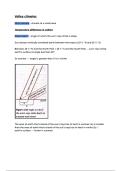
The area of earth that a band of the sun's rays has to heat in summer (a) is smaller
than the area of earth that a band of the sun's rays has to heat in winter (b) ∴
earth's surface → hotter in summer
, ➔ Sun's rays strike land at a low angle to the horizontal
➔ Sun's rays coming from north side (direction of equator)
➔ North-facing slope receives most heat from sun
➔ South facing slope doesn’t receive sun → shadow zone
Shadow zone - an area, such as a slope, that doesn’t receive sunlight
Valley winds
Wind blows from high to low pressure
➢ Warm air = low pressure
➢ Cold air = high pressure
4 winds that blow in valleys:
➔ Upslope wind - local wind that blows up sides of valley during day
➔ Valley wind or anabatic wind - a local wind that blows up the length of the
valley during the day, from the bottom to top of mountain
➔ Downslope wind - local wind that blows down sides of valley during night
➔ Mountain wind or katabatic wind - local wind that blows down the sides of a
valley during the night, from top to bottom of mountain
Micro climate - climate of a small area
Temperature difference in valleys
Slope aspect - angle at which the sun's rays strike a slope
Sun always vertically overhead earth between the tropics (23 ½ °N and 23 ½ °S)
Between 23 ½ °N and the North Pole + 23 ½ °S and the South Pole → sun's rays strike
earth's surface at angle less than 90°
In summer → angle is greater than it is in winter
The area of earth that a band of the sun's rays has to heat in summer (a) is smaller
than the area of earth that a band of the sun's rays has to heat in winter (b) ∴
earth's surface → hotter in summer
, ➔ Sun's rays strike land at a low angle to the horizontal
➔ Sun's rays coming from north side (direction of equator)
➔ North-facing slope receives most heat from sun
➔ South facing slope doesn’t receive sun → shadow zone
Shadow zone - an area, such as a slope, that doesn’t receive sunlight
Valley winds
Wind blows from high to low pressure
➢ Warm air = low pressure
➢ Cold air = high pressure
4 winds that blow in valleys:
➔ Upslope wind - local wind that blows up sides of valley during day
➔ Valley wind or anabatic wind - a local wind that blows up the length of the
valley during the day, from the bottom to top of mountain
➔ Downslope wind - local wind that blows down sides of valley during night
➔ Mountain wind or katabatic wind - local wind that blows down the sides of a
valley during the night, from top to bottom of mountain


