
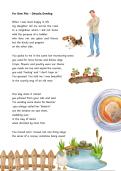
For Oom Piet – Dinuala Dowling
When I was least happy in life
my daughter led me across the road
to a neighbour whom I did not know
with the purpose of a toddler
who does not see gates and fences
but the ducks and puppies
on the other side.
You spoke to me in the same low murmuring tones
you used for lame horses and bilious dogs.
Crops, flowers and poultry were our theme:
you made me tea and wiped the counter,
you said ‘Foeitog’ and ‘I don’t hope so.’
You guessed. You told me I was beautiful,
In the courtly way of an old man.
One day when it rained
you phoned from your side and said
‘I’m sending some ducks for Beatrix’
-you always called her ‘Beatrix’-
out the window we saw them,
waddling over,
in the way of ducks
when directed by Oom Piet.
You moved and I moved, but one thing stays:
the sense of a rescue, somehow being saved.
, - The title signals a personal dedication, highlighting intimacy and
respect.
For OomPiet
- The honorific “Oom” conveys warmth and cultural context,
preparing the reader for a poem about guidance, kindness, and
human connection.
- This line immediately establishes a moment of vulnerability and
emotional low point, signaling that the speaker is reflecting from
a place of past struggle.
- It frames the ensuing narrative as one of contrast—highlighting
how moments of kindness or connection can emerge even in
When I was least happy in periods of despair. The phrasing is understated yet intimate,
life - drawing the reader into the speaker’s personal emotional
landscape without melodrama.
- By situating the speaker at their “least happy,” the poem primes
us to notice the significance of subsequent encounters,
emphasizing that small gestures or human connections gain
profound meaning when experienced against a backdrop of
unhappiness.
- This phrase conveys both physical and emotional guidance,
portraying the daughter as a gentle, intuitive presence who helps
the speaker navigate toward something new or restorative.
- The simplicity of the action—a small, everyday movement—belies
my daughter led me
its deeper significance, suggesting trust, innocence, and care.
across the road -
It also emphasizes the child’s perspective: unburdened by fear or
hesitation, she moves naturally toward curiosity and connection.
- In this way, the line frames the daughter as a bridge between the
speaker’s current despair and the potential for comfort or joy
- This phrase highlights a sense of unfamiliarity and tentative
exploration, emphasizing that the forthcoming connection is
unexpected.
to a neighbour whom I did
- It underscores the speaker’s vulnerability, stepping into a new
not know
space and opening themselves to another person’s kindness.
- The line also sets up a contrast between the unknown and the
comfort that will later be found, reinforcing the theme that
meaningful human connections can arise in surprising,
unanticipated places.
- This phrase conveys innocence and unselfconscious intent,
emphasizing action driven by curiosity and simple desire rather
with the purpose of a
than strategy or calculation.
toddler It highlights a childlike perspective, where attention is drawn to
-
what delights rather than what restricts, and barriers such as
rules, gates, or social expectations are invisible.
When I was least happy in life
my daughter led me across the road
to a neighbour whom I did not know
with the purpose of a toddler
who does not see gates and fences
but the ducks and puppies
on the other side.
You spoke to me in the same low murmuring tones
you used for lame horses and bilious dogs.
Crops, flowers and poultry were our theme:
you made me tea and wiped the counter,
you said ‘Foeitog’ and ‘I don’t hope so.’
You guessed. You told me I was beautiful,
In the courtly way of an old man.
One day when it rained
you phoned from your side and said
‘I’m sending some ducks for Beatrix’
-you always called her ‘Beatrix’-
out the window we saw them,
waddling over,
in the way of ducks
when directed by Oom Piet.
You moved and I moved, but one thing stays:
the sense of a rescue, somehow being saved.
, - The title signals a personal dedication, highlighting intimacy and
respect.
For OomPiet
- The honorific “Oom” conveys warmth and cultural context,
preparing the reader for a poem about guidance, kindness, and
human connection.
- This line immediately establishes a moment of vulnerability and
emotional low point, signaling that the speaker is reflecting from
a place of past struggle.
- It frames the ensuing narrative as one of contrast—highlighting
how moments of kindness or connection can emerge even in
When I was least happy in periods of despair. The phrasing is understated yet intimate,
life - drawing the reader into the speaker’s personal emotional
landscape without melodrama.
- By situating the speaker at their “least happy,” the poem primes
us to notice the significance of subsequent encounters,
emphasizing that small gestures or human connections gain
profound meaning when experienced against a backdrop of
unhappiness.
- This phrase conveys both physical and emotional guidance,
portraying the daughter as a gentle, intuitive presence who helps
the speaker navigate toward something new or restorative.
- The simplicity of the action—a small, everyday movement—belies
my daughter led me
its deeper significance, suggesting trust, innocence, and care.
across the road -
It also emphasizes the child’s perspective: unburdened by fear or
hesitation, she moves naturally toward curiosity and connection.
- In this way, the line frames the daughter as a bridge between the
speaker’s current despair and the potential for comfort or joy
- This phrase highlights a sense of unfamiliarity and tentative
exploration, emphasizing that the forthcoming connection is
unexpected.
to a neighbour whom I did
- It underscores the speaker’s vulnerability, stepping into a new
not know
space and opening themselves to another person’s kindness.
- The line also sets up a contrast between the unknown and the
comfort that will later be found, reinforcing the theme that
meaningful human connections can arise in surprising,
unanticipated places.
- This phrase conveys innocence and unselfconscious intent,
emphasizing action driven by curiosity and simple desire rather
with the purpose of a
than strategy or calculation.
toddler It highlights a childlike perspective, where attention is drawn to
-
what delights rather than what restricts, and barriers such as
rules, gates, or social expectations are invisible.



