CHAPTER 8
INVESTMENT
__________________________________________________
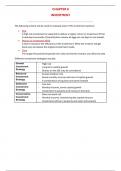
The following criteria will be used to evaluate each of the investment options:
• Risk
A high risk investment is expected to deliver a higher return on investment IF the
investment succeeds. Diversification means all eggs are not kept in one basket.
• Return on investment (ROI)
A tool to measure the efficiency of the investment. What the investor will get
back over and above the original investment made.
• Time
The longer the period the greater the risks are that the investor can afford to take
Different investment strategies include:
Growth - High risk
Investment - Long term capital growth
Strategy - Shares on the JSE may be considered
Balanced - Accept medium risk
Investment - Some monthly income with aim of capital growth
Strategy - A combination of equities and some interest
Defensive - Low risk
Investment - Monthly income, some capital growth
Strategy - Investment in property and money in the bank
Conservative - Does not want risk
Investment - Monthly income, maintaining the capital amount
Strategy - Investment will be in property and cash instruments
, EQUITIES/SHARES
Description
Equities are also known as shares in a company. There are two “options/methods” to
become a shareholder in a company listed on the JSE:
• The shares were bought from the company
• The shares were bought on the JSE from a previous shareholder
Risk
• The JSE has strict rules for companies to list on the stock exchange.
• Moderate to high risk.
• Blue-chip shares are shares in high end companies on the stock exchange, The
risk is smaller than other companies. The ROI is higher than other companies.
• Investors usually take smaller risks than people speculating shares.
ROI
Two factors that contribute to ROI:
• Increase in share price
• Dividends
Shareholder will by shares in the company with the expectation that:
• Share price will increase over a period of time (capital growth)
• Good dividends will be generated
• Outperform inflation
Impact on the overall return on the shareholders’ investment:
• Level of confidence in the state of the economy. Eager to buy shares (Bull
market). Anticipate losses, they will sell their shares (Bear market)
• Government policies or new legislation
• Industry performance
• Financial performance of the business
• Management and the public’s confidence in the management team
• Social issues surrounding the company
• Legal issues
• Media coverage increases public awareness
Time frame
• Long term for investors – blue chip shares where there is capital growth
• Short term for speculators – sells shares to make a profit
INVESTMENT
__________________________________________________
The following criteria will be used to evaluate each of the investment options:
• Risk
A high risk investment is expected to deliver a higher return on investment IF the
investment succeeds. Diversification means all eggs are not kept in one basket.
• Return on investment (ROI)
A tool to measure the efficiency of the investment. What the investor will get
back over and above the original investment made.
• Time
The longer the period the greater the risks are that the investor can afford to take
Different investment strategies include:
Growth - High risk
Investment - Long term capital growth
Strategy - Shares on the JSE may be considered
Balanced - Accept medium risk
Investment - Some monthly income with aim of capital growth
Strategy - A combination of equities and some interest
Defensive - Low risk
Investment - Monthly income, some capital growth
Strategy - Investment in property and money in the bank
Conservative - Does not want risk
Investment - Monthly income, maintaining the capital amount
Strategy - Investment will be in property and cash instruments
, EQUITIES/SHARES
Description
Equities are also known as shares in a company. There are two “options/methods” to
become a shareholder in a company listed on the JSE:
• The shares were bought from the company
• The shares were bought on the JSE from a previous shareholder
Risk
• The JSE has strict rules for companies to list on the stock exchange.
• Moderate to high risk.
• Blue-chip shares are shares in high end companies on the stock exchange, The
risk is smaller than other companies. The ROI is higher than other companies.
• Investors usually take smaller risks than people speculating shares.
ROI
Two factors that contribute to ROI:
• Increase in share price
• Dividends
Shareholder will by shares in the company with the expectation that:
• Share price will increase over a period of time (capital growth)
• Good dividends will be generated
• Outperform inflation
Impact on the overall return on the shareholders’ investment:
• Level of confidence in the state of the economy. Eager to buy shares (Bull
market). Anticipate losses, they will sell their shares (Bear market)
• Government policies or new legislation
• Industry performance
• Financial performance of the business
• Management and the public’s confidence in the management team
• Social issues surrounding the company
• Legal issues
• Media coverage increases public awareness
Time frame
• Long term for investors – blue chip shares where there is capital growth
• Short term for speculators – sells shares to make a profit