Human Evolution
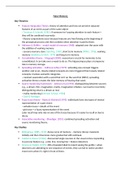
Apes Humans
Quadrupeds Bipeds
Foramen Magnum at back of skull Foramen Magnum central in skull
C-shape vertebral column S-shape vertebral column
Arms are longer and stronger than legs Legs are longer and stronger than arms
Knee joints are small and weak Knee joints are large and strong
Opposable big toe Fixed big toe
Flat feet Feet with a curved arch
Long, narrow pelvis Short, wide pelvis
Smaller, less developed brain Large, developed brain
Large prominent canines Canines the same size as other teeth
Thin tooth enamel Thick tooth enamel
Large, prominent jaw with no chin Rounded jaw with a chin
Wider, sloping face Narrow, flat face
Narrow, rectangular palate Wider, more curved palate
Prominent brow and cranial ridges Reduced cranial and brow ridges
Opposable thumbs for “power grip”
2 hands with 5 fingers each
Long arms rotate freely at the shoulder
Naked fingertips ending in nails
Reduced snout with a weak sense of smell
Stereoscopic vision with colour
Enlarged brain centres for sensory information from hands and eyes
No tail
Clearly distinguished sexual dimorphism
Molars and premolars with rounded cusps
, Human Evolution
Australopithecus
4.5 mya – 1.5 mya
First bipedal primates
They have human and ape-like characteristics
This is due to the changing habitat they lived in
o African forests were turning into woodlands, grasslands and savannah
They are found mainly in Eastern and Southern Africa
Characteristics
- Bipedal (evidence: Laetoli footprints)
- Foramen magnum central below skull
- Short and wide pelvis
- Long arms used for tree climbing
- Long, curved fingers with a non-opposable big toe
- Brain capacity larger than apes
o Approximately 380 – 500 cm3
- More human-like teeth with a small diastema
o Canines smaller than apes but larger than humans
- Protruding jaw with no chin
- Sloping face (less sloping than apes)
- U shaped palate
- Large brow ridges
They are not considered to be human ancestors but rather they developed simultaneously with the
genus Homo
Well known Specimens
- Lucy
o (Australopithecus afarensis)
- Mrs Ples
o (Australopithecus africanus)
- Taung Child
o (Australopithecus africanus)
- Little Foot
o (Australopithecus prometheus)
- Karabo
, Human Evolution
o (Australopithecus sediba)
Apes Humans
Quadrupeds Bipeds
Foramen Magnum at back of skull Foramen Magnum central in skull
C-shape vertebral column S-shape vertebral column
Arms are longer and stronger than legs Legs are longer and stronger than arms
Knee joints are small and weak Knee joints are large and strong
Opposable big toe Fixed big toe
Flat feet Feet with a curved arch
Long, narrow pelvis Short, wide pelvis
Smaller, less developed brain Large, developed brain
Large prominent canines Canines the same size as other teeth
Thin tooth enamel Thick tooth enamel
Large, prominent jaw with no chin Rounded jaw with a chin
Wider, sloping face Narrow, flat face
Narrow, rectangular palate Wider, more curved palate
Prominent brow and cranial ridges Reduced cranial and brow ridges
Opposable thumbs for “power grip”
2 hands with 5 fingers each
Long arms rotate freely at the shoulder
Naked fingertips ending in nails
Reduced snout with a weak sense of smell
Stereoscopic vision with colour
Enlarged brain centres for sensory information from hands and eyes
No tail
Clearly distinguished sexual dimorphism
Molars and premolars with rounded cusps
, Human Evolution
Australopithecus
4.5 mya – 1.5 mya
First bipedal primates
They have human and ape-like characteristics
This is due to the changing habitat they lived in
o African forests were turning into woodlands, grasslands and savannah
They are found mainly in Eastern and Southern Africa
Characteristics
- Bipedal (evidence: Laetoli footprints)
- Foramen magnum central below skull
- Short and wide pelvis
- Long arms used for tree climbing
- Long, curved fingers with a non-opposable big toe
- Brain capacity larger than apes
o Approximately 380 – 500 cm3
- More human-like teeth with a small diastema
o Canines smaller than apes but larger than humans
- Protruding jaw with no chin
- Sloping face (less sloping than apes)
- U shaped palate
- Large brow ridges
They are not considered to be human ancestors but rather they developed simultaneously with the
genus Homo
Well known Specimens
- Lucy
o (Australopithecus afarensis)
- Mrs Ples
o (Australopithecus africanus)
- Taung Child
o (Australopithecus africanus)
- Little Foot
o (Australopithecus prometheus)
- Karabo
, Human Evolution
o (Australopithecus sediba)