

READING COMPANION
T.Polayya
, The White Tiger
Reading Companion
Background Information
Aravind Adiga, born in 1974 in Madras (now Chennai), India, is an
Indian author and journalist whose background and experiences
deeply inform his debut novel The White Tiger. Educated in India,
Australia, and at prestigious institutions like Columbia University
and Oxford, Adiga worked as a journalist, including as a South Asia
correspondent for Time magazine. His exposure to the stark social
and economic inequalities in India shaped the themes of The White
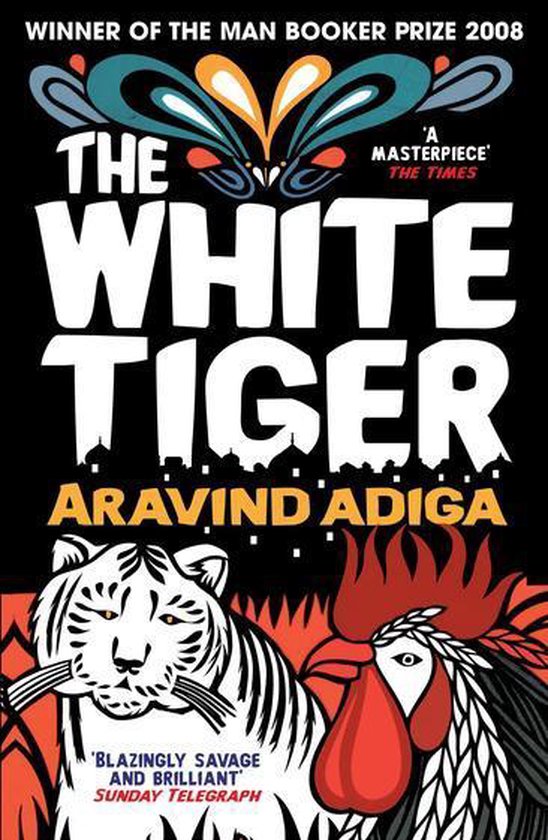
Tiger, which won the 2008 Man Booker Prize. The novel is framed as
a series of letters written by Balram Halwai, a poor man from a
village in Bihar, to the Chinese Premier, narrating his rise from a
servant to a successful entrepreneur in Bangalore. Through
Balram's journey, Adiga critiques India’s rigid class system, the
exploitation of the poor, and the illusion of social mobility, using
sharp satire and dark humour to highlight the moral compromises
required to escape poverty. Adiga’s portrayal of modern India
challenges romanticised or one-dimensional narratives, offering a
brutally honest look at the complexities of a rapidly changing
ARAVIND ADIGA society.
ABOUT THE TITLE
THE SOCIAL AND
The White Tiger is set in early 21st-century India, during
a time of rapid economic growth and modernization.
The title “The White Tiger” symbolises
LANDSCAPE
This period, especially the 1990s to 2000s, followed
ECONOMIC
rarity, power, and individuality, India's economic liberalization in 1991, which opened
reflecting the main character Balram the country to global markets and foreign investment.
Halwai’s unique ability to break free While cities like Delhi and Bangalore experienced
booming industries, especially in technology and
from the oppressive social system he outsourcing, rural areas remained deeply impoverished.
was born into. In the novel, a white The novel highlights this sharp contrast between the
tiger is described as a creature born "Light" (wealthy, urban India) and the "Darkness" (poor,
rural India). It reflects a society in transition, where
only once in a generation, mirroring
traditional structures like the caste system, corruption,
Balram’s exceptional intelligence and and servitude still persist despite the promises of
drive to escape poverty and servitude progress. Through Balram’s journey, Adiga explores how
economic change creates new opportunities for some,
but also deepens inequality and forces people to make
difficult, often unethical choices to survive and succeed.
During this time, India was becoming known as a rising
THE NOVEL USES
One of the novel’s most striking features global power, with its cities embracing modern
VIVID IMAGERY
is its use of the “rooster coop” metaphor technology, luxury, and consumerism. However, much of
—an image of how the poor remain the population—especially in rural areas—was left
behind, trapped in poverty with limited access to
trapped in servitude due to fear and education, healthcare, or upward mobility. The novel
loyalty. With its witty tone, unforgettable captures this tension between old and new India, where
wealth and modernity exist alongside deep-rooted
narrator, and unflinching honesty, The
inequality and corruption. Social hierarchies,
White Tiger challenges readers to think particularly the caste system, still played a powerful role
about freedom, morality, and what in shaping people's lives, despite the appearance of
progress. By setting the novel in this era, Aravind Adiga
success really costs in a deeply unequal
exposes the hidden costs of development and
society. challenges the idea that economic growth automatically
leads to social justice.
T. Polayya 2
, The White Tiger
Reading Companion
Reeking
For each of the words here, look up the definitions, make sure you understand
the meaning, and then write your own sentences.
Demeanor
Cynical
Prestige
Veneration
Sardonically
Communalism
Hierarchy
Stenographer
Paternalistic
Shanty
Charpoy
Dowry
Emaciated
Sanctimonious
Lavish
Disillusioned
Conspiracy
Frivolous
Detritus
Resentment
Malicious
Infiltrate
Exploitation
Repercussions
Petty
Illiteracy
Metaphorically
T. Polayya
3
T.Polayya
, The White Tiger
Reading Companion
Background Information
Aravind Adiga, born in 1974 in Madras (now Chennai), India, is an
Indian author and journalist whose background and experiences
deeply inform his debut novel The White Tiger. Educated in India,
Australia, and at prestigious institutions like Columbia University
and Oxford, Adiga worked as a journalist, including as a South Asia
correspondent for Time magazine. His exposure to the stark social
and economic inequalities in India shaped the themes of The White
Tiger, which won the 2008 Man Booker Prize. The novel is framed as
a series of letters written by Balram Halwai, a poor man from a
village in Bihar, to the Chinese Premier, narrating his rise from a
servant to a successful entrepreneur in Bangalore. Through
Balram's journey, Adiga critiques India’s rigid class system, the
exploitation of the poor, and the illusion of social mobility, using
sharp satire and dark humour to highlight the moral compromises
required to escape poverty. Adiga’s portrayal of modern India
challenges romanticised or one-dimensional narratives, offering a
brutally honest look at the complexities of a rapidly changing
ARAVIND ADIGA society.
ABOUT THE TITLE
THE SOCIAL AND
The White Tiger is set in early 21st-century India, during
a time of rapid economic growth and modernization.
The title “The White Tiger” symbolises
LANDSCAPE
This period, especially the 1990s to 2000s, followed
ECONOMIC
rarity, power, and individuality, India's economic liberalization in 1991, which opened
reflecting the main character Balram the country to global markets and foreign investment.
Halwai’s unique ability to break free While cities like Delhi and Bangalore experienced
booming industries, especially in technology and
from the oppressive social system he outsourcing, rural areas remained deeply impoverished.
was born into. In the novel, a white The novel highlights this sharp contrast between the
tiger is described as a creature born "Light" (wealthy, urban India) and the "Darkness" (poor,
rural India). It reflects a society in transition, where
only once in a generation, mirroring
traditional structures like the caste system, corruption,
Balram’s exceptional intelligence and and servitude still persist despite the promises of
drive to escape poverty and servitude progress. Through Balram’s journey, Adiga explores how
economic change creates new opportunities for some,
but also deepens inequality and forces people to make
difficult, often unethical choices to survive and succeed.
During this time, India was becoming known as a rising
THE NOVEL USES
One of the novel’s most striking features global power, with its cities embracing modern
VIVID IMAGERY
is its use of the “rooster coop” metaphor technology, luxury, and consumerism. However, much of
—an image of how the poor remain the population—especially in rural areas—was left
behind, trapped in poverty with limited access to
trapped in servitude due to fear and education, healthcare, or upward mobility. The novel
loyalty. With its witty tone, unforgettable captures this tension between old and new India, where
wealth and modernity exist alongside deep-rooted
narrator, and unflinching honesty, The
inequality and corruption. Social hierarchies,
White Tiger challenges readers to think particularly the caste system, still played a powerful role
about freedom, morality, and what in shaping people's lives, despite the appearance of
progress. By setting the novel in this era, Aravind Adiga
success really costs in a deeply unequal
exposes the hidden costs of development and
society. challenges the idea that economic growth automatically
leads to social justice.
T. Polayya 2
, The White Tiger
Reading Companion
Reeking
For each of the words here, look up the definitions, make sure you understand
the meaning, and then write your own sentences.
Demeanor
Cynical
Prestige
Veneration
Sardonically
Communalism
Hierarchy
Stenographer
Paternalistic
Shanty
Charpoy
Dowry
Emaciated
Sanctimonious
Lavish
Disillusioned
Conspiracy
Frivolous
Detritus
Resentment
Malicious
Infiltrate
Exploitation
Repercussions
Petty
Illiteracy
Metaphorically
T. Polayya
3

