, PLEASE USE THIS DOCUMENT AS A GUIDE TO ANSWER YOUR ASSIGNMENT
QUESTION 1
1. The Screening, Identification, Assessment and Support (SIAS) policy is structured in such a
way that it ensures that teachers and schools understand the support needs of all learners to
enhance the delivery of the National Curriculum and Assessment Policy Statement (Department
of Basic Education, 2011).
1.1. Discuss the FOUR (4) stages of the SIAS process and explain the role of the teacher at each
stage of implementation.
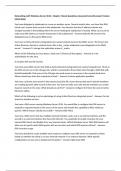
Understanding the Stages of the SIAS Process and the Role of the Teacher
The Screening, Identification, Assessment and Support (SIAS) policy is designed to ensure that
every learner receives the support they need to access quality education. This process is central to
building an inclusive education system that addresses barriers to learning early and effectively.
Teachers play a critical role at each stage of this process, working collaboratively with families,
school-based teams, and district officials to ensure that all learners can participate meaningfully in
the curriculum. The SIAS process consists of four key stages, each with distinct responsibilities and
expectations for teachers.
Stage 1: Screening Learners Using the Personal Learner Profile
The first stage involves the initial screening of learners when they are admitted to a school and at the
beginning of each school phase. The information gathered is recorded in a Personal Learner Profile
(PLP), which serves as a foundational document that captures essential information about each
learner. At this stage, the teacher is responsible for conducting the screening of all learners and
capturing relevant details in the PLP. This includes understanding learners’ backgrounds, strengths,
learning styles, and any potential barriers they may face. The teacher uses this information to plan
appropriate daily support and interventions within the classroom. The PLP enables the teacher to
better understand each learner and develop teaching strategies that cater to individual needs.
Stage 2: Identifying and Addressing Barriers at the School Level
If a learner is identified as being at risk or experiencing barriers to learning based on the initial
screening, the second stage is activated. This involves a deeper assessment and the development of
support plans at the school level. Here, the teacher takes on a central role by becoming the case
manager for the learner. They complete the Support Needs Assessment form (SNA 1) in
collaboration with the learner’s parent or caregiver. The teacher identifies the learner’s strengths and
needs across various domains, including academic performance, social interactions, communication,
and family circumstances. Based on this, an individual support plan is created, and appropriate
interventions are implemented and reviewed regularly—ideally once per term. These may include
differentiated teaching methods, adjustments to the learning environment, or adapted assessment
strategies. The teacher keeps a detailed log of all interventions and consultations. If the learner does
not show improvement, the teacher refers the case to the School-Based Support Team (SBST) by
completing the next level of the assessment (SNA 2).
QUESTION 1
1. The Screening, Identification, Assessment and Support (SIAS) policy is structured in such a
way that it ensures that teachers and schools understand the support needs of all learners to
enhance the delivery of the National Curriculum and Assessment Policy Statement (Department
of Basic Education, 2011).
1.1. Discuss the FOUR (4) stages of the SIAS process and explain the role of the teacher at each
stage of implementation.
Understanding the Stages of the SIAS Process and the Role of the Teacher
The Screening, Identification, Assessment and Support (SIAS) policy is designed to ensure that
every learner receives the support they need to access quality education. This process is central to
building an inclusive education system that addresses barriers to learning early and effectively.
Teachers play a critical role at each stage of this process, working collaboratively with families,
school-based teams, and district officials to ensure that all learners can participate meaningfully in
the curriculum. The SIAS process consists of four key stages, each with distinct responsibilities and
expectations for teachers.
Stage 1: Screening Learners Using the Personal Learner Profile
The first stage involves the initial screening of learners when they are admitted to a school and at the
beginning of each school phase. The information gathered is recorded in a Personal Learner Profile
(PLP), which serves as a foundational document that captures essential information about each
learner. At this stage, the teacher is responsible for conducting the screening of all learners and
capturing relevant details in the PLP. This includes understanding learners’ backgrounds, strengths,
learning styles, and any potential barriers they may face. The teacher uses this information to plan
appropriate daily support and interventions within the classroom. The PLP enables the teacher to
better understand each learner and develop teaching strategies that cater to individual needs.
Stage 2: Identifying and Addressing Barriers at the School Level
If a learner is identified as being at risk or experiencing barriers to learning based on the initial
screening, the second stage is activated. This involves a deeper assessment and the development of
support plans at the school level. Here, the teacher takes on a central role by becoming the case
manager for the learner. They complete the Support Needs Assessment form (SNA 1) in
collaboration with the learner’s parent or caregiver. The teacher identifies the learner’s strengths and
needs across various domains, including academic performance, social interactions, communication,
and family circumstances. Based on this, an individual support plan is created, and appropriate
interventions are implemented and reviewed regularly—ideally once per term. These may include
differentiated teaching methods, adjustments to the learning environment, or adapted assessment
strategies. The teacher keeps a detailed log of all interventions and consultations. If the learner does
not show improvement, the teacher refers the case to the School-Based Support Team (SBST) by
completing the next level of the assessment (SNA 2).