ABSTRACT EXPRESSIONISM (1948-1950s)
SECTION 3
ABSTRACT EXPRESSIONISM
WHEN: Abstract Expressionism is a term
applied to a movement in American
painting that flourished in New York City
after the Second World War (1948 -
1950s), sometimes referred to as the New
York School.
WHERE: The political turmoil in Europe
brought about by World War II forced
many artists to emigrate to America,
bringing with them their own traditions
and ideas. The immigration of many of the
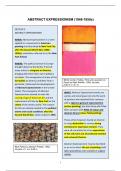
Surrealists to America and New York in White Center (Yellow, Pink and Lavender on
Rose) by Mark Rothko, 1950, oil paint,
particular, influenced the developments 2,06 m x 1,41 m
of Abstract Expressionism in the United
States. The emergence of Abstract
WHAT: Abstract Expressionist works are
Expressionism seemed to mark the
varied, and encompass not only the work
coming of age of American Art and the
of painters who attacked their canvases
replacement of Paris by New York as the
with a vigorous gestural expressionism
centre of the artistic world. The reasons
(action painting), but also those who filled
for this are directly related to the political
their canvases with fields of colour and
events and social conditions after the
abstract forms (colour field painting).
Second World War, which ended in 1945.
These artists however shared an interest
in using abstraction to convey strong
emotional or expressive content. They
were all committed to art as expressions
of the self, born out of profound emotion
and universal themes.
Abstract Expressionism may be described
Blue Poles by Jackson Pollock, 1952, as an art in which the act of painting itself
oil paint, 2,1 m x 4,86 m
takes precedence over content or subject
matter.
1
, Rather than strive to produce a perfect
finished picture, the new American
painters threw all their energies into the
moment of creation - what was registered
on the canvas was merely a record of that
moment.
Abstract Expressionism drew on
Surrealism’s focus on the sub-conscious,
and Dada’s influence of chance. Artists
gave their emotions free rein in the act of
painting. Excavation by Willem de Kooning, 1950,
oil on canvas, 205,8 cm x 254,7 cm
The flatness of the picture plane (canvas)
was emphasised, highlighting the nature
of paint itself rather than what the SOCIAL / POLITICAL INFLUENCES:
medium can achieve through realism.
• World War II ended in 1945 and
Abstract Expressionism is best known for many European artists fled to the
large-scale paintings that break away USA to escape the crisis in their own
from traditional processes, often taking countries. The Surrealists in
the canvas off of the easel and using particular brought with them the
unconventional materials such as house artistic traditions of Europe and
paint. their ideas, to a country without
these traditions.
They moved away from European
traditions of painting to create a distinctly
American kind of art. • The Abstract Expressionists
expressed emotions and universal
themes in a style which fit with the
“At a certain moment the canvas began to post-war mood of trauma and
appear to one American painter after anxiety. The expression of pain
another as an arena in which to act. What emanating from World War II and
was to go on the canvas was not a picture the huge psychological effect the
but an event.” - Harold Rosenberg
two atomic bombs had on the
psyche of people after the second
WHO: Jackson Pollock, Mark Rothko, World War must also be considered
Willem de Kooning, Barnett Newmann. when viewing their work.
https://www.youtube.com/watch?v=rP9k2xzrgx8
• Where images are recognisable they
https://www.youtube.com/watch?v=j3GEAiH-yjU
https://www.youtube.com/watch?v=lCeM4NOoegs are often archetypal or universal.
2
SECTION 3
ABSTRACT EXPRESSIONISM
WHEN: Abstract Expressionism is a term
applied to a movement in American
painting that flourished in New York City
after the Second World War (1948 -
1950s), sometimes referred to as the New
York School.
WHERE: The political turmoil in Europe
brought about by World War II forced
many artists to emigrate to America,
bringing with them their own traditions
and ideas. The immigration of many of the
Surrealists to America and New York in White Center (Yellow, Pink and Lavender on
Rose) by Mark Rothko, 1950, oil paint,
particular, influenced the developments 2,06 m x 1,41 m
of Abstract Expressionism in the United
States. The emergence of Abstract
WHAT: Abstract Expressionist works are
Expressionism seemed to mark the
varied, and encompass not only the work
coming of age of American Art and the
of painters who attacked their canvases
replacement of Paris by New York as the
with a vigorous gestural expressionism
centre of the artistic world. The reasons
(action painting), but also those who filled
for this are directly related to the political
their canvases with fields of colour and
events and social conditions after the
abstract forms (colour field painting).
Second World War, which ended in 1945.
These artists however shared an interest
in using abstraction to convey strong
emotional or expressive content. They
were all committed to art as expressions
of the self, born out of profound emotion
and universal themes.
Abstract Expressionism may be described
Blue Poles by Jackson Pollock, 1952, as an art in which the act of painting itself
oil paint, 2,1 m x 4,86 m
takes precedence over content or subject
matter.
1
, Rather than strive to produce a perfect
finished picture, the new American
painters threw all their energies into the
moment of creation - what was registered
on the canvas was merely a record of that
moment.
Abstract Expressionism drew on
Surrealism’s focus on the sub-conscious,
and Dada’s influence of chance. Artists
gave their emotions free rein in the act of
painting. Excavation by Willem de Kooning, 1950,
oil on canvas, 205,8 cm x 254,7 cm
The flatness of the picture plane (canvas)
was emphasised, highlighting the nature
of paint itself rather than what the SOCIAL / POLITICAL INFLUENCES:
medium can achieve through realism.
• World War II ended in 1945 and
Abstract Expressionism is best known for many European artists fled to the
large-scale paintings that break away USA to escape the crisis in their own
from traditional processes, often taking countries. The Surrealists in
the canvas off of the easel and using particular brought with them the
unconventional materials such as house artistic traditions of Europe and
paint. their ideas, to a country without
these traditions.
They moved away from European
traditions of painting to create a distinctly
American kind of art. • The Abstract Expressionists
expressed emotions and universal
themes in a style which fit with the
“At a certain moment the canvas began to post-war mood of trauma and
appear to one American painter after anxiety. The expression of pain
another as an arena in which to act. What emanating from World War II and
was to go on the canvas was not a picture the huge psychological effect the
but an event.” - Harold Rosenberg
two atomic bombs had on the
psyche of people after the second
WHO: Jackson Pollock, Mark Rothko, World War must also be considered
Willem de Kooning, Barnett Newmann. when viewing their work.
https://www.youtube.com/watch?v=rP9k2xzrgx8
• Where images are recognisable they
https://www.youtube.com/watch?v=j3GEAiH-yjU
https://www.youtube.com/watch?v=lCeM4NOoegs are often archetypal or universal.
2