The Impact Of Recent Legislation On Businesses
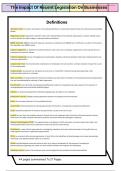
Definitions
Affirmative action: the policy and process of providing preferences in employment opportunities for previously disadvantaged
people.
Bargaining councils: negotiations between trade union representatives and employer organisations on labour related issues
such as demand for higher wages or improved working conditions.
BBBEE Scorecard: BBBEE scorecards measure a business’s compliance with BBBEE and a certificate is issued to the business
that stipulates their BBBEE rating.
Collective agreement: an agreement entered between a trade union and an employer organisation concerning the terms of
employment for specific matters.
Collective bargaining: process of engaging and solving labour disputes collectively between trade union representatives and
employer organisations
Compensation Fund: this fund provides compensation to employees who are injured or contract diseases through the course
of their employment.
Credit providers: businesses that sell goods and services on credit/offer credit purchasing options/provide credit
facilities/credit products to customers.
Debt counsellors: provide professional advice/counselling to private citizens/ members of the public/businesses/organisations
that are overindebted/offer methods of debt repayments.
Discrimination: the intentional unjust/prejudicial/differential treatment of people/social groups based on the grounds of
race/age/gender/sexual orientation/disability/religion.
Disputes: an argument/disagreement between people/groups of people in the workplace.
Employment contract: a legally binding agreement between the employer and the employee.
Equity: fair and equal treatment in the workplace/society.
Learnerships: theoretical/practical training opportunities that leads to a recognised occupational qualification.
Levies: imposition/collection of money by the government, usually in the form of tax.
Lockout: occurs when the employer prevents (literally locks out) employees from entering the business premises during
strike action and labour dispute resolution processes to prevent looting and damages to property.
National Credit Regulator (NCR): the regulatory body that applies the NCA, educates consumers about their rights, and
monitors/administers and ensures adherence of the NCA and the credit industry.
Ombudsman: a state official responsible for investigating complaints of private citizens/members of the public that are
made against businesses/ organisations/government.
SETAs: a vocational skills training organisation in South Africa that identifies/ outlines/manages and creates learnerships,
internships, and apprenticeships within its jurisdiction.
Strikes: partial/complete concerted refusal to work by a group of employees for the purpose of remedying a
grievance/dispute regarding any matter of mutual interest between the employer and employees.
Workplace injuries: injuries that take place while conducting/performing workplace duties/responsibilities.
44 pages summarised To 27 Pages
, ÷ Skills Development Act
Purpose of SDA of 1998
① Develops skills of SA to improve productivity in workplace
② Encourages businesses to improve existing + new workers skills
③ Invests in education + training of SA workforce
④ Purposefully decreases imbalances of past through SDA
⑤ Improves job prospects of previously disadvantaged people
⑥ Provides the systematic implementation of strategies on a national, sector and workplace basis.
Impact of SDA On Businesses
Positives Negatives
• Increase number of skilled employees • Implementation of the SDA is
with scarce skills time-consuming, expensive,
prescriptive and administratively
• Improves productivity in workplace burdensome.
as employees are empowered through
training programmes which makes • The SD Levy (SDL) places an additional
them more knowledgeable burden on financially struggling
businesses.
• Increases global competitiveness
of SA businesses (more employees • The SDA initiative of the government
are trained with upgraded, relevant may not always be supported by all
and scarce skills) businesses.
• Improves the return on investment • Businesses find it difficult to
(ROI) in education + training. monitor/control the implementation of
this Act.
• Increases investment in education and
training in the South African labour • Productivity in the workplace may
market. decline, as employees have to attend
learnerships during work hours.
• Improves the delivery of services of
businesses because employees are • Only businesses with a staff payroll over
working at optimal level R500 000 per annum can claim the SDL.
, ÷ Skills Development Act
Non-Compliance with The SDA
① Actions Considered Non-Compliant
• Restricting employee access to training and learnerships.
• Discriminating against employees based on factors like pregnancy, age, gender, etc.
• Unfair promotion of skills development for specific employees.
• Falsifying documentation (e.g., tax or workplace skills plans).
• Offering unregistered employment services.
• Providing misleading learnership information to employees.
② Penalties for Non-Compliance
• Compliance orders from the Labour Court.
• Large fines and potential imprisonment.
• Inability to offer learnerships or claim grants.
• Suspension of business operations by labour inspectors.
• Revocation of operating licenses.
@
Compliance with The SDA
↳ Ways Businesses Can Comply with the SDA
• Display summary of SDA in the business (visible to all employees)
• Provide opportunities to all employees to improve their skills.
• Assess the skills of employees to determine areas in which skills development is needed.
• Promote + encourage employees to improve their skills + to actively engage in learnerships.
• Employers who collect PAYE (Pay As You Earn tax) should register with SETA.
• Employers whose payroll exceeds R500 000 (half a million rand) per annum should pay 1% of it
over to SETA.
• Employers should submit a workplace skills plan and provide evidence that it was implemented.
Definitions
Affirmative action: the policy and process of providing preferences in employment opportunities for previously disadvantaged
people.
Bargaining councils: negotiations between trade union representatives and employer organisations on labour related issues
such as demand for higher wages or improved working conditions.
BBBEE Scorecard: BBBEE scorecards measure a business’s compliance with BBBEE and a certificate is issued to the business
that stipulates their BBBEE rating.
Collective agreement: an agreement entered between a trade union and an employer organisation concerning the terms of
employment for specific matters.
Collective bargaining: process of engaging and solving labour disputes collectively between trade union representatives and
employer organisations
Compensation Fund: this fund provides compensation to employees who are injured or contract diseases through the course
of their employment.
Credit providers: businesses that sell goods and services on credit/offer credit purchasing options/provide credit
facilities/credit products to customers.
Debt counsellors: provide professional advice/counselling to private citizens/ members of the public/businesses/organisations
that are overindebted/offer methods of debt repayments.
Discrimination: the intentional unjust/prejudicial/differential treatment of people/social groups based on the grounds of
race/age/gender/sexual orientation/disability/religion.
Disputes: an argument/disagreement between people/groups of people in the workplace.
Employment contract: a legally binding agreement between the employer and the employee.
Equity: fair and equal treatment in the workplace/society.
Learnerships: theoretical/practical training opportunities that leads to a recognised occupational qualification.
Levies: imposition/collection of money by the government, usually in the form of tax.
Lockout: occurs when the employer prevents (literally locks out) employees from entering the business premises during
strike action and labour dispute resolution processes to prevent looting and damages to property.
National Credit Regulator (NCR): the regulatory body that applies the NCA, educates consumers about their rights, and
monitors/administers and ensures adherence of the NCA and the credit industry.
Ombudsman: a state official responsible for investigating complaints of private citizens/members of the public that are
made against businesses/ organisations/government.
SETAs: a vocational skills training organisation in South Africa that identifies/ outlines/manages and creates learnerships,
internships, and apprenticeships within its jurisdiction.
Strikes: partial/complete concerted refusal to work by a group of employees for the purpose of remedying a
grievance/dispute regarding any matter of mutual interest between the employer and employees.
Workplace injuries: injuries that take place while conducting/performing workplace duties/responsibilities.
44 pages summarised To 27 Pages
, ÷ Skills Development Act
Purpose of SDA of 1998
① Develops skills of SA to improve productivity in workplace
② Encourages businesses to improve existing + new workers skills
③ Invests in education + training of SA workforce
④ Purposefully decreases imbalances of past through SDA
⑤ Improves job prospects of previously disadvantaged people
⑥ Provides the systematic implementation of strategies on a national, sector and workplace basis.
Impact of SDA On Businesses
Positives Negatives
• Increase number of skilled employees • Implementation of the SDA is
with scarce skills time-consuming, expensive,
prescriptive and administratively
• Improves productivity in workplace burdensome.
as employees are empowered through
training programmes which makes • The SD Levy (SDL) places an additional
them more knowledgeable burden on financially struggling
businesses.
• Increases global competitiveness
of SA businesses (more employees • The SDA initiative of the government
are trained with upgraded, relevant may not always be supported by all
and scarce skills) businesses.
• Improves the return on investment • Businesses find it difficult to
(ROI) in education + training. monitor/control the implementation of
this Act.
• Increases investment in education and
training in the South African labour • Productivity in the workplace may
market. decline, as employees have to attend
learnerships during work hours.
• Improves the delivery of services of
businesses because employees are • Only businesses with a staff payroll over
working at optimal level R500 000 per annum can claim the SDL.
, ÷ Skills Development Act
Non-Compliance with The SDA
① Actions Considered Non-Compliant
• Restricting employee access to training and learnerships.
• Discriminating against employees based on factors like pregnancy, age, gender, etc.
• Unfair promotion of skills development for specific employees.
• Falsifying documentation (e.g., tax or workplace skills plans).
• Offering unregistered employment services.
• Providing misleading learnership information to employees.
② Penalties for Non-Compliance
• Compliance orders from the Labour Court.
• Large fines and potential imprisonment.
• Inability to offer learnerships or claim grants.
• Suspension of business operations by labour inspectors.
• Revocation of operating licenses.
@
Compliance with The SDA
↳ Ways Businesses Can Comply with the SDA
• Display summary of SDA in the business (visible to all employees)
• Provide opportunities to all employees to improve their skills.
• Assess the skills of employees to determine areas in which skills development is needed.
• Promote + encourage employees to improve their skills + to actively engage in learnerships.
• Employers who collect PAYE (Pay As You Earn tax) should register with SETA.
• Employers whose payroll exceeds R500 000 (half a million rand) per annum should pay 1% of it
over to SETA.
• Employers should submit a workplace skills plan and provide evidence that it was implemented.