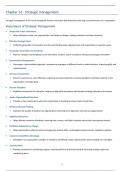
Chapter 16 - Strategic management
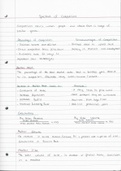
Strategic management is the set of managerial decision and action that determines the long-run performance of a corporation
Importance of Strategic Management
Shapes the Future of Business:
Helps anticipate trends, use opportunities, and adapt to changes, shaping direction and future business.
Effective Strategic Ideas:
Facilitates generation of innovative and forward-thinking ideas, aligning them with organisation’s long-term goals
Encourages Innovation and Creativity:
Inspires managers and employees to be innovative, creative, active in problem-solving and strategy formulation
Decentralised Management:
Encourages a decentralised approach, empowering managers at different levels to make decisions, fostering agility and
responsiveness
Increases Productivity:
Ensures resources are used efficiently, improving overall productivity and ensuring efforts contribute directly to the
organisation’s strategic goals
Ensures Discipline:
Establishes framework for discipline, helping to align daily operations with broader strategic objectives of business
Guides Organisational Direction:
Provides a clear roadmap for where the organisation is heading and how it plans to get there
Enhances Decision-Making:
Improves the quality of decisions by aligning them with long-term objectives and external opportunities
Optimises Resources:
Helps allocate resources effectively, ensuring time, money, and effort invested where they have greatest impact
Facilitates Adaptation to Change:
Helps organizations adapt to external changes like market shifts, technological advancements, regulatory updates
Improves Competitive Advantage:
Strengthens an organisation’s position in market by identifying unique opportunities and leveraging core strengths
Controls Effort:
Provides structure for monitoring progress, ensuring efforts are directed towards achieving strategic goals and
maintaining focus
1
, Elements of Strategy
The strategy has following four elements:
Defining mission - establishing a clear, long-term objective that aligns with the organization's purpose
Competitive advantage - striving to become a powerful player in the competitive environment
Synergy - working together to achieve goals
Vector - creating strong relationships within the business for growth
Strategic Direction
Strategic direction is the framework guiding an organization's long-term goals, including its vision, mission, core values
A clear strategic direction is essential for sustainable growth and competitive advantage
Key Components:
Vision Statement: ultimate goal of the organisation
Mission Statement: defines the purpose and primary objectives
Core Values: principles that guide behaviour and culture
Importance of Strategic Direction
Provides clarity and focus for all stakeholders
Aligns resources and efforts towards common objectives
Facilitates effective decision-making and prioritisation
Vision Statement
The vision statement provides a long-term perspective on where the organisation is headed
It outlines what the organisation aims to achieve in the future, serving as a source of inspiration
Purpose:
Guides strategic planning and decision-making.
Helps align organisational efforts towards a common goal.
Enhances organisational identity and culture.
A strong vision statement is crucial for fostering unity and purpose within an organisation
Mission Statement
A mission statement is a summary of the aims and values of an organisation
It shows the organisation's purpose and its primary objectives
Purpose:
Guides daily operations and decision-making
Communicates the organisation's intentions to stakeholders
Enhances employee engagement and alignment
An effective mission statement is crucial for establishing a clear organisational identity and direction
Helping to motivate employees and build stakeholder trust
2
Strategic management is the set of managerial decision and action that determines the long-run performance of a corporation
Importance of Strategic Management
Shapes the Future of Business:
Helps anticipate trends, use opportunities, and adapt to changes, shaping direction and future business.
Effective Strategic Ideas:
Facilitates generation of innovative and forward-thinking ideas, aligning them with organisation’s long-term goals
Encourages Innovation and Creativity:
Inspires managers and employees to be innovative, creative, active in problem-solving and strategy formulation
Decentralised Management:
Encourages a decentralised approach, empowering managers at different levels to make decisions, fostering agility and
responsiveness
Increases Productivity:
Ensures resources are used efficiently, improving overall productivity and ensuring efforts contribute directly to the
organisation’s strategic goals
Ensures Discipline:
Establishes framework for discipline, helping to align daily operations with broader strategic objectives of business
Guides Organisational Direction:
Provides a clear roadmap for where the organisation is heading and how it plans to get there
Enhances Decision-Making:
Improves the quality of decisions by aligning them with long-term objectives and external opportunities
Optimises Resources:
Helps allocate resources effectively, ensuring time, money, and effort invested where they have greatest impact
Facilitates Adaptation to Change:
Helps organizations adapt to external changes like market shifts, technological advancements, regulatory updates
Improves Competitive Advantage:
Strengthens an organisation’s position in market by identifying unique opportunities and leveraging core strengths
Controls Effort:
Provides structure for monitoring progress, ensuring efforts are directed towards achieving strategic goals and
maintaining focus
1
, Elements of Strategy
The strategy has following four elements:
Defining mission - establishing a clear, long-term objective that aligns with the organization's purpose
Competitive advantage - striving to become a powerful player in the competitive environment
Synergy - working together to achieve goals
Vector - creating strong relationships within the business for growth
Strategic Direction
Strategic direction is the framework guiding an organization's long-term goals, including its vision, mission, core values
A clear strategic direction is essential for sustainable growth and competitive advantage
Key Components:
Vision Statement: ultimate goal of the organisation
Mission Statement: defines the purpose and primary objectives
Core Values: principles that guide behaviour and culture
Importance of Strategic Direction
Provides clarity and focus for all stakeholders
Aligns resources and efforts towards common objectives
Facilitates effective decision-making and prioritisation
Vision Statement
The vision statement provides a long-term perspective on where the organisation is headed
It outlines what the organisation aims to achieve in the future, serving as a source of inspiration
Purpose:
Guides strategic planning and decision-making.
Helps align organisational efforts towards a common goal.
Enhances organisational identity and culture.
A strong vision statement is crucial for fostering unity and purpose within an organisation
Mission Statement
A mission statement is a summary of the aims and values of an organisation
It shows the organisation's purpose and its primary objectives
Purpose:
Guides daily operations and decision-making
Communicates the organisation's intentions to stakeholders
Enhances employee engagement and alignment
An effective mission statement is crucial for establishing a clear organisational identity and direction
Helping to motivate employees and build stakeholder trust
2