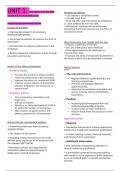
UNIT 1: THE IMPACT OF RECENT Penalties for offense
LEGISLATION ON BUSINESSES. → Can receive a compliance order.
→ Can get huge fines.
→ Must not offer apprenticeships to employees
SKILLS DEVELOPMENT ACT (SDA) or claim allowances from the SDA.
→ Businesses' readings can be withdrawn,
Purpose of the WVO
preventing them from carrying out any form of
→ Improve job prospects of previously operations further.
disadvantaged people.
→ Encourage businesses to improve the skills of
employees. Ways Businesses Can Comply with the Law
→ Display a summary of the law.
→ develop skills to improve productivity in the
→ Pay 1% of the salary bill to the ESD.
workplace.
→ Give opportunities to all employees to
→ Restore deliberate imbalances of past through improve their skills.
education and training. → Evaluate the skills of employees to determine
the areas in which skill development is needed.
Impact of the SDA on Businesses Special aspects
→ Positive impact SETA
• Increase the number of skilled workers → The role and function
• Improves productivity in the workplace • Register different apprenticeships and
• Improve the return on investment (ROI) learning programmes.
• Improve service delivery of businesses • Promote and establish different
because employees are working at an apprenticeships.
optimal level. • Approves the workplace skills plans and
→ Negative impact annual training reports submitted by
businesses.
• Time-consuming, prescriptive and
expensive. → Funding
• Difficult to monitor • Receiving donations/grants from the
• Elevation on skills development (ESD) is public/businesses/SMI programs.
an additional burden on businesses. • Surplus funds of state institutions.
• SDA initiative of government is not • Receive funds from the provision of their
always supported by all businesses. services.
Apprenticeships
Actions that are considered a violation → Meaning
→ Preventing employees from accessing • Theoretical and practical training opportunity
apprenticeships. leading to a recognised vocational qualification.
→ The forgery of documents. • Includes training courses, learning materials,
→ Providing employment services for profit and hands-on work experience.
without being registered as an employer with → Additional Information
the relevant SOET (SETA).
• This nationally recognised qualification is
→Providing incorrect and inappropriate directly related to a profession.
information about an apprenticeship to
deliberately mislead employees. • A learnership combines structured learning
with hands-on work experience while employed
by an accredited public or private learnership
provider.
, The National Skills Development Strategy
(NSDS)
→ It aims to develop skills, improve education,
→ Negative
and provide support and training to SA's
workforce • Reduce global competitiveness.
• Reduces productivity and profitability.
• It was developed as a result of the
• Very expensive and time-consuming.
promulgation of the SDA to introduce
• Employment of legal specialists and
more skilled workers in rare fields in SA.
labour consultants increases the cost of
→ Increase access to programs that train the business.
people.
→ Build career counselling centres.
Actions Considered Offense
→ Improve social development through
→ To unfairly dismiss employees.
economic development.
→ Preventing employees from joining unions.
The Human Resource Strategy (HRS)
→ Preventing employees from participating in
→ Aims to promote equity to reduce poverty and
lawful protesting.
inequality in SA by addressing skills shortages
in the economy. → Dismissal of employees who participate in
legal protesting.
• It was developed due to the
promulgation of the SDA.
→ Improve the provision of skills. Penalties for offense
→ Address skills shortages in SA's workplace. → Can receive a compliance order.
→ Increase employee participation in lifelong → Can be forced into dispute resolution.
learning.
→ Can receive large fines if agreement is not
kept.
→ May incur financial costs such as legal costs /
THE LABOUR RELATIONS ACT (LRA)
CCMA fees.
Purpose of the WAV
→ Promote fair labour practices.
Ways Businesses Can Comply with the Law
→ Promote collective bargaining.
→ Display a summary of the law.
→ Promote simple procedures for registering
→ Allows employees to join unions.
trade unions and employers' organisations.
→ Employers must disclose all relevant
→ Promote social justice
information to the union representatives.
Special aspects
Impact of the LRA on Businesses
→ Rights of Employers
→ Positive
• The right to form employers'
• Protect the rights of businesses. organisations.
• Prevent unfair discrimination in the • The right to form bargaining councils for
workplace. the purpose of collective bargaining.
• Promote quick and cheaper settlement of • The right to withhold compensation for
labour disputes. unfinished work with protests.
• Ensure participation of all practices in
the collective bargaining process. → Rights of employees
LEGISLATION ON BUSINESSES. → Can receive a compliance order.
→ Can get huge fines.
→ Must not offer apprenticeships to employees
SKILLS DEVELOPMENT ACT (SDA) or claim allowances from the SDA.
→ Businesses' readings can be withdrawn,
Purpose of the WVO
preventing them from carrying out any form of
→ Improve job prospects of previously operations further.
disadvantaged people.
→ Encourage businesses to improve the skills of
employees. Ways Businesses Can Comply with the Law
→ Display a summary of the law.
→ develop skills to improve productivity in the
→ Pay 1% of the salary bill to the ESD.
workplace.
→ Give opportunities to all employees to
→ Restore deliberate imbalances of past through improve their skills.
education and training. → Evaluate the skills of employees to determine
the areas in which skill development is needed.
Impact of the SDA on Businesses Special aspects
→ Positive impact SETA
• Increase the number of skilled workers → The role and function
• Improves productivity in the workplace • Register different apprenticeships and
• Improve the return on investment (ROI) learning programmes.
• Improve service delivery of businesses • Promote and establish different
because employees are working at an apprenticeships.
optimal level. • Approves the workplace skills plans and
→ Negative impact annual training reports submitted by
businesses.
• Time-consuming, prescriptive and
expensive. → Funding
• Difficult to monitor • Receiving donations/grants from the
• Elevation on skills development (ESD) is public/businesses/SMI programs.
an additional burden on businesses. • Surplus funds of state institutions.
• SDA initiative of government is not • Receive funds from the provision of their
always supported by all businesses. services.
Apprenticeships
Actions that are considered a violation → Meaning
→ Preventing employees from accessing • Theoretical and practical training opportunity
apprenticeships. leading to a recognised vocational qualification.
→ The forgery of documents. • Includes training courses, learning materials,
→ Providing employment services for profit and hands-on work experience.
without being registered as an employer with → Additional Information
the relevant SOET (SETA).
• This nationally recognised qualification is
→Providing incorrect and inappropriate directly related to a profession.
information about an apprenticeship to
deliberately mislead employees. • A learnership combines structured learning
with hands-on work experience while employed
by an accredited public or private learnership
provider.
, The National Skills Development Strategy
(NSDS)
→ It aims to develop skills, improve education,
→ Negative
and provide support and training to SA's
workforce • Reduce global competitiveness.
• Reduces productivity and profitability.
• It was developed as a result of the
• Very expensive and time-consuming.
promulgation of the SDA to introduce
• Employment of legal specialists and
more skilled workers in rare fields in SA.
labour consultants increases the cost of
→ Increase access to programs that train the business.
people.
→ Build career counselling centres.
Actions Considered Offense
→ Improve social development through
→ To unfairly dismiss employees.
economic development.
→ Preventing employees from joining unions.
The Human Resource Strategy (HRS)
→ Preventing employees from participating in
→ Aims to promote equity to reduce poverty and
lawful protesting.
inequality in SA by addressing skills shortages
in the economy. → Dismissal of employees who participate in
legal protesting.
• It was developed due to the
promulgation of the SDA.
→ Improve the provision of skills. Penalties for offense
→ Address skills shortages in SA's workplace. → Can receive a compliance order.
→ Increase employee participation in lifelong → Can be forced into dispute resolution.
learning.
→ Can receive large fines if agreement is not
kept.
→ May incur financial costs such as legal costs /
THE LABOUR RELATIONS ACT (LRA)
CCMA fees.
Purpose of the WAV
→ Promote fair labour practices.
Ways Businesses Can Comply with the Law
→ Promote collective bargaining.
→ Display a summary of the law.
→ Promote simple procedures for registering
→ Allows employees to join unions.
trade unions and employers' organisations.
→ Employers must disclose all relevant
→ Promote social justice
information to the union representatives.
Special aspects
Impact of the LRA on Businesses
→ Rights of Employers
→ Positive
• The right to form employers'
• Protect the rights of businesses. organisations.
• Prevent unfair discrimination in the • The right to form bargaining councils for
workplace. the purpose of collective bargaining.
• Promote quick and cheaper settlement of • The right to withhold compensation for
labour disputes. unfinished work with protests.
• Ensure participation of all practices in
the collective bargaining process. → Rights of employees