100% satisfaction guarantee Immediately available after payment Both online and in PDF No strings attached 4,6 TrustPilot
logo-home
Exam (elaborations)

HED4802 PORTFOLIO - DUE 21 January 2025

Rating
3,0
(1)
Sold
10
Pages
22
Grade
A+
Uploaded on
14-11-2024
Written in
2024/2025

HED4802 PORTFOLIO 2024 - DUE 21 January 2025 ;100 % TRUSTED workings, Expert Solved, Explanations and Solutions. For assistance call or W.h.a.t.s.a.p.p us on ...(.+.2.5.4.7.7.9.5.4.0.1.3.2)........... Activity 1: Create a visual representation (e.g., concept map, mind map, infographic, or diagram) that outlines the different definitions and perspectives on the term “curriculum.” This task is designed to help you understand the complexity of curriculum as a concept and how it varies across different educational contexts and theories. (20) Some guidelines The activity should include the following steps: Research Definitions of Curriculum • Investigate multiple definitions of “curriculum” from various sources such as academic literature, educational theorists, and curriculum frameworks. Consider both traditional and modern perspectives. • Traditional views: Focus on curriculum as a syllabus or a planned set of lessons and content that teachers deliver in the classroom. • Broader perspectives: Explore modern definitions that view the curriculum as an experiential, holistic, or hidden set of learnings that occur both in and outside the classroom. • Look at critical, social justice, or culturally relevant approaches to curriculum, such as “hidden curriculum” or “null curriculum.” Graphic Creation Design a graphic (concept map, mind map, or other visual format) that organises the definitions. Centre Point: Start with the term “Curriculum” in the centre of your graphic. Branches: Create branches or sections for each key theme or category of curriculum definitions Incorporate Visual Elements Make your graphic visually engaging by using colours, icons, or symbols to represent different concepts or categories. Ensure your graphic is clear and easy to understand. Minimum definitions: 10 Activity 1 Rubric: Criteria Excellent (10 marks) Good (8 marks) Satisfactory (6 marks) Needs Improvement (4 marks) 0 (Not attempted/not done) Comprehensiveness and accuracy Includes all major definitions and perspectives on curriculum. All information is accurate and free from errors. Includes most major definitions and perspectives on curriculum. Most information is accurate with few errors Includes some major definitions and perspectives on curriculum. Some information is accurate but contains several errors. Includes few or no major definitions and perspectives on curriculum. Information is mostly inaccurate with many errors. Criteria Excellent (5 marks) Good (4 marks) Satisfactory (3 marks) Needs Improvement (2 marks) 0 (Not attempted/not done) Organisation, clarity, and readability Graphic is logically organised and very easy to read. Graphic is mostly organised and easy to read. Graphic has some organization but a little difficult to read Graphic is poorly organised and difficult to read. Criteria Excellent (5 marks) Good (4 marks) Satisfactory (3 marks) Needs Improvement (2 marks) 0 (Not attempted/not done) Visual Appeal Graphic is visually appealing with effective use of colors, shapes, and layout. Graphic is visually appealing with some effective use of colors, shapes, and layout. Graphic has limited visual appeal with minimal use of colors, shapes, and layout. Graphic lacks visual appeal with poor use of colors, shapes, and layout. Activity 2: Letter to the Minister of Education (40) Write a persuasive letter addressed to the new Minister of Education of Basic Education. In this letter, you should propose specific changes to the current school curriculum and offer valid reasons to support your recommendations. Guidelines: Identify an area for improvement: Choose a subject area, grade level or specific aspect of the curriculum that you believe would benefit from reform. It could be related to content, teaching methodologies, assessment practices or any other relevant aspect. Structure of the letter: Introduction: Clearly state your purpose for writing the letter, introducing yourself as a concerned and informed Honours education student. Rationale: Present a concise overview of the current state of the curriculum in the chosen area, highlighting its strengths and shortcomings. Reference the curriculum document and other supporting policies, circulars, and memoranda. Proposed changes: Outline your suggested changes to the curriculum, providing a detailed explanation of each proposed change. Supporting evidence: Present relevant evidence that supports the need for these changes. Draw on credible sources and educational literature to strengthen your arguments. Benefits and impact: Discuss the potential positive outcomes of your proposed changes, emphasising how they would enhance learning experiences and outcomes. Voice and tone: Maintain a respectful and professional tone throughout the letter. Demonstrate your passion for education and your commitment to the well-being of students. Formatting: Your letter should be well organised, coherent and free of grammatical errors. Word count: 600-800 words Activity 2 Rubric: Criteria Excellent (10 marks) Good (10 marks) Satisfactory (6 marks) Needs Improvement (4 marks) Not done (0) Identification of area for Improvement Clearly identifies a specific subject area, grade level, or aspect of the curriculum needing reform. Identifies a specific subject area, grade level, or aspect of the curriculum needing reform. Identifies a general area for improvement but lacks specificity. Fails to identify a clear area for improvement. Criteria Excellent (10 marks) Good (8 marks) Satisfactory (6 marks) Needs Improvement (4 marks) Not done (0) Proposed changes Proposes specific, feasible, and well-justified changes to the curriculum. Proposes specific and feasible changes to the curriculum with some justification. Proposes changes to the curriculum but lacks specificity or strong justification. Proposes vague or unrealistic changes with little to no justification. Criteria Excellent (10 marks) Good (8 marks) Satisfactory (6 marks) Needs Improvement (4 marks) Not done (0) Supporting arguments Provides strong, valid reasons and evidence to support the proposed changes. Provides valid reasons and some evidence to support the proposed changes. Provides reasons to support the proposed changes but lacks strong evidence. Provides weak or no reasons and evidence to support the proposed changes. Criteria Excellent (10 marks) Good (8 marks) Satisfactory (6 marks) Needs Improvement (4 marks) Not done (0) Benefit and impact Clearly explains the benefits and positive impact of the proposed changes on students, teachers, and the education system. Explains the benefits and positive impact of the proposed changes on students, teachers, and the education system. Mentions some benefits and impact but lacks depth or clarity. Fails to explain the benefits and impact of the proposed changes. Activity 3: Africanisation the curriculum Select a topic that you teach and investigate how you can Africanise the content, methods, or assessment for this topic. (40) Topic Selection Choose a specific topic or subject that you teach. It could be from any educational level or discipline (e.g., science, history, language, etc.). Briefly explain why you selected this topic. Research African Contextualisation Explore what it means to

Show more Read less


Whoops! We can’t load your doc right now. Try again or contact support.

Document information

Uploaded on
November 14, 2024
Number of pages
22
Written in
2024/2025
Type
Exam (elaborations)
Contains
Questions & answers

Subjects

Content preview

HED4802
PORTFOLIO 2024
UNIQUE NO.
DUE DATE: 21 JANUARY 2025

, HED4802

Portfolio 2024

Unique Number:

Due Date: 21 January 2024

Curriculum Studies

Activity 1

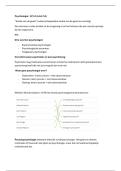
Concept Map: "Curriculum"

Center Term: Curriculum

1. Place the word "Curriculum" at the center of the graphic, as the focal point of
your concept map.


Branches and Definitions

Using the center point, create five main branches radiating outward, each representing
a different category or perspective on curriculum. Each branch should have a distinct
color for easy identification.

1. Traditional Approaches

 Definition 1: Syllabus
Curriculum as a structured list of topics and subjects designed to guide what
students are taught.
 Definition 2: Content Delivery
A planned set of lessons and materials delivered to students, often focusing on
textbooks and lecture-based instruction.

2. Experiential Approaches

Reviews from verified buyers

Showing all reviews
1 year ago

3,0

1 reviews

5
0
4
0
3
1
2
0
1
0
Trustworthy reviews on Stuvia

All reviews are made by real Stuvia users after verified purchases.

Get to know the seller

Seller avatar
Reputation scores are based on the amount of documents a seller has sold for a fee and the reviews they have received for those documents. There are three levels: Bronze, Silver and Gold. The better the reputation, the more your can rely on the quality of the sellers work.
LIBRARYpro University of South Africa (Unisa)
View profile
Follow You need to be logged in order to follow users or courses
Sold
10556
Member since
2 year
Number of followers
4904
Documents
4841
Last sold
8 hours ago
LIBRARY

On this page, you find all documents, Package Deals, and Flashcards offered by seller LIBRARYpro (LIBRARY). Knowledge is Power. #You already got my attention!

3,7

1464 reviews

5
687
4
237
3
243
2
79
1
218

Recently viewed by you

Why students choose Stuvia

Created by fellow students, verified by reviews

Quality you can trust: written by students who passed their exams and reviewed by others who've used these notes.

Didn't get what you expected? Choose another document

No worries! You can immediately select a different document that better matches what you need.

Pay how you prefer, start learning right away

No subscription, no commitments. Pay the way you're used to via credit card or EFT and download your PDF document instantly.

Student with book image

“Bought, downloaded, and aced it. It really can be that simple.”

Alisha Student

Frequently asked questions