Theme 1
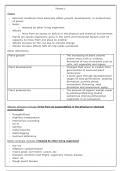
Stress
- External conditions that adversely affect growth, development, or productivity
of plants
- Biotic
o Imposed by other living organisms
- Abiotic
o Arise from an excess or deficit in the physical and chemical environment
- Plants are sessile organisms: grow in the same environmental factors with no
capacity to move from one place to another
- Abiotic stresses on the rise due to climate change
- Abiotic stresses affects 50% of crop yields worldwide
Other definitions:
Plant growth - The increasing of plant volume
and/or mass with or without
formation of new structures such as
cells, cell organelles and organs
Plant development - Changes that occur in a plant from
germination of seed and plant
senescence
- A plant goes through developmental
stages of seed germination, seedling
formation, juvenile phase,
maturation, flowering, seed
formation and senescence/ aging
Plant productivity - The amount of organic matter made
by photosynthesising (and/or
sometimes chemosynthesizing)
organisms in an ecosystem
Abiotic stresses include (Arise from an excess/deficit in the physical or chemical
environment)
- Drought/flood
- High/low temperature
- Mechanical wounding
- UV-B
- Salinity
- Metal toxicity
- Waterlogging
- Nutrient deficiency
Biotic stresses include: (imposed by other living organisms)
- Ear rot
- Alfatoxin contamination
- Insect pests: Corn borer, weevil, etc
- Diseases: Northern leaf blight, sugarcane mosaic disease
- Stem rot
- Rough dwarf disease
,Effects of abiotic stresses
- Loss of seed germination
- Growth inhibition
- Disruption of energy assimilation and photosynthesis
- Imbalance in metabolism, nutrient homeostasis, and nutrient uptake
- Reduction of crop yield, and deterioration of crop quality
Stresses affecting plants
- High light
o Causes production of excess excitation
energy in the photosynthetic reaction
centres, resulting in direct accumulation of a
variety of ROS
- High temperature
o Denatures proteins and causes lipid
peroxidation
- Water deficit
o Interferes with metabolism; activates ROS
production which triggers signalling
pathways that generate defence proteins
- Soil salinity
o Causes excess salts of chloride and sulphate
o Result into cytotoxicity; osmotic stress
o Decreases uptake of nutrients; metabolic
imbalances and oxidative stress
- Air pollution
o Air pollution with oxidising species (e.g., ozone and sulfuric acid) cause
direct oxidative damage to tissues. Local and systematic signalling
responses also occur
- Mechanical damage
o Both biotic (e.g., insect feeding) and abiotic (e.g., wind damage) factors
trigger expression of defence-related genes
- Cold stress
o Interferes with metabolic processes (particularly enzyme activity) and
alters membrane properties.
o Frosting can severely damage tissues when ice forms.
o Extracellular ice formation causes intracellular water deficit
Why do we study plant physiology
- To understand how plants react to a particular stress
- What makes a plant tolerant/sensitive to a stress factor
- Breeding of new plant varieties (modern breeding tools)
- Elimination of toxic reactions (protection of natural vegetation and agricultural
cultures)
Effects of abiotic stresses depend on
1) Type and duration/extent of stress
2) Plant species or genotype
,5 Phases of plant stress
1. Standard phase: No stress
2. Response phase: Alarm reaction
➢ Beginning of stress
➢ Deviation of functional norm
o Performance of photosynthesis
o Transport of metabolites and/or
o Uptake and translocation of ions
➢ Decline in vitality
➢ Catabolic processes exceed anabolism
➢ Acute damage and senescence will occur with low, no-stress tolerance
mechanisms, and thus have a low resistance minimum
3. Restitution phase: Stage of resistance
➢ Continuing stress
➢ Adaptation processes
o E.g., leaf rolling
➢ Accumulation of metabolic fluxes
➢ Activation of repair processes
➢ Hardening of plants (reactivation)
➢ New physiological standard established at this point
o Optimum state of physiology under impact of stressor
o Corresponds to plant’s resistance maximum
4. End phase: Exhaustion
➢ Long-term stress
➢ Physiology and vitality become progressively lost
o Causes severe damage and maybe death
➢ Stress intensity too high
➢ Overcharge of adaption capacity
➢ Chronic disease/death
5. Regeneration phase
➢ Partial or full regeneration when stressor is removed and damage was not
too high
➢ Time and stage of exhaustion when stressor is removed determines new
standard within the range of resistance, min and max that plant will hold
, How plants respond to abiotic stress
1) Stress characteristics
• Severity
• Duration
• Number of exposures
• Combination of stresses
2) Plant characteristics
• Genotype of plant
• Tissue/organ affected
• Stage of development
Responses will lead to
• Resistance
o Plant survives after going through stress
• Susceptibility
o Plant dies
Stress resistance mechanisms
1. Avoidance
• Plant maintains optimum growth, development and productivity while under
stress
• Prevent exposure to stress
o E.g., deep rooting system (Phreatophytes- plants that depend for their
water supply upon ground water that lies withing reach of their
roots)
Stress
- External conditions that adversely affect growth, development, or productivity
of plants
- Biotic
o Imposed by other living organisms
- Abiotic
o Arise from an excess or deficit in the physical and chemical environment
- Plants are sessile organisms: grow in the same environmental factors with no
capacity to move from one place to another
- Abiotic stresses on the rise due to climate change
- Abiotic stresses affects 50% of crop yields worldwide
Other definitions:
Plant growth - The increasing of plant volume
and/or mass with or without
formation of new structures such as
cells, cell organelles and organs
Plant development - Changes that occur in a plant from
germination of seed and plant
senescence
- A plant goes through developmental
stages of seed germination, seedling
formation, juvenile phase,
maturation, flowering, seed
formation and senescence/ aging
Plant productivity - The amount of organic matter made
by photosynthesising (and/or
sometimes chemosynthesizing)
organisms in an ecosystem
Abiotic stresses include (Arise from an excess/deficit in the physical or chemical
environment)
- Drought/flood
- High/low temperature
- Mechanical wounding
- UV-B
- Salinity
- Metal toxicity
- Waterlogging
- Nutrient deficiency
Biotic stresses include: (imposed by other living organisms)
- Ear rot
- Alfatoxin contamination
- Insect pests: Corn borer, weevil, etc
- Diseases: Northern leaf blight, sugarcane mosaic disease
- Stem rot
- Rough dwarf disease
,Effects of abiotic stresses
- Loss of seed germination
- Growth inhibition
- Disruption of energy assimilation and photosynthesis
- Imbalance in metabolism, nutrient homeostasis, and nutrient uptake
- Reduction of crop yield, and deterioration of crop quality
Stresses affecting plants
- High light
o Causes production of excess excitation
energy in the photosynthetic reaction
centres, resulting in direct accumulation of a
variety of ROS
- High temperature
o Denatures proteins and causes lipid
peroxidation
- Water deficit
o Interferes with metabolism; activates ROS
production which triggers signalling
pathways that generate defence proteins
- Soil salinity
o Causes excess salts of chloride and sulphate
o Result into cytotoxicity; osmotic stress
o Decreases uptake of nutrients; metabolic
imbalances and oxidative stress
- Air pollution
o Air pollution with oxidising species (e.g., ozone and sulfuric acid) cause
direct oxidative damage to tissues. Local and systematic signalling
responses also occur
- Mechanical damage
o Both biotic (e.g., insect feeding) and abiotic (e.g., wind damage) factors
trigger expression of defence-related genes
- Cold stress
o Interferes with metabolic processes (particularly enzyme activity) and
alters membrane properties.
o Frosting can severely damage tissues when ice forms.
o Extracellular ice formation causes intracellular water deficit
Why do we study plant physiology
- To understand how plants react to a particular stress
- What makes a plant tolerant/sensitive to a stress factor
- Breeding of new plant varieties (modern breeding tools)
- Elimination of toxic reactions (protection of natural vegetation and agricultural
cultures)
Effects of abiotic stresses depend on
1) Type and duration/extent of stress
2) Plant species or genotype
,5 Phases of plant stress
1. Standard phase: No stress
2. Response phase: Alarm reaction
➢ Beginning of stress
➢ Deviation of functional norm
o Performance of photosynthesis
o Transport of metabolites and/or
o Uptake and translocation of ions
➢ Decline in vitality
➢ Catabolic processes exceed anabolism
➢ Acute damage and senescence will occur with low, no-stress tolerance
mechanisms, and thus have a low resistance minimum
3. Restitution phase: Stage of resistance
➢ Continuing stress
➢ Adaptation processes
o E.g., leaf rolling
➢ Accumulation of metabolic fluxes
➢ Activation of repair processes
➢ Hardening of plants (reactivation)
➢ New physiological standard established at this point
o Optimum state of physiology under impact of stressor
o Corresponds to plant’s resistance maximum
4. End phase: Exhaustion
➢ Long-term stress
➢ Physiology and vitality become progressively lost
o Causes severe damage and maybe death
➢ Stress intensity too high
➢ Overcharge of adaption capacity
➢ Chronic disease/death
5. Regeneration phase
➢ Partial or full regeneration when stressor is removed and damage was not
too high
➢ Time and stage of exhaustion when stressor is removed determines new
standard within the range of resistance, min and max that plant will hold
, How plants respond to abiotic stress
1) Stress characteristics
• Severity
• Duration
• Number of exposures
• Combination of stresses
2) Plant characteristics
• Genotype of plant
• Tissue/organ affected
• Stage of development
Responses will lead to
• Resistance
o Plant survives after going through stress
• Susceptibility
o Plant dies
Stress resistance mechanisms
1. Avoidance
• Plant maintains optimum growth, development and productivity while under
stress
• Prevent exposure to stress
o E.g., deep rooting system (Phreatophytes- plants that depend for their
water supply upon ground water that lies withing reach of their
roots)