

LU13 – ESTATE DUTY
WHAT IS ESTATE DUTY?
Estate duty is a separate tax governed by the Estate Duty Act (No. 45 of 1955). This tax is calculated at a flat rate of 20% (prior to
1 October 2001 the rate was 25%) on the estate of a deceased person. Individuals ordinarily resident in South Africa at the date
of their death must include their worldwide assets in their estate. However, individuals who are not ordinarily resident in South
Africa at the date of their death must only include assets located in South Africa. All sections referred to in this learning unit are
sections of the Estate Duty Act unless otherwise stated.
HOW DO WE CALCULATE ESTATE DUTY?
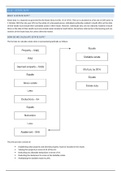
The formula to calculate estate duty is represented graphically as follows:
Thus the process consists of:
Establishing what property and deemed property must be included in the estate.
Valuing this property in terms of S5 of the Act.
Deducting any allowable deductions in terms of S4.
Deducting the abatement to arrive at the dutiable estate.
Multiplying the dutiable estate by 20%.
, WHAT PROPERTY MUST BE INCLUDED IN THE DECEASED’S ESTATE?
The deceased’s estate must include all property of that person at the date of his/her death as well as all property that is deemed
property in terms of the Act.
PROPERTY – S3(2)
‘Any right in or to property, movable and immovable, corporeal or incorporeal’. Therefore, property can consist of furniture and
equipment as well as a house, land or buildings. In addition, items can be included in property even though they contain no
value in the actual materials from which they are made e.g. share certificates, trademarks etc. The Estate Duty Act also
specifically includes the following:
RIGHTS TO PROPERTY – S3(2)(A) AND (B)
Rights to property (alternatively known as limited interests in property), such as the right to use or to occupy property or the
right to income earned from a property generally cease when a person dies. Where this results in a benefit to someone else on
the death of the deceased this right must be included in the deceased’s estate.
The following rights to property are included in property in terms of the Act:
1. Fiduciary, usufructuary, or other like interests in property
Please review Learning Unit 12 – Donations tax for a detailed explanation of these rights.
2. Annuities charged against properties
This arises when an individual has to pay an annuity to another person out of income from property. For example, Mr X
earns rental income of R 40 000 a year on a flat in Green Point; he is required to pay Mr Y R 20 000 per year of this rental. In
this case, Mr Y has a right to an annuity charged against property.
3. Annuities not charged against property
Annuities not charged against property are generally annuities purchased from a life assurance company. These annuities
must be payable to some other person on the death of the deceased in order to be included in deemed property. Annuities
(not charged against property) which cease on the death of the deceased do not constitute property and will not be
included in the deceased’s estate.
EXCLUSIONS FROM PROPERTY – S3(2)(C) TO (I)
For an individual who was not ordinarily resident in South Africa at the date of his death, the following property must be
excluded from his estate:
1. Immovable property (or any rights to such property) situated outside SA – S3(2)(c).
2. Movable property (or any rights to such property) situated outside SA – S3(2)(d).
3. Debts not enforceable in SA – S3(2)(e).
4. Intellectual property (e.g. goodwill, licence, patent, trademark) which is not registered or enforceable in SA – S3(2)
(f).
5. Stocks and shares in a body corporate which is not a South African company and stocks and shares in a company
where change of ownership in such company is not required to be registered in SA – S3(2)(g).
6. Any rights to income produced by or derived from the property mentioned in the above Sections 3(2)(e), (f) and (g)
– S3(2)(h).
WHAT IS ESTATE DUTY?
Estate duty is a separate tax governed by the Estate Duty Act (No. 45 of 1955). This tax is calculated at a flat rate of 20% (prior to
1 October 2001 the rate was 25%) on the estate of a deceased person. Individuals ordinarily resident in South Africa at the date
of their death must include their worldwide assets in their estate. However, individuals who are not ordinarily resident in South
Africa at the date of their death must only include assets located in South Africa. All sections referred to in this learning unit are
sections of the Estate Duty Act unless otherwise stated.
HOW DO WE CALCULATE ESTATE DUTY?
The formula to calculate estate duty is represented graphically as follows:
Thus the process consists of:
Establishing what property and deemed property must be included in the estate.
Valuing this property in terms of S5 of the Act.
Deducting any allowable deductions in terms of S4.
Deducting the abatement to arrive at the dutiable estate.
Multiplying the dutiable estate by 20%.
, WHAT PROPERTY MUST BE INCLUDED IN THE DECEASED’S ESTATE?
The deceased’s estate must include all property of that person at the date of his/her death as well as all property that is deemed
property in terms of the Act.
PROPERTY – S3(2)
‘Any right in or to property, movable and immovable, corporeal or incorporeal’. Therefore, property can consist of furniture and
equipment as well as a house, land or buildings. In addition, items can be included in property even though they contain no
value in the actual materials from which they are made e.g. share certificates, trademarks etc. The Estate Duty Act also
specifically includes the following:
RIGHTS TO PROPERTY – S3(2)(A) AND (B)
Rights to property (alternatively known as limited interests in property), such as the right to use or to occupy property or the
right to income earned from a property generally cease when a person dies. Where this results in a benefit to someone else on
the death of the deceased this right must be included in the deceased’s estate.
The following rights to property are included in property in terms of the Act:
1. Fiduciary, usufructuary, or other like interests in property
Please review Learning Unit 12 – Donations tax for a detailed explanation of these rights.
2. Annuities charged against properties
This arises when an individual has to pay an annuity to another person out of income from property. For example, Mr X
earns rental income of R 40 000 a year on a flat in Green Point; he is required to pay Mr Y R 20 000 per year of this rental. In
this case, Mr Y has a right to an annuity charged against property.
3. Annuities not charged against property
Annuities not charged against property are generally annuities purchased from a life assurance company. These annuities
must be payable to some other person on the death of the deceased in order to be included in deemed property. Annuities
(not charged against property) which cease on the death of the deceased do not constitute property and will not be
included in the deceased’s estate.
EXCLUSIONS FROM PROPERTY – S3(2)(C) TO (I)
For an individual who was not ordinarily resident in South Africa at the date of his death, the following property must be
excluded from his estate:
1. Immovable property (or any rights to such property) situated outside SA – S3(2)(c).
2. Movable property (or any rights to such property) situated outside SA – S3(2)(d).
3. Debts not enforceable in SA – S3(2)(e).
4. Intellectual property (e.g. goodwill, licence, patent, trademark) which is not registered or enforceable in SA – S3(2)
(f).
5. Stocks and shares in a body corporate which is not a South African company and stocks and shares in a company
where change of ownership in such company is not required to be registered in SA – S3(2)(g).
6. Any rights to income produced by or derived from the property mentioned in the above Sections 3(2)(e), (f) and (g)
– S3(2)(h).


