NS
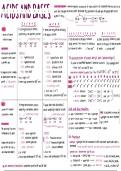
Acid-base reaction : A chemical reaction in which one or more protons are transfered from an acid to a
a
base . Two conjugate acid-base pairs are formed . The substances in an acid-base conjugate pair differ
Ht
by sne it only
shal
>
- 1
+
HCI (99)
+ H20 (e) >
Cl (aa) +
130
> i e
base base add
conjugate conjugate
.
: acid
#g
:
o n
I I I
a 1 -
-
ACID :
A strong acid ionises almost A weak acd only
lnices partially
aqueous solution conc en + rated 10 + ei
·
proton (H) donor completely in an In an
ageous solution
- -
comises in water I C
>
-
single arrow
(strong 1 C double arrow (weak A concentrated acca/base contains A dilute aclatbase contains a small
>
-
· .
.
+
H2SO4 2H20 584
H8 HOCHCO
+ >
2H30 +
CHaCOOH +
large amount (I of moles) of acid/base (I of moles) of base per volume
-
amount
(99) (e) (ag) (ag) (99) (99)
Ionisation :
pervolume of water lesmoldo of water 100 , 01mol . am'
the reaction of molecular examples :
examples :
substance with HI hydrosonic acid HF
hydrofluoric add The autoconisation of water and pH (auto protolysis)
>
scale
:
water ~ :
to produce lons
>
HCI :
hydrochloric acid >
H3PO4 :
Phosphoric adid A proton is transfered between 2 identical molecules (H20 undergoes this
>
H2SO4 :
Sulfuric acid >
H2SO3 :
Sulfurors adid -forms Hz0
+
ions and Otions
*
(A polyprotic add is capable
>
HNO3 :
Nitric doid >
CH3COOH :
ethanoic add <
equilibrium constant of water (kw)
:
Kw =
CHO"COH] =
10 (at 25
:
C)
of donating more than one >
HzCO3 :
Carbonic acid DH012345678910 11 12 13 14
4 Ka is
high 10
proton Hzsoy (diprotic) ↳ forms concentration #30t > (C80H)2 :
oxalic acid CH30 + 100 10"10"103 10 "1010"10"108 10 "10 "10" 118" 10
.
1.e
high cons
10 18 "15" 118818" 10 15 "1818"10"
%
Al carboxylase
or HsPOp (triprotic)) COH-] 18 " 10 1
low ( 10)
& 250c
COH'] P(9t
In acidic
+
solutions CH3O ] [OH]
< -
: >
concentration #38" cons -
in neutral solutions :
CHEO"] =
basic solutions CH3O"] <
[OH] and pH >
-
:
-
in
BASE :
A strong base dissociates almost A weak base only dissociated /
proton (H ) acceptor aqueous solution completely And and base reactions
completely
+
· in an isnises in ageous solution
Salt A substance which the
:
in
· dissociates in water 1
e
.
Single arrow (strong 1 . C
>
-
double arrow (weak) (a) acd + active metal -salt-hydrogen
k
+
hydrogen of an acd is replaced
KOH < + OH NHs + H20 - NHy" +
OH (b) acid + metal oxide salt-water
(a) Sa a by
(S) (ag) (99) a cation .
dissociation :
(c) acid + metal hydroxide < salt-water
NH48H (aql
Salt
(a) carbon dioxide +
>
The splitting of acid + metal carbonate +
water
anlonic examples :
compound into its parts > Li0H :
lithium hydroxide examples :
Salt
Koh :
potassium hydroxide Nha :
Ammonia solution e Hayrolysis
·
>
(A base that dissolves in > NaOH :
sodium hydroxide >
NH40H Ammonium hydroxide
:
hydrolysis :
hydrolysis of a salt is a reaction of a salt with water where water Itself is
decomposed
Hes to form of ions is (group I hydroxides > CaCOs :
Calcium carbonate (strong conjugate base/acd will react with #20 molecules in the solution
also known as an alkali ↳ KD Is Iow general rules :
(determining type of salt
Kb high
>
is
i form a
high concentration of of ions 4 form a low concentration of OH-ions (1) Strong acd
+
strong base Neutral salt e.g NaCl KCl NazSO4 NaNOs
,
,
,
acid weak base acidic salt
Strong (NHu)2SO4 NHy NOs
>
(2) + e .
g NHyCI , ,
Weak acid strong base < basic salt
N B an
. amphoteric/amphiprotic substance can act as an add or base (3) +
e .
g NazSOs ,
CHzCOONa ,
NaF
Acid-base reaction : A chemical reaction in which one or more protons are transfered from an acid to a
a
base . Two conjugate acid-base pairs are formed . The substances in an acid-base conjugate pair differ
Ht
by sne it only
shal
>
- 1
+
HCI (99)
+ H20 (e) >
Cl (aa) +
130
> i e
base base add
conjugate conjugate
.
: acid
#g
:
o n
I I I
a 1 -
-
ACID :
A strong acid ionises almost A weak acd only
lnices partially
aqueous solution conc en + rated 10 + ei
·
proton (H) donor completely in an In an
ageous solution
- -
comises in water I C
>
-
single arrow
(strong 1 C double arrow (weak A concentrated acca/base contains A dilute aclatbase contains a small
>
-
· .
.
+
H2SO4 2H20 584
H8 HOCHCO
+ >
2H30 +
CHaCOOH +
large amount (I of moles) of acid/base (I of moles) of base per volume
-
amount
(99) (e) (ag) (ag) (99) (99)
Ionisation :
pervolume of water lesmoldo of water 100 , 01mol . am'
the reaction of molecular examples :
examples :
substance with HI hydrosonic acid HF
hydrofluoric add The autoconisation of water and pH (auto protolysis)
>
scale
:
water ~ :
to produce lons
>
HCI :
hydrochloric acid >
H3PO4 :
Phosphoric adid A proton is transfered between 2 identical molecules (H20 undergoes this
>
H2SO4 :
Sulfuric acid >
H2SO3 :
Sulfurors adid -forms Hz0
+
ions and Otions
*
(A polyprotic add is capable
>
HNO3 :
Nitric doid >
CH3COOH :
ethanoic add <
equilibrium constant of water (kw)
:
Kw =
CHO"COH] =
10 (at 25
:
C)
of donating more than one >
HzCO3 :
Carbonic acid DH012345678910 11 12 13 14
4 Ka is
high 10
proton Hzsoy (diprotic) ↳ forms concentration #30t > (C80H)2 :
oxalic acid CH30 + 100 10"10"103 10 "1010"10"108 10 "10 "10" 118" 10
.
1.e
high cons
10 18 "15" 118818" 10 15 "1818"10"
%
Al carboxylase
or HsPOp (triprotic)) COH-] 18 " 10 1
low ( 10)
& 250c
COH'] P(9t
In acidic
+
solutions CH3O ] [OH]
< -
: >
concentration #38" cons -
in neutral solutions :
CHEO"] =
basic solutions CH3O"] <
[OH] and pH >
-
:
-
in
BASE :
A strong base dissociates almost A weak base only dissociated /
proton (H ) acceptor aqueous solution completely And and base reactions
completely
+
· in an isnises in ageous solution
Salt A substance which the
:
in
· dissociates in water 1
e
.
Single arrow (strong 1 . C
>
-
double arrow (weak) (a) acd + active metal -salt-hydrogen
k
+
hydrogen of an acd is replaced
KOH < + OH NHs + H20 - NHy" +
OH (b) acid + metal oxide salt-water
(a) Sa a by
(S) (ag) (99) a cation .
dissociation :
(c) acid + metal hydroxide < salt-water
NH48H (aql
Salt
(a) carbon dioxide +
>
The splitting of acid + metal carbonate +
water
anlonic examples :
compound into its parts > Li0H :
lithium hydroxide examples :
Salt
Koh :
potassium hydroxide Nha :
Ammonia solution e Hayrolysis
·
>
(A base that dissolves in > NaOH :
sodium hydroxide >
NH40H Ammonium hydroxide
:
hydrolysis :
hydrolysis of a salt is a reaction of a salt with water where water Itself is
decomposed
Hes to form of ions is (group I hydroxides > CaCOs :
Calcium carbonate (strong conjugate base/acd will react with #20 molecules in the solution
also known as an alkali ↳ KD Is Iow general rules :
(determining type of salt
Kb high
>
is
i form a
high concentration of of ions 4 form a low concentration of OH-ions (1) Strong acd
+
strong base Neutral salt e.g NaCl KCl NazSO4 NaNOs
,
,
,
acid weak base acidic salt
Strong (NHu)2SO4 NHy NOs
>
(2) + e .
g NHyCI , ,
Weak acid strong base < basic salt
N B an
. amphoteric/amphiprotic substance can act as an add or base (3) +
e .
g NazSOs ,
CHzCOONa ,
NaF