
Endocrine System
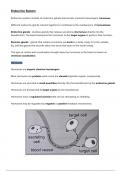
Endocrine system consists of endocrine glands that secrete chemical messengers, hormones.
Different endocrine glands interact together to contribute to the maintenance of homeostasis.
Endocrine glands - ductless glands that release secretions (hormones) directly into the
bloodstream. The blood transports the hormones to the target organs to perform their function.
Exocrine glands - glands that release secretions via ducts to a body cavity or to the outside.
Eg. salivary glands that secrete saliva into ducts that open in the mouth cavity.
The type of control and coordination brought about by hormones in the blood is known as
chemical coordination.
Hormones
Hormones are organic chemical messengers.
Most hormones are proteins while some are steroids (lipid-like organic compounds).
Hormones are secreted in small quantities directly into the bloodstream by the endocrine glands.
Hormones are transported to target organs by the bloodstream.
Hormones have a regulatory function that can be stimulating or inhibiting.
Hormones may be regulated by negative or positive feedback mechanisms.
, Endocrine glands and their hormones
Hypophysis/Pituitary gland
Located at the base of the brain, attached to the hypothalamus by a short stalk.
(Hypothalamus is located below the corpus callosum and controls the functions of the hypophysis)
(Hypothalamus is the link between the nervous and endocrine system)
Hypophysis consists of two lobes:
- Anterior lobe (adenohypophysis)
- Posterior lobe (neurohypophysis)
Endocrine system consists of endocrine glands that secrete chemical messengers, hormones.
Different endocrine glands interact together to contribute to the maintenance of homeostasis.
Endocrine glands - ductless glands that release secretions (hormones) directly into the
bloodstream. The blood transports the hormones to the target organs to perform their function.
Exocrine glands - glands that release secretions via ducts to a body cavity or to the outside.
Eg. salivary glands that secrete saliva into ducts that open in the mouth cavity.
The type of control and coordination brought about by hormones in the blood is known as
chemical coordination.
Hormones
Hormones are organic chemical messengers.
Most hormones are proteins while some are steroids (lipid-like organic compounds).
Hormones are secreted in small quantities directly into the bloodstream by the endocrine glands.
Hormones are transported to target organs by the bloodstream.
Hormones have a regulatory function that can be stimulating or inhibiting.
Hormones may be regulated by negative or positive feedback mechanisms.
, Endocrine glands and their hormones
Hypophysis/Pituitary gland
Located at the base of the brain, attached to the hypothalamus by a short stalk.
(Hypothalamus is located below the corpus callosum and controls the functions of the hypophysis)
(Hypothalamus is the link between the nervous and endocrine system)
Hypophysis consists of two lobes:
- Anterior lobe (adenohypophysis)
- Posterior lobe (neurohypophysis)



