Chapter 53: Musculoskeletal or Articular Dysfu Perry: Maternal Child Care Nursing in Canada
MULTIPLE CHOICE
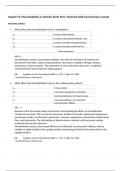
1. What effect does immobilization have on metabolism?
a. It causes hypocalcemia.
b. It causes a decreased metabolic rate.
c. It causes a positive nitrogen balance.
d. It causes increased production of
stress hormones.
ANS: B
Immobilization causes a decreased metabolic rate with the slowing of all systems and
decreased food intake, leads to hypercalcemia, and causes a negative nitrogen balance
secondary to muscle atrophy. The production of stress hormones decreases, resulting in
reduced physical and emotional coping capacity.
DIF: Cognitive Level: ComprehensionREF: p. 1713 | Table 53-1 OBJ:
Nursing Process: Assessment
2. What effect does immobilization have on the cardiovascular system?
a. Venous stasis
b. Increased vasopressor mechanism
c. Normal distribution of blood volume
d. Increased efficiency of orthostatic
neurovascular reflexes
ANS: A
Because of the decreased muscle contraction, the physiological effects of immobilization
include venous stasis. This can lead to pulmonary emboli or thrombi. A decreased vasopressor
mechanism results in orthostatic hypotension, syncope, hypotension, decreased cerebral blood
flow, and tachycardia. The distribution of blood volume is altered, with decreased cardiac
workload and exercise tolerance.
Immobilization causes a decreased efficiency in orthostatic neurovascular reflexes, with an
inability to adapt readily to the upright position and pooling of blood in the extremities in the
upright position.
DIF: Cognitive Level: ComprehensionREF: p. 1714 | Table 53-1 OBJ:
Nursing Process: Assessment
, 3. What
can result from the bone demineralization associated with immobility?
a. Osteoporosis
b. Urinary retention
c. Pooling of blood
d. Susceptibility to infection
ANS: A
Bone demineralization leads to a negative calcium balance, osteoporosis, pathological
fractures, extraosseous bone formation, and renal calculi. Urinary retention is secondary to the
effect of immobilization on the urinary tract. The pooling of blood is a result of the
cardiovascular effects of immobilization. Susceptibility to infection can result from the effects
of immobilization on the respiratory and renal systems.
DIF: Cognitive Level: Comprehension REF: p. 1713 | Table 53-1
OBJ: Nursing Process: Assessment
4. A young girl has just injured her ankle at school. In addition to calling the child’s parents, what
is the school nurse’s most appropriate, immediate action?
a. Apply ice.
b. Observe the ankle for edema and
discolouration.
c. Encourage the child to assume a
comfortable position.
d. Obtain parental permission for
administration of acetaminophen or
aspirin.
ANS: A
Soft-tissue injuries should be iced immediately. In addition to ice, the extremity should be
rested and elevated and have compression applied. Observing for edema and discolouration,
encouraging the child to assume a comfortable position, and obtaining parental permission or
administration of acetaminophen or aspirin are not immediate priorities.
DIF: Cognitive Level: Analysis REF: p. 1718
OBJ: Nursing Process: Implementation
5. What term is used to describe a fracture that does not produce a break in the skin?
MULTIPLE CHOICE
1. What effect does immobilization have on metabolism?
a. It causes hypocalcemia.
b. It causes a decreased metabolic rate.
c. It causes a positive nitrogen balance.
d. It causes increased production of
stress hormones.
ANS: B
Immobilization causes a decreased metabolic rate with the slowing of all systems and
decreased food intake, leads to hypercalcemia, and causes a negative nitrogen balance
secondary to muscle atrophy. The production of stress hormones decreases, resulting in
reduced physical and emotional coping capacity.
DIF: Cognitive Level: ComprehensionREF: p. 1713 | Table 53-1 OBJ:
Nursing Process: Assessment
2. What effect does immobilization have on the cardiovascular system?
a. Venous stasis
b. Increased vasopressor mechanism
c. Normal distribution of blood volume
d. Increased efficiency of orthostatic
neurovascular reflexes
ANS: A
Because of the decreased muscle contraction, the physiological effects of immobilization
include venous stasis. This can lead to pulmonary emboli or thrombi. A decreased vasopressor
mechanism results in orthostatic hypotension, syncope, hypotension, decreased cerebral blood
flow, and tachycardia. The distribution of blood volume is altered, with decreased cardiac
workload and exercise tolerance.
Immobilization causes a decreased efficiency in orthostatic neurovascular reflexes, with an
inability to adapt readily to the upright position and pooling of blood in the extremities in the
upright position.
DIF: Cognitive Level: ComprehensionREF: p. 1714 | Table 53-1 OBJ:
Nursing Process: Assessment
, 3. What
can result from the bone demineralization associated with immobility?
a. Osteoporosis
b. Urinary retention
c. Pooling of blood
d. Susceptibility to infection
ANS: A
Bone demineralization leads to a negative calcium balance, osteoporosis, pathological
fractures, extraosseous bone formation, and renal calculi. Urinary retention is secondary to the
effect of immobilization on the urinary tract. The pooling of blood is a result of the
cardiovascular effects of immobilization. Susceptibility to infection can result from the effects
of immobilization on the respiratory and renal systems.
DIF: Cognitive Level: Comprehension REF: p. 1713 | Table 53-1
OBJ: Nursing Process: Assessment
4. A young girl has just injured her ankle at school. In addition to calling the child’s parents, what
is the school nurse’s most appropriate, immediate action?
a. Apply ice.
b. Observe the ankle for edema and
discolouration.
c. Encourage the child to assume a
comfortable position.
d. Obtain parental permission for
administration of acetaminophen or
aspirin.
ANS: A
Soft-tissue injuries should be iced immediately. In addition to ice, the extremity should be
rested and elevated and have compression applied. Observing for edema and discolouration,
encouraging the child to assume a comfortable position, and obtaining parental permission or
administration of acetaminophen or aspirin are not immediate priorities.
DIF: Cognitive Level: Analysis REF: p. 1718
OBJ: Nursing Process: Implementation
5. What term is used to describe a fracture that does not produce a break in the skin?