UNISA 2023 ECS1601-23-S2 Online assessments Assessment 4
QUIZ
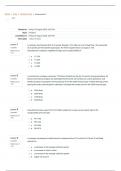
Started on Thursday, 5 October 2023, 12:57 PM
State Finished
Completed on Thursday, 5 October 2023, 1:42 PM
Time taken 44 mins 51 secs
Marks 17.00/20.00
Grade 85.00 out of 100.00
Question 1
Correct
Mark 1.00 out of 1.00
Which of the following can cause demand-pull inflation?
[1] A decrease in interest rates which leads to an increase in consumption and
investment spending.
[2] An increase in government spending on social wealth and education.
[3] A rise in the cost of import intermediate goods due to a depreciation of the
domestic currency.
a. [1] and [2]
b. [2]
c. [1], [2] and [3]
d. [3]
e. [1]
Refer to section 10.4 of the prescribed textbook.
Question 2
Correct
Mark 1.00 out of 1.00
The appropriate policy to combat cost-push inflation would be to increase
______, which will be illustrated by __________.
a. productivity; rightward shift of the aggregate supply curve
b. interest rates; leftward shift of the aggregate demand curve
c. wages; leftward shift of the aggregate supply curve
d. government spending; rightward shift of the aggregate demand curve
See sections 9.1 and 10.4 of the prescribed textbook.
QUIZ
Started on Thursday, 5 October 2023, 12:57 PM
State Finished
Completed on Thursday, 5 October 2023, 1:42 PM
Time taken 44 mins 51 secs
Marks 17.00/20.00
Grade 85.00 out of 100.00
Question 1
Correct
Mark 1.00 out of 1.00
Which of the following can cause demand-pull inflation?
[1] A decrease in interest rates which leads to an increase in consumption and
investment spending.
[2] An increase in government spending on social wealth and education.
[3] A rise in the cost of import intermediate goods due to a depreciation of the
domestic currency.
a. [1] and [2]
b. [2]
c. [1], [2] and [3]
d. [3]
e. [1]
Refer to section 10.4 of the prescribed textbook.
Question 2
Correct
Mark 1.00 out of 1.00
The appropriate policy to combat cost-push inflation would be to increase
______, which will be illustrated by __________.
a. productivity; rightward shift of the aggregate supply curve
b. interest rates; leftward shift of the aggregate demand curve
c. wages; leftward shift of the aggregate supply curve
d. government spending; rightward shift of the aggregate demand curve
See sections 9.1 and 10.4 of the prescribed textbook.