Gina Brown
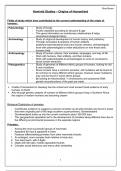
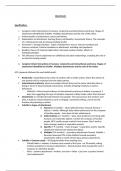
Hominid Studies – Origins of Humankind
Fields of study which have contributed to the current understanding of the origin of
humans:
Paleontology - Study of fossils
- Fossils classified according to structure & age
- This gives information on evolutionary relationships & helps
reconstruct biological history
Archaeology - Study of origins & development of human history and prehistory
- Through excavation & analysis of human artifacts
(pottery/ornaments/stone tools) and human remains, archaeologists
work with paleontologists to make deductions on how those early
humans lived
Anthropology - Study of human cultures, their societies, languages, and way of life
- Work with humans, their artifacts, and their remains
- Work with paleontologists & archaeologists to come to conclusions
about human behaviour
Paleogenetics - Study of genomes of different ethnic groups of humans, looking for old
& new mutations
- Since humans have a common ancestor, old mutations will be found to
be common to many different ethnic groups, however newer mutations
may only be found in some ethnic groups
- By looking at mitochondrial, Y chromosome and autosomal DNA,
genetic reconstructions of the past are made
Cradle of Humankind in Gauteng has the richest and most ancient fossil evidence of early
humans on Earth
Also through genetic analysis of humans of different ethnic groups living in Southern Africa,
the origins of modern humans are becoming clearer
Biological Distribution of primates:
- Contributes evidence to suggest a common ancestor as all wild primates are found in areas
that were originally part of the large southern supercontinent, Gondwanaland
- Gondwanaland broke up into the current continents about 180-200 mya
- This geographical separation led to the development of primates along different lines due to
the differing environmental pressures in the separate regions
Primates:
- Among the most successful groups of mammals
- Appeared 85 mya & appeared in trees
- Features differentiating primates from other mammals include:
1. An enlarged, more complex brain relative to body size
2. Two hand each, with 5 digits
3. Digits with flat nails, mobile opposable thumbs
4. Complex social behaviour and many other similarities
1
, Gina Brown
2 recognized groups of Primates:
Prosimians - Primitive types
- Less well-developed brains
- Lemurs, tarsiers, and bushbabies
Anthropoids - More advanced types
- Larger brains
- Old work monkeys, new world monkeys and hominids
*There is only one species of hominid, homo sapiens, that still
exist today although there were several hominid species in the
past
Features that primates have in common:
1. Two hands with 5 digits
2. Long upper arms
3. Freely rotating arms
4. Elbow joints allowing rotation of forearm
5. Opposable thumbs which work in opposite direction
6. Sexual dimorphism
7. 2 mammary glands only
Hominids: Bipedal animals in the fossil record showing a mixture of ape-like and human-like
features (excludes apes)
Diagram on the left shows a current classification
of primates and where modern man fits into the
classification (take note of the relationship between
humans – homo sapiens – and the primates.
Genetic evidence indicates that primates share
a large % of their DNA
Humans share 99.5% of their DNA with each other, 98.5% of their DNA with chimpanzees and
93% with rhesus monkeys
This suggests a common ancestor at an earlier stage
- Primates have full trichromatic colour vision
(ability to perceive red/green/blue)
- Ability is only found in primates (thought to be
controlled by the same set of genes in all
primates)
Evolutionary links show a relationship between
modern humans and apes (doesn’t mean
humans evolved from apes, but rather that they
shared a common ancestor)
Humans and this common ancestor are thought to have separated 6 mya
2
Hominid Studies – Origins of Humankind
Fields of study which have contributed to the current understanding of the origin of
humans:
Paleontology - Study of fossils
- Fossils classified according to structure & age
- This gives information on evolutionary relationships & helps
reconstruct biological history
Archaeology - Study of origins & development of human history and prehistory
- Through excavation & analysis of human artifacts
(pottery/ornaments/stone tools) and human remains, archaeologists
work with paleontologists to make deductions on how those early
humans lived
Anthropology - Study of human cultures, their societies, languages, and way of life
- Work with humans, their artifacts, and their remains
- Work with paleontologists & archaeologists to come to conclusions
about human behaviour
Paleogenetics - Study of genomes of different ethnic groups of humans, looking for old
& new mutations
- Since humans have a common ancestor, old mutations will be found to
be common to many different ethnic groups, however newer mutations
may only be found in some ethnic groups
- By looking at mitochondrial, Y chromosome and autosomal DNA,
genetic reconstructions of the past are made
Cradle of Humankind in Gauteng has the richest and most ancient fossil evidence of early
humans on Earth
Also through genetic analysis of humans of different ethnic groups living in Southern Africa,
the origins of modern humans are becoming clearer
Biological Distribution of primates:
- Contributes evidence to suggest a common ancestor as all wild primates are found in areas
that were originally part of the large southern supercontinent, Gondwanaland
- Gondwanaland broke up into the current continents about 180-200 mya
- This geographical separation led to the development of primates along different lines due to
the differing environmental pressures in the separate regions
Primates:
- Among the most successful groups of mammals
- Appeared 85 mya & appeared in trees
- Features differentiating primates from other mammals include:
1. An enlarged, more complex brain relative to body size
2. Two hand each, with 5 digits
3. Digits with flat nails, mobile opposable thumbs
4. Complex social behaviour and many other similarities
1
, Gina Brown
2 recognized groups of Primates:
Prosimians - Primitive types
- Less well-developed brains
- Lemurs, tarsiers, and bushbabies
Anthropoids - More advanced types
- Larger brains
- Old work monkeys, new world monkeys and hominids
*There is only one species of hominid, homo sapiens, that still
exist today although there were several hominid species in the
past
Features that primates have in common:
1. Two hands with 5 digits
2. Long upper arms
3. Freely rotating arms
4. Elbow joints allowing rotation of forearm
5. Opposable thumbs which work in opposite direction
6. Sexual dimorphism
7. 2 mammary glands only
Hominids: Bipedal animals in the fossil record showing a mixture of ape-like and human-like
features (excludes apes)
Diagram on the left shows a current classification
of primates and where modern man fits into the
classification (take note of the relationship between
humans – homo sapiens – and the primates.
Genetic evidence indicates that primates share
a large % of their DNA
Humans share 99.5% of their DNA with each other, 98.5% of their DNA with chimpanzees and
93% with rhesus monkeys
This suggests a common ancestor at an earlier stage
- Primates have full trichromatic colour vision
(ability to perceive red/green/blue)
- Ability is only found in primates (thought to be
controlled by the same set of genes in all
primates)
Evolutionary links show a relationship between
modern humans and apes (doesn’t mean
humans evolved from apes, but rather that they
shared a common ancestor)
Humans and this common ancestor are thought to have separated 6 mya
2