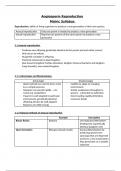
Angiosperm Reproduction
Matric Syllabus
Reproduction: ability of living organisms to produce a new generation of their own species.
Asexual reproduction Only one parent is needed to produce a new generation
Sexual reproduction Requires two parents of the same species to produce a new
generation
2.1 Asexual reproduction
- Produces new offspring genetically identical to the parent and each other (cones)
- Only occurs by mitosis
- No genetic variation in offspring
- Practiced extensively in plant kingdom
- Also found in kingdom Protista (Amoeba), kingdom Monera (bacteria) and kingdom
Fungi (moulds), even animal kingdom
2.1.1 Advantages and Disadvantages
Advantages Disadvantages
- Quick method (no need to find a mate - Inability to adapt to changing
& is a simple process) environment
- Organism can spread rapidly – can - Similar weaknesses throughout a
crowd out competitors species – vulnerable to extinction
- If parent is well adapted to particular - Overcrowding rapidly diminishes
environment, genetically identical resources (food)
offspring will also be well adapted
- Requires very little energy
2.1.2 Natural methods of Asexual reproduction
Example Description
Binary fission Bacteria Cell replicates DNA before
dividing into 2 genetically
identical daughter cells
Spore formation Rhizopus (bread mould) Asexual Reproduction by
producing spores from
sporangia that are dispersed
and form a new mould when
they germinate on a suitable
substrate
, Vegetative propagation Runners (hen & chicken, Many flowering plants are
grass) able to reproduce asexually
Bulbs (onions) by forming a new individual
Tubers (potatoes) from a non-reproductive
Rhizomes (ferns) part of the plant
2.1.3 Artificial methods
Example Description
Cuttings Geranium and sugar cane Sections of the plant can be
cut off and grown into a new
plant
Grafts The stem of a good fruit- One plant is joined to
bearing tree can be grafted another
to the root stock of a
different tree with strong
roots to produce a strong
and productive tree
Tissue culture Discussed in genetic
(biotechnology) engineering
- Both sexual and asexual reproduction can be used to develop improved food crops
when they are artificially manipulated to improve quality and yields
- This addresses food shortages in the world
2.2 Sexual reproduction
Produces new offspring which are not genetically identical to parents or each other
Occurs by production of gametes (sperm and ova) from 2 parents
Parents’ genetic material combines when male’s sperm fertilizes female’s ovum to form
a zygote which will develop into new cell
Gametes produced by meiosis (a type of cell division which causes a shuffling of parents’
genes)
Creates genetic variation as gametes differ from each other genetically
2.2.1 Advantages and disadvantages
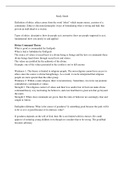
Matric Syllabus
Reproduction: ability of living organisms to produce a new generation of their own species.
Asexual reproduction Only one parent is needed to produce a new generation
Sexual reproduction Requires two parents of the same species to produce a new
generation
2.1 Asexual reproduction
- Produces new offspring genetically identical to the parent and each other (cones)
- Only occurs by mitosis
- No genetic variation in offspring
- Practiced extensively in plant kingdom
- Also found in kingdom Protista (Amoeba), kingdom Monera (bacteria) and kingdom
Fungi (moulds), even animal kingdom
2.1.1 Advantages and Disadvantages
Advantages Disadvantages
- Quick method (no need to find a mate - Inability to adapt to changing
& is a simple process) environment
- Organism can spread rapidly – can - Similar weaknesses throughout a
crowd out competitors species – vulnerable to extinction
- If parent is well adapted to particular - Overcrowding rapidly diminishes
environment, genetically identical resources (food)
offspring will also be well adapted
- Requires very little energy
2.1.2 Natural methods of Asexual reproduction
Example Description
Binary fission Bacteria Cell replicates DNA before
dividing into 2 genetically
identical daughter cells
Spore formation Rhizopus (bread mould) Asexual Reproduction by
producing spores from
sporangia that are dispersed
and form a new mould when
they germinate on a suitable
substrate
, Vegetative propagation Runners (hen & chicken, Many flowering plants are
grass) able to reproduce asexually
Bulbs (onions) by forming a new individual
Tubers (potatoes) from a non-reproductive
Rhizomes (ferns) part of the plant
2.1.3 Artificial methods
Example Description
Cuttings Geranium and sugar cane Sections of the plant can be
cut off and grown into a new
plant
Grafts The stem of a good fruit- One plant is joined to
bearing tree can be grafted another
to the root stock of a
different tree with strong
roots to produce a strong
and productive tree
Tissue culture Discussed in genetic
(biotechnology) engineering
- Both sexual and asexual reproduction can be used to develop improved food crops
when they are artificially manipulated to improve quality and yields
- This addresses food shortages in the world
2.2 Sexual reproduction
Produces new offspring which are not genetically identical to parents or each other
Occurs by production of gametes (sperm and ova) from 2 parents
Parents’ genetic material combines when male’s sperm fertilizes female’s ovum to form
a zygote which will develop into new cell
Gametes produced by meiosis (a type of cell division which causes a shuffling of parents’
genes)
Creates genetic variation as gametes differ from each other genetically
2.2.1 Advantages and disadvantages