Advanced Auditing
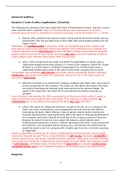
Question 1 Code of ethics (application) (20 points)
The following are situations that may violate the Code of Professional Conduct. Assume, in each
case, that the CPA is a partner. Why are fundamental principles threatened, so frst the
principle then the threat! (combination of both the principles and the framework ch 1 + 19/20)
1. Elmyra, CPA, advertises her practice online, citing several prominent clients she has
worked with. She has provided links to their Web sites and included quotes from her
happy clients.
Potentially, the confidentiality is breached. Unless all companies gave their consent, that
they were ok with the fact that their names and websites were published on her website, this
could be attributed to her Self-interest. As she intended to publish these names to generate
positive publicity and attract new clients. Secondly, due care could be threatened as Elmyra
should always check whether these quotes were actually true!
2. Samir, CPA, is hired to do the audit of Al-Sharif Transportation Co. Samir owns a
substantial limited partnership interest in a construction company called Flat. Zubair
Al-Sharif is a 100% owner in Al-Sharif Transportation Co. Al-Sharif also owns a
substantial limited partnership in the same construction company Flat as Samir.
The problem here should be self-interest since Samir owns a substantial interest. Secondly,
familiarity could be an issue, given the substantial interest he has in Flat. Both impair the
principle of objectivity
3. After the controller of a construction company suddenly quit, Basil, CPA, was hired to
do the accounting for the company. The audits are due within two weeks, and there
are several discrepancies between bank statements and the general ledger. He
spoke to his supervisor, who told him to reconcile the two books as quickly as
possible.
Given the short time-window, the CPA is pressured to do the reconciliation within 2 weeks in
order to meet the audit deadline within two weeks. This could give a slight indication of
intimidation but is more likely to be pressure for which due care will sufer!
4. Jamal, CPA, works for Gilgamesh Practices. As part of his job, he is in charge of the
audit, tax return, bookkeeping, and management services work for the Uthman
Decorating Company. Makin Uthman relies on Jamal’s advice before making any
business decisions that could signifcantly afect the taxes or fnancial statements of
this company. Jamal also attends all meetings of the company’s board of directors.
Because he doesn’t know too much about the industry, Jamal attends some
professional development courses in interior decorating. Recently, it was announced
that Uthman’s vice president will be retiring soon, and Uthman has hinted that he
would like Jamal to join his company with a higher pay than he is currently receiving
at Gilgamesh.
Jamal is responsible for doing the tax returns, bookkeeping and management services while
conducting the audit as well. This is a clear indication of self review. Secondly, familiarity is
a threat given the fact that Jamal is present at board meetings. Implying he is heavily involved
in his client Flat. Thirdly he is ofered a job, which apparently pays better. He therefore is guilty
of self interest. All fndings imply an impairment of objectivity and possible professional
competence/due care (Is he competent enough to do all these things at the same time?).
Required:
1
, Determine whether the facts in any of the situations indicate violations of the AICPA Code of
Professional Conduct. If so, identify the nature of the violation(s). and motivate your answer.
Question 2 Sales transactions (20 points)
The following are common audit procedures for tests of sales and cash receipts:
1. Obtain a copy of the current price list and agree for a sample of invoices that
relevant or current prices have been used. Test of controls/ substantive
tests to address the risk of
that the wrong prices were used, which would amount to the accuracy
assertion.
2. Discuss with members of the sales team the process for setting sales discounts
and review the sales discount report for evidence of review by the sales director.
Test of control, it focuses on the processes and you want to rely on the
controls. The risk addressed here is that discounts were given either
unauthorized or discount rates were not accurate. Therefore the assertion here is
accuracy.
3. Trace selected sales journal entries to supporting documents including sales
invoice, bill of lading, sales order and customer order.
Substantive testing, you do not rely on the IC of the client. The risk here is
whether the transactions of the sales did actually take place.
Existence/occurrence is the assertion here.
4. Use audit software to foot and cross-foot the sales journal and trace totals to the
general ledger to check if there is any discrepancy.
You do not rely on the IC of the client and is therefore a substantive test which
addresses the assertion of presentation.
5. Trace the credit entries in the accounts receivable master fle to its source to see
whether it relates to cash actually collected, goods returned, bad debt written-of
or an issue of credit memo
This is an example of substantive testing, the risk here is whether the
transaction did actually take place and products did not go to fctitious
customers. Therefore the existence assertion is tested.
6. Observe whether the bookkeeper reconciles bank account regularly.
This is an example of test of controls, the assertion here is accuracy.(and
potentially cut-of if not all transactions are depicted in the right period as a
result of reconciling not regularly).
7. Examine prelisting for proper account classifcation.
This is an example of substantive testing, the risk here is that accounts are
not properly classifed, non-existing accounts could be classifed as well. The
assertion here is classification (or Occurrence).
8. Account for numerical sequence of the sales invoices selected from the sales
journal and watch for duplicate numbers or invoices outside the normal
sequence.
a) Identify whether each audit procedure is a test of control or a substantive test of
transactions.
2
Question 1 Code of ethics (application) (20 points)
The following are situations that may violate the Code of Professional Conduct. Assume, in each
case, that the CPA is a partner. Why are fundamental principles threatened, so frst the
principle then the threat! (combination of both the principles and the framework ch 1 + 19/20)
1. Elmyra, CPA, advertises her practice online, citing several prominent clients she has
worked with. She has provided links to their Web sites and included quotes from her
happy clients.
Potentially, the confidentiality is breached. Unless all companies gave their consent, that
they were ok with the fact that their names and websites were published on her website, this
could be attributed to her Self-interest. As she intended to publish these names to generate
positive publicity and attract new clients. Secondly, due care could be threatened as Elmyra
should always check whether these quotes were actually true!
2. Samir, CPA, is hired to do the audit of Al-Sharif Transportation Co. Samir owns a
substantial limited partnership interest in a construction company called Flat. Zubair
Al-Sharif is a 100% owner in Al-Sharif Transportation Co. Al-Sharif also owns a
substantial limited partnership in the same construction company Flat as Samir.
The problem here should be self-interest since Samir owns a substantial interest. Secondly,
familiarity could be an issue, given the substantial interest he has in Flat. Both impair the
principle of objectivity
3. After the controller of a construction company suddenly quit, Basil, CPA, was hired to
do the accounting for the company. The audits are due within two weeks, and there
are several discrepancies between bank statements and the general ledger. He
spoke to his supervisor, who told him to reconcile the two books as quickly as
possible.
Given the short time-window, the CPA is pressured to do the reconciliation within 2 weeks in
order to meet the audit deadline within two weeks. This could give a slight indication of
intimidation but is more likely to be pressure for which due care will sufer!
4. Jamal, CPA, works for Gilgamesh Practices. As part of his job, he is in charge of the
audit, tax return, bookkeeping, and management services work for the Uthman
Decorating Company. Makin Uthman relies on Jamal’s advice before making any
business decisions that could signifcantly afect the taxes or fnancial statements of
this company. Jamal also attends all meetings of the company’s board of directors.
Because he doesn’t know too much about the industry, Jamal attends some
professional development courses in interior decorating. Recently, it was announced
that Uthman’s vice president will be retiring soon, and Uthman has hinted that he
would like Jamal to join his company with a higher pay than he is currently receiving
at Gilgamesh.
Jamal is responsible for doing the tax returns, bookkeeping and management services while
conducting the audit as well. This is a clear indication of self review. Secondly, familiarity is
a threat given the fact that Jamal is present at board meetings. Implying he is heavily involved
in his client Flat. Thirdly he is ofered a job, which apparently pays better. He therefore is guilty
of self interest. All fndings imply an impairment of objectivity and possible professional
competence/due care (Is he competent enough to do all these things at the same time?).
Required:
1
, Determine whether the facts in any of the situations indicate violations of the AICPA Code of
Professional Conduct. If so, identify the nature of the violation(s). and motivate your answer.
Question 2 Sales transactions (20 points)
The following are common audit procedures for tests of sales and cash receipts:
1. Obtain a copy of the current price list and agree for a sample of invoices that
relevant or current prices have been used. Test of controls/ substantive
tests to address the risk of
that the wrong prices were used, which would amount to the accuracy
assertion.
2. Discuss with members of the sales team the process for setting sales discounts
and review the sales discount report for evidence of review by the sales director.
Test of control, it focuses on the processes and you want to rely on the
controls. The risk addressed here is that discounts were given either
unauthorized or discount rates were not accurate. Therefore the assertion here is
accuracy.
3. Trace selected sales journal entries to supporting documents including sales
invoice, bill of lading, sales order and customer order.
Substantive testing, you do not rely on the IC of the client. The risk here is
whether the transactions of the sales did actually take place.
Existence/occurrence is the assertion here.
4. Use audit software to foot and cross-foot the sales journal and trace totals to the
general ledger to check if there is any discrepancy.
You do not rely on the IC of the client and is therefore a substantive test which
addresses the assertion of presentation.
5. Trace the credit entries in the accounts receivable master fle to its source to see
whether it relates to cash actually collected, goods returned, bad debt written-of
or an issue of credit memo
This is an example of substantive testing, the risk here is whether the
transaction did actually take place and products did not go to fctitious
customers. Therefore the existence assertion is tested.
6. Observe whether the bookkeeper reconciles bank account regularly.
This is an example of test of controls, the assertion here is accuracy.(and
potentially cut-of if not all transactions are depicted in the right period as a
result of reconciling not regularly).
7. Examine prelisting for proper account classifcation.
This is an example of substantive testing, the risk here is that accounts are
not properly classifed, non-existing accounts could be classifed as well. The
assertion here is classification (or Occurrence).
8. Account for numerical sequence of the sales invoices selected from the sales
journal and watch for duplicate numbers or invoices outside the normal
sequence.
a) Identify whether each audit procedure is a test of control or a substantive test of
transactions.
2