PREVIEW
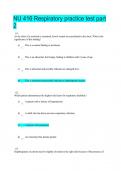
QUESTION 1
1.1. Name one type of stereotyping that
can be found in older books. (1)
One type of stereotyping found in older
books is gender stereotyping, where
certain roles, characteristics, or
behaviors are assigned to individuals
based on their gender.
1.2. Briefly explain in no more than two
sentences, why it is important for a
Foundation Phase teacher to examine
their beliefs and assumptions. (2)
It is important for a Foundation Phase
teacher to examine their beliefs and
assumptions to ensure that they are
not inadvertently perpetuating
stereotypes or biases in their teaching.
This examination allows teachers to
provide a more inclusive and equitable
ENG1516 learning environment for all students.
ASSIGNMENT 1 2024
NATALIE FOXX
, ASSIGNMENT 01: Introducing Children’s Literature
This assignment is based on Units 1 and 2 in Tutorial Letter 501. Work through these two units as
well as pp. 1-25, 29-66 and 223-237 in your prescribed textbook, Introducing Children’s Literature:
A Guide to the South African Classroom (2017) by Evans, et al. before you attempt the
assignment. Answer the questions below in full sentences.
QUESTION 1
1.1. Name one type of stereotyping that can be found in older books. (1)
One type of stereotyping found in older books is gender stereotyping, where certain
roles, characteristics, or behaviors are assigned to individuals based on their gender.
1.2. Briefly explain in no more than two sentences, why it is important for a Foundation
Phase teacher to examine their beliefs and assumptions. (2)
It is important for a Foundation Phase teacher to examine their beliefs and assumptions
to ensure that they are not inadvertently perpetuating stereotypes or biases in their
teaching. This examination allows teachers to provide a more inclusive and equitable
learning environment for all students.
[3]
QUESTION 2
Read through the following excerpt from the children's play, The Tragical Comedy, or Comical
Tragedy, of Punch and Judy, dating back to 1832, and answer the questions below. This play was
performed as a puppet show in the Victorian times.
The Tragical Comedy, or Comical Tragedy, of Punch and Judy
[RE-ENTER JUDY.]
JUDY: Where is the child?
PUNCH: Gone – gone to sleep.
JUDY: What have you done to the child, I say.
PUNCH: Gone to sleep, I say.
JUDY: What have you done with it!
PUNCH: What have I done with it!
JUDY: Ay; done with it! I heard it crying just now. Where is it?
PUNCH: How should I know?
NATALIE FOXX 2024
QUESTION 1
1.1. Name one type of stereotyping that
can be found in older books. (1)
One type of stereotyping found in older
books is gender stereotyping, where
certain roles, characteristics, or
behaviors are assigned to individuals
based on their gender.
1.2. Briefly explain in no more than two
sentences, why it is important for a
Foundation Phase teacher to examine
their beliefs and assumptions. (2)
It is important for a Foundation Phase
teacher to examine their beliefs and
assumptions to ensure that they are
not inadvertently perpetuating
stereotypes or biases in their teaching.
This examination allows teachers to
provide a more inclusive and equitable
ENG1516 learning environment for all students.
ASSIGNMENT 1 2024
NATALIE FOXX
, ASSIGNMENT 01: Introducing Children’s Literature
This assignment is based on Units 1 and 2 in Tutorial Letter 501. Work through these two units as
well as pp. 1-25, 29-66 and 223-237 in your prescribed textbook, Introducing Children’s Literature:
A Guide to the South African Classroom (2017) by Evans, et al. before you attempt the
assignment. Answer the questions below in full sentences.
QUESTION 1
1.1. Name one type of stereotyping that can be found in older books. (1)
One type of stereotyping found in older books is gender stereotyping, where certain
roles, characteristics, or behaviors are assigned to individuals based on their gender.
1.2. Briefly explain in no more than two sentences, why it is important for a Foundation
Phase teacher to examine their beliefs and assumptions. (2)
It is important for a Foundation Phase teacher to examine their beliefs and assumptions
to ensure that they are not inadvertently perpetuating stereotypes or biases in their
teaching. This examination allows teachers to provide a more inclusive and equitable
learning environment for all students.
[3]
QUESTION 2
Read through the following excerpt from the children's play, The Tragical Comedy, or Comical
Tragedy, of Punch and Judy, dating back to 1832, and answer the questions below. This play was
performed as a puppet show in the Victorian times.
The Tragical Comedy, or Comical Tragedy, of Punch and Judy
[RE-ENTER JUDY.]
JUDY: Where is the child?
PUNCH: Gone – gone to sleep.
JUDY: What have you done to the child, I say.
PUNCH: Gone to sleep, I say.
JUDY: What have you done with it!
PUNCH: What have I done with it!
JUDY: Ay; done with it! I heard it crying just now. Where is it?
PUNCH: How should I know?
NATALIE FOXX 2024