Topic 4
Learning unit 17
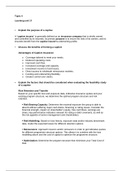
• Explain the purpose of a captive
A "captive insurer" is generally defined as an insurance company that is wholly owned
and controlled by its insureds; its primary purpose is to insure the risks of its owners, and its
insureds benefit from the captive insurer's underwriting profits
• Discuss the benefits of forming a captive
Advantages of Captive Insurance
o Coverage tailored to meet your needs.
o Reduced operating costs.
o Improved cash flow.
o Increased coverage and capacity.
o Investment income to fund losses.
o Direct access to wholesale reinsurance markets.
o Funding and underwriting flexibility.
o Greater control over claims.
• Explain the factors that should be considered when evaluating the feasibility study
of a captive
Risk Retention and Transfer
Based on your specific loss and exposure data, indicative insurance quotes and your
existing program structure, we determine the optimal program structure and risk
retention.
Risk Bearing Capacity: Determine the maximal exposure the group is able to
absorb without suffering major cash drains, financing or rating issues. Consider the
financial strength, impact on shareholder’s equity, free cash flows, earnings per
share, key performance indicators relevant for rating or debt covenants, as well as
the risk appetite of senior management and shareholders.
Risk Modelling: Based on loss history, exposure data and/or industry benchmark
data, model the expected losses for different retention options.
Reinsurance: Approach insurers and/or reinsurers in order to get indicative quotes
for different programme structure options. This allows it to combine with the loss
modelling above and the cost of capital to optimize the programme structure.
Optimization: Determine the program structure that minimises your Total Cost of
Risk
, Structuring :
Optimal Domicile: The choice depends upon the chosen risk financing vehicle, tax
considerations, fronting requirements, cost of operation, capital requirements, flexibility in the
underwriting and investments, capitalisation, solvency requirements and infrastructure in the
domicile.
Optimal Vehicle: Besides the classical wholly owned Captive insurance company, other
options include Protected Cell Companies, Rented Captives, pure balance sheet financing
and others. The choice of the vehicle is interdependent with the choice of domicile.
Fronting and Claims Settlement: Once the technical and financial issues are analysed,
practical issues of fronting and claims management will be addressed and solutions
presented.
Business Plan
The financial analysis is based on detailed business plans comparing all options. In addition,
consideration is given to tax issues, capital requirements of a Captive, investment strategy
and operating costs.
Implementation
Meh
• Discuss the types of captives
Single Parent Captive
Often described as 'pure' captives, these are companies with a single owner
to whom they provide insurance coverage. A risk manager or financial officer
at the parent company usually monitors them. A domiciled captive insurance
manager manages the captive.
Association Captive
A captive formed by an established trade association or members of an
industry to provide insurance coverage for members. Ownership rests with
the association or individual members. They usually have a financial expert
at the association level with prime responsibility, or outsource this function to
a captive insurance manager.
Industry Captive
Industry captives are owned by organizations within the same industry that
have come together to solve a specific insurance problem. The stockholders
generally appoint a board of directors to whom the management company
reports.
Rent-a-Captive
Insurance companies that provide access to captive facilities without the user
needing to capitalize his own captive. The user pays a fee for the use of the
captive facilities and will be required to provide some form of collateral so
that the rent-a-captive is not at risk from any underwriting losses suffered by
the user.
Learning unit 17
• Explain the purpose of a captive
A "captive insurer" is generally defined as an insurance company that is wholly owned
and controlled by its insureds; its primary purpose is to insure the risks of its owners, and its
insureds benefit from the captive insurer's underwriting profits
• Discuss the benefits of forming a captive
Advantages of Captive Insurance
o Coverage tailored to meet your needs.
o Reduced operating costs.
o Improved cash flow.
o Increased coverage and capacity.
o Investment income to fund losses.
o Direct access to wholesale reinsurance markets.
o Funding and underwriting flexibility.
o Greater control over claims.
• Explain the factors that should be considered when evaluating the feasibility study
of a captive
Risk Retention and Transfer
Based on your specific loss and exposure data, indicative insurance quotes and your
existing program structure, we determine the optimal program structure and risk
retention.
Risk Bearing Capacity: Determine the maximal exposure the group is able to
absorb without suffering major cash drains, financing or rating issues. Consider the
financial strength, impact on shareholder’s equity, free cash flows, earnings per
share, key performance indicators relevant for rating or debt covenants, as well as
the risk appetite of senior management and shareholders.
Risk Modelling: Based on loss history, exposure data and/or industry benchmark
data, model the expected losses for different retention options.
Reinsurance: Approach insurers and/or reinsurers in order to get indicative quotes
for different programme structure options. This allows it to combine with the loss
modelling above and the cost of capital to optimize the programme structure.
Optimization: Determine the program structure that minimises your Total Cost of
Risk
, Structuring :
Optimal Domicile: The choice depends upon the chosen risk financing vehicle, tax
considerations, fronting requirements, cost of operation, capital requirements, flexibility in the
underwriting and investments, capitalisation, solvency requirements and infrastructure in the
domicile.
Optimal Vehicle: Besides the classical wholly owned Captive insurance company, other
options include Protected Cell Companies, Rented Captives, pure balance sheet financing
and others. The choice of the vehicle is interdependent with the choice of domicile.
Fronting and Claims Settlement: Once the technical and financial issues are analysed,
practical issues of fronting and claims management will be addressed and solutions
presented.
Business Plan
The financial analysis is based on detailed business plans comparing all options. In addition,
consideration is given to tax issues, capital requirements of a Captive, investment strategy
and operating costs.
Implementation
Meh
• Discuss the types of captives
Single Parent Captive
Often described as 'pure' captives, these are companies with a single owner
to whom they provide insurance coverage. A risk manager or financial officer
at the parent company usually monitors them. A domiciled captive insurance
manager manages the captive.
Association Captive
A captive formed by an established trade association or members of an
industry to provide insurance coverage for members. Ownership rests with
the association or individual members. They usually have a financial expert
at the association level with prime responsibility, or outsource this function to
a captive insurance manager.
Industry Captive
Industry captives are owned by organizations within the same industry that
have come together to solve a specific insurance problem. The stockholders
generally appoint a board of directors to whom the management company
reports.
Rent-a-Captive
Insurance companies that provide access to captive facilities without the user
needing to capitalize his own captive. The user pays a fee for the use of the
captive facilities and will be required to provide some form of collateral so
that the rent-a-captive is not at risk from any underwriting losses suffered by
the user.