Principles of Management IIA by ProfessorBurgerQueen
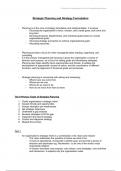
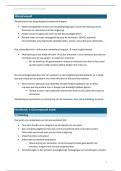
Strategic Planning and Strategy Formulation
- Planning is at the core of strategy formulation and implementation. It involves:
- Choosing the organisation’s vision, mission, and overall goals; both short and
long term
- Devising divisional, departmental, and individual goals based on overall
organisational goals
- Choosing strategy and tactics to achieve organisational goals
- Allocating resources
- Planning provides a focus for other managerial tasks: leading, organising, and
controlling
- It is the primary managerial task because it gives the organisation a sense of
direction and purpose, as a focus for setting goals and developing strategies
- Planning also helps identify future opportunities and threats. It enables the
development of appropriate courses of action, and the coordination of different
functions, and the alignment of divisional goals and processes
- Strategic planning is concerned with asking and answering:
- Where have we come from
- Where are we now
- Where do we want to be
- How do we move from here to there
The 9 Primary Tasks of Strategic Planning
1. Clarify organisation’s strategic intent
2. Assess threats and opportunities
3. Assess strengths and weaknesses
4. Set strategic objectives
5. Undertake a gap analysis
6. Develop strategies to fill the gap
7. Implement the best-fit strategy
8. Control and diagnose strategy
9. Repeat the process
Task 1
- An organisation’s strategic intent is a combination of its vision and mission
- The vision addresses the question of where we want to be
- It must be aspirational, incorporate a stretch goal, and provide a sense of
direction and destination eg. Woolworths - to be one of the world’s most
responsible retailers
- A mission describes core purpose, core values, core strategies, core activities
and behaviours. It explains why the organisation exists
Strategic Planning and Strategy Formulation
- Planning is at the core of strategy formulation and implementation. It involves:
- Choosing the organisation’s vision, mission, and overall goals; both short and
long term
- Devising divisional, departmental, and individual goals based on overall
organisational goals
- Choosing strategy and tactics to achieve organisational goals
- Allocating resources
- Planning provides a focus for other managerial tasks: leading, organising, and
controlling
- It is the primary managerial task because it gives the organisation a sense of
direction and purpose, as a focus for setting goals and developing strategies
- Planning also helps identify future opportunities and threats. It enables the
development of appropriate courses of action, and the coordination of different
functions, and the alignment of divisional goals and processes
- Strategic planning is concerned with asking and answering:
- Where have we come from
- Where are we now
- Where do we want to be
- How do we move from here to there
The 9 Primary Tasks of Strategic Planning
1. Clarify organisation’s strategic intent
2. Assess threats and opportunities
3. Assess strengths and weaknesses
4. Set strategic objectives
5. Undertake a gap analysis
6. Develop strategies to fill the gap
7. Implement the best-fit strategy
8. Control and diagnose strategy
9. Repeat the process
Task 1
- An organisation’s strategic intent is a combination of its vision and mission
- The vision addresses the question of where we want to be
- It must be aspirational, incorporate a stretch goal, and provide a sense of
direction and destination eg. Woolworths - to be one of the world’s most
responsible retailers
- A mission describes core purpose, core values, core strategies, core activities
and behaviours. It explains why the organisation exists