Unit 1 Summary
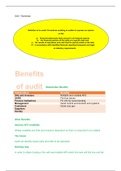
Definition of an audit: Procedures enabling an auditor to express an opinion
on the
a) Financial statements fairly present in all material aspects
b) the financial position of the entity at a specific date and
c) the results of operations and cash flow for period ended on the date
d) in accordance with identified financial reporting framework and legal
or statutory requirements
Benefits
of audit Stakeholder Benefits
Stakeholders Benefits
SHs and investors Reliable and credible AFS
SARS Find tax issues
Finance institutions Fin info for sound lending
Management Good control environment and systems
Customers Good corp gov
Suppliers
Society
Other Benefits
Improve AFS credibility
Widely available and SHs and investors dependent on them so important to be reliable
Tax issues
Audit can identify issues early and refer to tax specialist
Banking reqs
In order to obtain funding a firm will need reliable AFS which the bank will find true and fair
, Advice on operational structure
Deficiencies in internal controls and the control environment be pointed out and solutions
provided.
Good corp gov
Essential to a firm’s reputational risk management
Types
of
Internal Auditors
Auditor Roles including examining, evaluating and monitoring quality
and effectiveness of accounting and internal controls. SIACA
CPC states must serve public interest.
s External Auditors
Performs the statutory or voluntary external audit and
expressed opinion on the AFS
Others
Forensic auditors, government auditors, special purpose auditors
Regulation
of
IRBA (Independent Regulatory Board of Auditors)
Legal body regulating auditors in public practice
To sign off an audit one must be a RA with IRBA
General Functions
Promote integrity in the profession
Use engagement with auditors to protect PI
Prescribe standards of prof conduct and ethics
Prescribe audit standards
Definition of an audit: Procedures enabling an auditor to express an opinion
on the
a) Financial statements fairly present in all material aspects
b) the financial position of the entity at a specific date and
c) the results of operations and cash flow for period ended on the date
d) in accordance with identified financial reporting framework and legal
or statutory requirements
Benefits
of audit Stakeholder Benefits
Stakeholders Benefits
SHs and investors Reliable and credible AFS
SARS Find tax issues
Finance institutions Fin info for sound lending
Management Good control environment and systems
Customers Good corp gov
Suppliers
Society
Other Benefits
Improve AFS credibility
Widely available and SHs and investors dependent on them so important to be reliable
Tax issues
Audit can identify issues early and refer to tax specialist
Banking reqs
In order to obtain funding a firm will need reliable AFS which the bank will find true and fair
, Advice on operational structure
Deficiencies in internal controls and the control environment be pointed out and solutions
provided.
Good corp gov
Essential to a firm’s reputational risk management
Types
of
Internal Auditors
Auditor Roles including examining, evaluating and monitoring quality
and effectiveness of accounting and internal controls. SIACA
CPC states must serve public interest.
s External Auditors
Performs the statutory or voluntary external audit and
expressed opinion on the AFS
Others
Forensic auditors, government auditors, special purpose auditors
Regulation
of
IRBA (Independent Regulatory Board of Auditors)
Legal body regulating auditors in public practice
To sign off an audit one must be a RA with IRBA
General Functions
Promote integrity in the profession
Use engagement with auditors to protect PI
Prescribe standards of prof conduct and ethics
Prescribe audit standards